
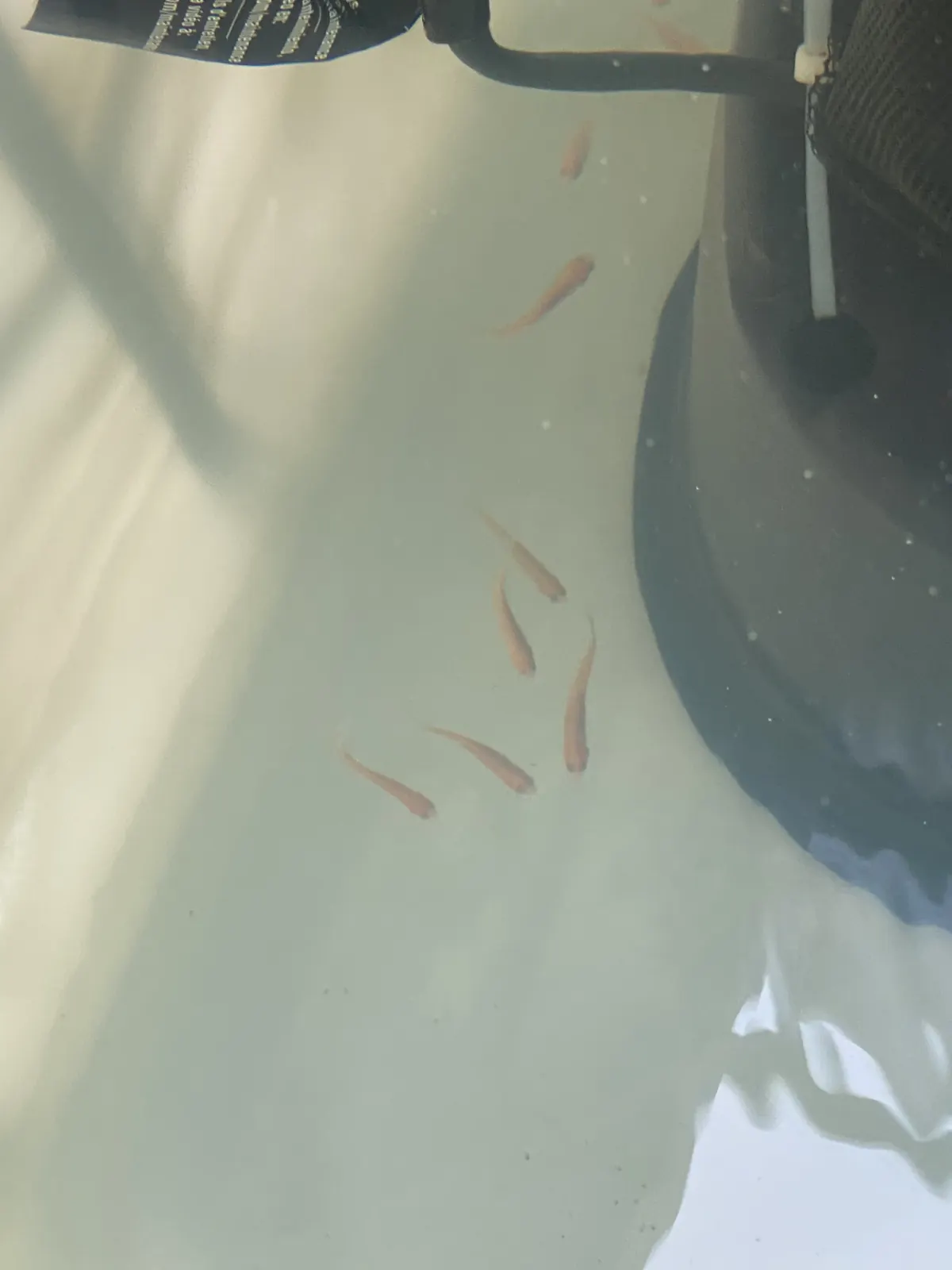
There is no single best fish for every backyard aquaponics system.
The best species is the one that fits your:
- water temperature;
- climate;
- tank size;
- system capacity;
- food goals;
- local regulations;
- willingness to heat or cool water;
- access to healthy fingerlings or ornamental stock.
A fish that performs well in a heated greenhouse can be a terrible choice for an unheated outdoor system in a cold climate.
Start with water temperature
Temperature eliminates many bad choices quickly.
Warm-water fish and cool-water fish should not be treated as interchangeable.
Oklahoma State recommends matching fish and crops with similar temperature needs. That is especially useful in aquaponics because the fish tank and plant root zone share the same water loop.
Before selecting fish, know the system’s realistic seasonal water-temperature range — not just the air temperature on a pleasant spring afternoon.
Tilapia
Tilapia are popular in aquaponics because they: (Oklahoma State: https://extension.okstate.edu/fact-sheets/nitrification-and-maintenance-in-media-bed-aquaponics)
- grow relatively quickly under warm conditions;
- use pelleted feeds readily;
- tolerate conditions that can be challenging for more sensitive species;
- are widely discussed in aquaponics research and extension material.
The major drawback is temperature.
Tilapia are warm-water fish. In a climate with cold winters, keeping them year-round can require substantial heating or a protected indoor/greenhouse environment.
My firsthand fish experience here comes from raising tilapia in one IBC system. The system required heating and winter protection, and a cold-weather failure briefly pushed the water into the 40s. That experience supports the practical warning that choosing warm-water fish in a cold climate can turn heating and backup planning into major design requirements.
Do not assume tilapia are legal to possess everywhere. Check state and local regulations before buying them.
Channel catfish
Channel catfish can be a practical food-fish option for larger backyard systems. (Oklahoma State: https://extension.okstate.edu/fact-sheets/nitrification-and-maintenance-in-media-bed-aquaponics)
Advantages include:
- established aquaculture use;
- food value;
- tolerance of a range of warm-water conditions;
- commercial feeds are readily available.
Tradeoffs include:
- substantial adult size;
- higher space requirements;
- the need to plan stocking around final biomass rather than fingerling size.
A small decorative tank is not a realistic long-term catfish system just because the fingerlings fit today.
Bluegill and other sunfish
Bluegill and related sunfish can be appealing where locally available and legal.
They can fit temperate backyard systems better than tropical fish and do not require the same warm-water strategy as tilapia.
Growth rate, feed training and final production goals should be considered. If the objective is food production, evaluate how long the fish will take to reach a useful harvest size in your climate.
Koi
Koi are ornamental carp, not food fish in the usual backyard aquaponics context. (Oklahoma State: https://extension.okstate.edu/fact-sheets/aquaponics)
They can work well when the owner values:
- long-lived ornamental fish;
- visible, attractive stock;
- a system that does not depend on fish harvest.
The downside is that koi can become large and valuable. A system designed around them needs adequate tank volume, oxygen, filtration and long-term planning.
If you want to compare koi directly with tilapia, see the existing AQP Tilapia vs Koi for Aquaponics page.
Goldfish
Goldfish are another common ornamental choice. (Oklahoma State: https://extension.okstate.edu/fact-sheets/aquaponics)
They are often used because they are widely available and can tolerate cool-water conditions better than tropical species.
But “goldfish” covers multiple body types and adult sizes. Common/comet goldfish can grow much larger than people expect.
The goldfish guide is research-based. I didn’t raise goldfish in my documented IBC system, so don’t mistake the comparison for a firsthand goldfish trial.
Trout
Trout are attractive for cool-water food production but are not a beginner-default fish. (Oklahoma State: https://extension.okstate.edu/fact-sheets/nitrification-and-maintenance-in-media-bed-aquaponics)
They generally require:
- cold, high-quality water;
- strong dissolved oxygen;
- careful temperature management;
- appropriate feed and system design.
A warm greenhouse system built around tilapia conditions is not a trout system with different fish dropped into it.
For most beginners, trout should be treated as a deliberate species-specific project rather than a casual alternative.
What about bass?
Bass and other predatory species can be raised in aquaculture, but they are not automatically convenient backyard aquaponics fish.
Consider:
- feed acceptance;
- adult size;
- stocking behavior;
- availability;
- state regulations;
- whether the species is commonly supplied as feed-trained fingerlings.
AQP’s existing tilapia/catfish/bass page provides a broader research-based comparison.
Food fish or ornamental fish?
This decision changes the entire ownership model.
If you want edible fish, consider:
- harvest size;
- growth rate;
- legal harvest/possession rules;
- feed cost;
- temperature cost;
- whether you actually want to process fish at home.
If you want ornamental fish, consider:
- lifespan;
- adult size;
- replacement cost;
- compatibility with the tank;
- whether fish harvest is unnecessary.
Aquaponics does not stop functioning just because the fish are not eaten.
Use adult size, not store size
This is one of the most important selection rules.
Do not choose a species because it fits in the tank as a juvenile.
Check:
- expected adult size;
- intended harvest size;
- final biomass;
- swimming-space needs;
- oxygen demand;
- whether fish need to be thinned as they grow.
Local availability matters
A theoretically perfect species is not useful if you cannot legally or reliably obtain healthy stock.
Before designing the system around a species, identify:
- a reputable source;
- transport distance;
- minimum order size;
- seasonal availability;
- state rules;
- quarantine/acclimation needs.
A simple selection framework
Choose tilapia when:
- warm water is realistic;
- food production is a goal;
- legal supply is available;
- heating cost is acceptable.
Consider catfish when:
- you have a larger tank;
- food production is a goal;
- you can support final adult biomass.
Consider bluegill/sunfish when:
- you want a temperate option;
- local supply and regulations are favorable;
- slower growth is acceptable.
Consider koi or goldfish when:
- ornamental fish are acceptable;
- you do not need fish harvest;
- you can plan for long-term adult size.
Consider trout only when:
- cold water can be maintained;
- dissolved oxygen is strong;
- you are prepared for species-specific management.
This comparison is research-led beyond the tilapia I raised in my IBC system. I did not personally raise catfish, bluegill, koi, goldfish, trout or bass in that system.
For related practical guidance, see Tilapia vs Koi for Aquaponics and Using Tilapia, Catfish, or Bass in Aquaponics Systems.