
If a pump can put water into a container faster than water can leave, that container needs a plan for the extra water.
“Nothing should clog” is not a plan.
Roots grow. Media shifts. Screens foul. Valves get bumped. Siphons misbehave.
Flood prevention starts by assuming at least one of those things will eventually happen.
Preserve freeboard
Do not operate tanks and grow beds filled to the lip.
Freeboard is the vertical space between the normal high-water level and the top of the container.
That space buys time when flow changes.
Give pumped containers an emergency path
Where practical, a component receiving pumped water should have an overflow route capable of moving excess water somewhere safe.
The overflow should discharge where the water will not damage electrical equipment, structures or foundations.
A decorative overflow that is smaller than the incoming flow is not much of an emergency device.
Protect drains from roots and media
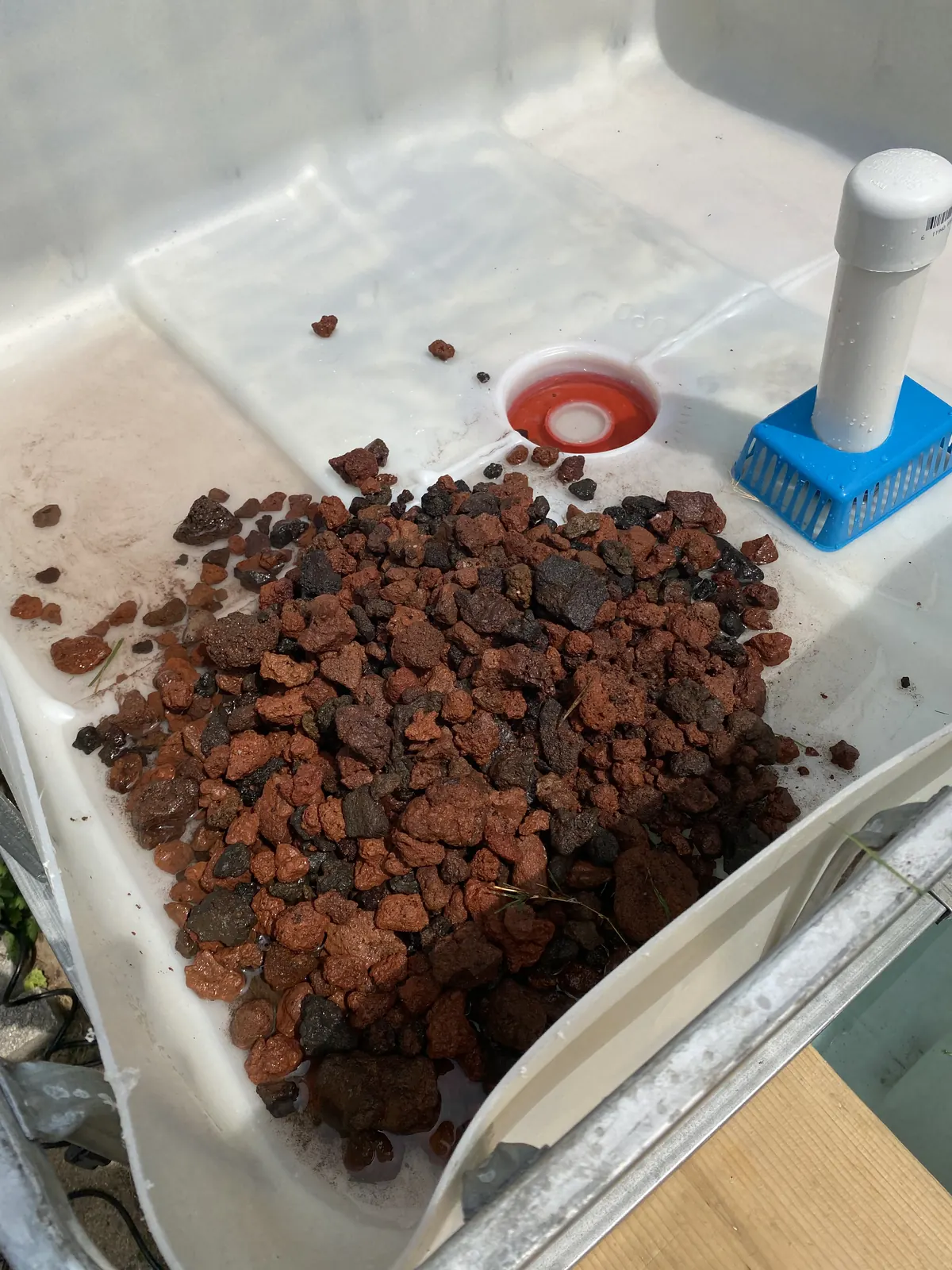
Use media guards and accessible drain areas.
Inspect them.
Oklahoma State specifically includes clearing root obstructions from bed drains as routine aquaponics maintenance and recommends oversized plumbing where practical to reduce clogging.
Test the blocked-drain scenario
During commissioning, simulate a restricted or failed normal drain in a controlled way where safe.
Watch where the water goes.
If the answer is “over the edge onto the power strip,” redesign it.
Test power-off drain-down
When the pump stops, water already above the sump can continue moving by gravity or siphon.
The sump or lowest vessel needs enough spare volume to contain expected drain-down.
Turn the system off intentionally during commissioning and watch the water levels.
Then restore power and confirm normal operation returns.
Standpipes can limit catastrophic loss
A properly designed standpipe can help keep a tank from draining below a defined level if downstream plumbing fails.
Oklahoma State’s troubleshooting guidance notes standpipes as one way to prevent a fish tank from losing all its water during leak problems.
The exact design depends on the system. The principle is to avoid one low plumbing failure emptying the entire fish tank.
My system lesson
My bell siphon could fail in both directions when inflow was wrong: too little flow and it would not establish properly; too much and it could refuse to break.
That is why flood prevention cannot be separated from flow control.
I used a valve to tune the grow-bed inflow and then left it alone once the cycle was reliable.
Design for boring failures
Ask: – What if this drain is half blocked? – What if this valve is fully open? – What if the pump stops? – What if the pump restarts? – What if a siphon keeps running? – What if a hose comes off? – What is the lowest level the fish tank can drain to?
A system that has sensible answers to those questions is much harder to surprise.
n