
Learn What Normal Looks Like Before Something Goes Wrong
The best fish-health tool in a backyard aquaponics system is a baseline.
How do the fish normally approach food? Where do they usually swim? How active are they at the current temperature? What does normal breathing look like?
If you know that, a change becomes obvious sooner.
Oklahoma State’s aquaponics maintenance guidance specifically includes monitoring fish behavior and appearance as a daily task. [1]
That is different from diagnosing fish disease.
I kept tilapia and watched them as part of running my IBC system. I did not become a fish pathologist in the process.
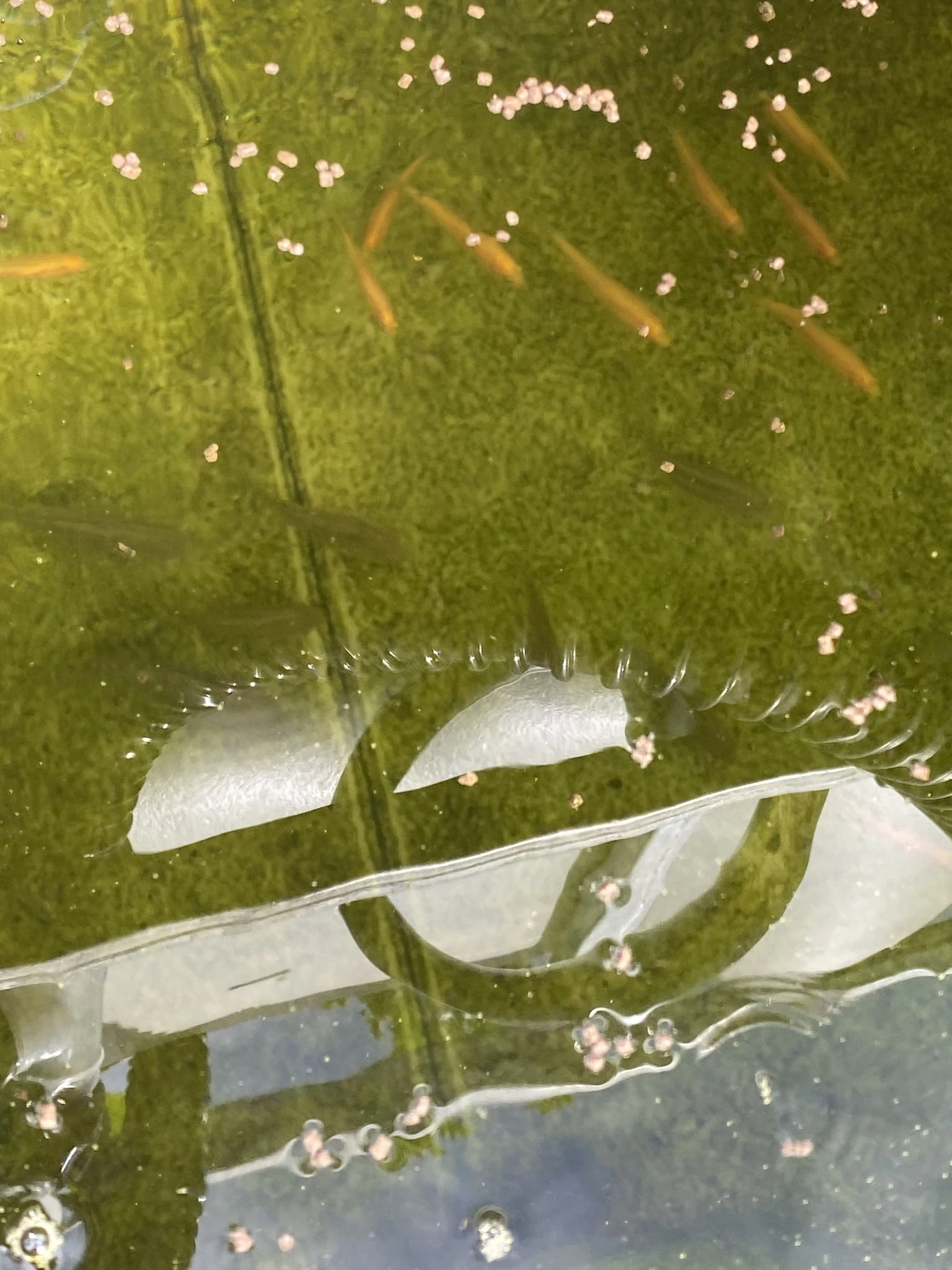
What Healthy Usually Looks Like
Exact behavior varies with species, age, temperature and time of day, but a healthy baseline generally means:
- fish are behaving normally for that species;
- they respond to feeding in their usual way;
- they maintain normal position and balance;
- breathing is not persistently labored;
- skin and fins are intact;
- body condition looks stable;
- the group is not suddenly clustering in an unusual location.
The word usual matters.
A fish doing something odd once is information. The whole tank changing behavior at once is much louder information.
Appetite Is One of the Easiest Changes to Notice
Feeding gives you a daily observation window.
If fish that normally eat aggressively suddenly ignore feed, do not just throw more food in.
Uneaten feed adds organic load while you are trying to determine what is wrong.
Loss of appetite is nonspecific. Temperature, oxygen, ammonia, nitrite, stress and disease can all affect feeding. Use it as a trigger to inspect the system, not as a diagnosis.
Rapid Breathing or Surface Gulping: Check the Environment First
When several fish are breathing rapidly, congregating near inflow/aeration or gulping at the surface, oxygen belongs high on the checklist.
So do temperature, ammonia and nitrite.
OSU notes that poor water quality can stress fish and that low dissolved oxygen is a common aquaponics problem. Its maintenance guidance recommends monitoring water quality and fish behavior routinely. [1]
Check:
1. Is the air pump running? 2. Are the air stones actually producing flow? 3. Is the water pump circulating? 4. Is the water unusually warm? 5. What is the dissolved oxygen, if you can measure it? 6. What are ammonia and nitrite doing? 7. Did stocking or feeding recently change?
Do not diagnose parasites because a fish came to the surface.
A411-057 nitrite/nitrate; A411-066 temperature.
Lethargy, Isolation and Strange Swimming Are Warning Signs, Not Diagnoses
Pay attention to:
- a fish isolating from the group;
- widespread lethargy;
- loss of equilibrium;
- persistent floating or sinking;
- spiraling or uncontrolled swimming;
- repeated darting;
- unusual head-up or head-down posture.
These can come from environmental stress, injury or disease.
The pattern matters.
Many fish affected at once makes a shared water/equipment problem especially important to investigate. One fish affected can point more toward an individual injury or disease process, though neither pattern proves a cause.
Look at Skin, Fins and Body Condition
Visible changes worth documenting include:
- damaged or eroded fins;
- missing scales;
- unusual redness or hemorrhage;
- sores or ulcers;
- excess mucus;
- unusual spots or attached organisms;
- swelling;
- progressive weight loss.
Photograph changes when practical. A series of dated images can be more useful than trying to remember whether a lesion looked smaller yesterday.
But a picture still may not identify the cause.
Flashing Does Not Name the Parasite
Fish rubbing or scratching against surfaces is often called flashing.
It can indicate irritation, including parasites, but visual behavior alone does not tell you which organism is involved—or whether a parasite is the cause at all.
Skin and gill problems can require microscopy or other diagnostic work.
That is where an observation guide should stop pretending to be a laboratory.
Water Quality Can Look Like Disease
This is one of the most important aquaponics distinctions.
Fish live in the same water as the biofilter and plant system. A circulation failure, low oxygen, ammonia/nitrite event, temperature problem or contamination can affect many fish quickly.
OSU’s aquaculture guidance emphasizes that recirculating systems have little margin for error and are vulnerable to power failure, clogged plumbing and water-quality problems. [2]
So when fish look wrong, check the shared environment early.
A Simple Fish-Health Check Sequence
When something changes:
1. Watch the fish before disturbing them. 2. Note whether one fish or many are affected. 3. Check aeration and water circulation. 4. Measure water temperature. 5. Test ammonia, nitrite and pH. 6. Measure dissolved oxygen if available. 7. Review recent feeding, stocking, handling, water changes or chemical exposure. 8. Inspect visible skin, fins and body condition. 9. Remove dead fish promptly. 10. Seek qualified diagnostic help if signs persist, spread, worsen or mortality occurs.
This sequence does not identify every disease.
It prevents the much more common mistake of guessing at disease while the pump is off.
Be Very Careful With Medication in Aquaponics
Aquaponics complicates treatment because the same water supports fish, nitrifying bacteria and edible plants.
Do not assume a familiar aquarium medication is appropriate for food fish or harmless to the biofilter and plants.
AQP should not publish casual medication recipes. Disease treatment depends on the fish species, diagnosis, intended food use, product labeling and applicable rules.
What I Actually Learned From Watching My Fish
The useful firsthand lesson is not that I learned to diagnose fish disease.
I learned that fish behavior is part of the instrument panel.
Feeding response, swimming behavior and where fish gather can tell you to stop and check the system.
Then you use water tests and actual evidence instead of inventing a diagnosis.
Firsthand / Research Boundary
Brian’s firsthand experience supports routine observation of his tilapia and recognizing behavioral changes as system clues. It does not establish expertise in parasites, infectious disease or fish-drug treatment. Those sections are research-led.
When fish behavior changes, start with water testing, aeration, fish stress troubleshooting, and system troubleshooting. Check ammonia, nitrite and nitrate, water temperature, and dissolved oxygen.
n