
Aquaponics solids filtration removes fish waste, uneaten feed, root fragments, and other suspended material before it settles in grow beds, coats plant roots, or breaks down in the wrong part of the system.
A lightly stocked media-bed system can process some solids naturally. A larger pond, stock tank, converted IBC system, raft bed, or heavily stocked greenhouse system usually benefits from dedicated mechanical filtration. The goal is not perfectly polished aquarium water. The goal is to remove concentrated waste before it creates oxygen demand, clogged plumbing, foul odors, and constant maintenance.
Affiliate disclosure: This page contains affiliate links. As an Amazon Associate I earn from qualifying purchases.
Quick answer: A swirl filter is simple and inexpensive. A radial flow settler usually separates solids more efficiently in the same footprint. Screens, brushes, sponges, and filter pads can catch finer particles, but they require more frequent cleaning.
Why Solids Filtration Matters
From my system: Field note: my IBC media bed ran roughly 16–18 months without a separate solids filter. At teardown the bottom inch of the bed was muddy/sludgy, but the upper media was still functioning and the bed was not catastrophically clogged. That is an observation from one lightly engineered media-bed system, not a universal rule.
Fish waste contains nutrients, but that does not mean every piece of waste belongs in the grow bed. Large solids can settle in plumbing, accumulate under media, coat raft-bed roots, and create areas with low oxygen.
When trapped organic material breaks down, bacteria consume oxygen. If too much waste collects in one place, the area can become anaerobic and begin producing sour or rotten odors. Water may remain cloudy, grow beds may drain slowly, and plant roots may become coated with dark material.
Effective solids filtration helps:
- Keep water clearer
- Reduce sludge buildup in grow beds
- Protect pumps and narrow plumbing
- Improve water flow around plant roots
- Reduce oxygen demand from decomposing waste
- Make maintenance more predictable
- Capture nutrient-rich material for separate mineralization or composting
Solids filtration works with biological filtration rather than replacing it. Mechanical filters remove particles. Biological filters support the bacteria that convert dissolved ammonia. Both jobs matter.
What Counts as Aquaponics Solids?
Most systems contain several types of solid material:
- Fish feces
- Uneaten fish feed
- Dead algae
- Plant roots and leaves
- Biofilm that breaks loose from pipes
- Insects and organic debris
- Fine mineral particles
- Dust introduced with new grow media
Heavy particles settle quickly. Smaller particles remain suspended and may pass through a basic settling filter. This is why one filter does not always remove everything.
Mechanical Filtration vs Biological Filtration
| Filter Type | Main Job | What It Handles |
|---|---|---|
| Mechanical filtration | Separates or traps solid particles | Fish waste, uneaten feed, root fragments, suspended debris |
| Biological filtration | Provides oxygenated surface area for bacteria | Dissolved ammonia and nitrite |
| Grow bed media | Supports plants, bacteria, and some solids capture | Mixed biological treatment and limited solids processing |
A filter full of brushes or sponges may catch solids but provide poor biological performance if water flow and oxygen are inadequate. A barrel full of bio-media may support bacteria but allow heavy waste to pass through untouched. Match the equipment to the job.
Swirl Filters
A swirl filter is one of the simplest aquaponics solids filters. Water enters near the side of a barrel or tank and moves in a circular pattern. Heavier particles lose speed and settle near the bottom while cleaner water exits higher in the container.
The filter normally includes:
- A barrel or round container
- A side inlet that encourages circular flow
- An outlet positioned above the settling zone
- A bottom drain or valve for removing sludge
- Unions or removable fittings for maintenance
Advantages of a Swirl Filter
- Simple construction
- Low cost
- No moving parts inside the filter
- Easy sludge removal
- Useful for heavy settleable solids
Limitations of a Swirl Filter
- Does not remove every fine particle
- Performance drops when flow is too fast
- Incoming water can disturb settled waste
- Small barrels may provide insufficient settling time
- Poorly placed outlets can pull solids back into circulation
A swirl filter works best when water enters smoothly. Turning the barrel into a miniature washing machine keeps waste suspended and defeats the point.
Radial Flow Settlers
A radial flow settler directs incoming water toward the center and downward. The water then slows, changes direction, and rises toward an outer outlet. Heavier solids continue downward and collect at the bottom.
This controlled change in direction usually separates solids more effectively than a basic swirl pattern. Radial flow settlers are common in larger backyard and small aquaculture systems because they provide good performance without screens that must be cleaned every day.
| Feature | Swirl Filter | Radial Flow Settler |
|---|---|---|
| Construction | Very simple | Slightly more complex |
| Heavy solids removal | Good | Usually better |
| Internal flow control | Circular movement | Downward and outward movement |
| Cleaning | Drain settled sludge | Drain settled sludge |
| Best fit | Small or budget systems | IBC, stock-tank, raft, and heavier fish-load systems |
For a system with growing tilapia, catfish, or another heavily fed fish population, a radial flow settler is often worth the additional plumbing.
Screens, Brushes, Sponges, and Filter Pads
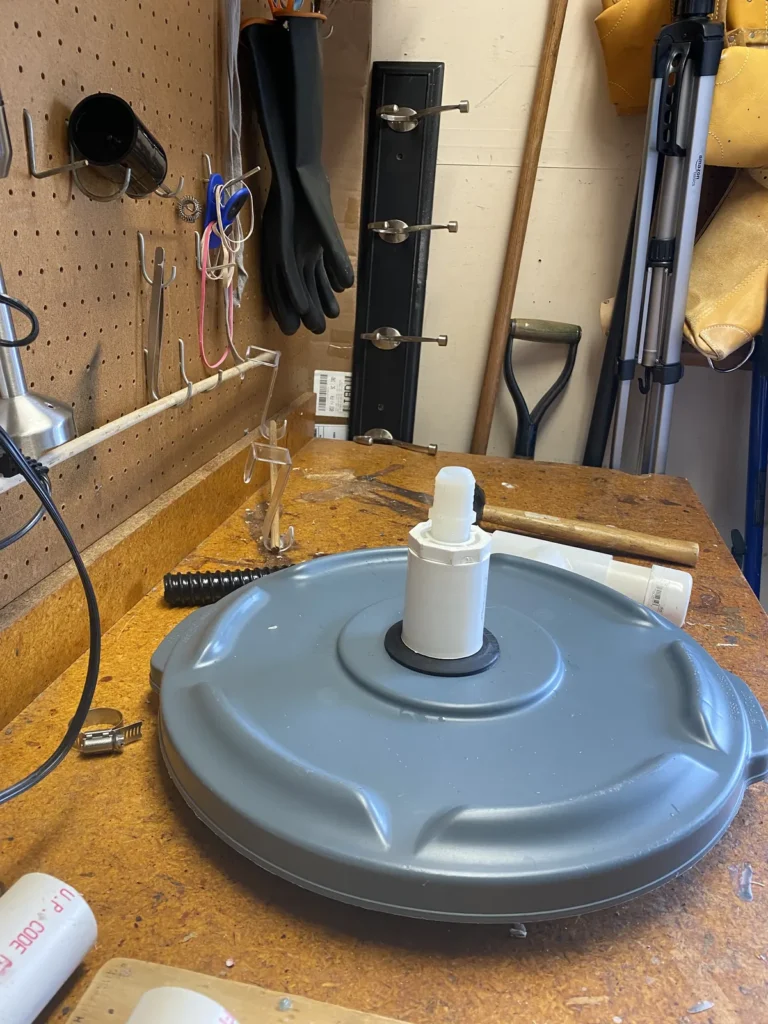
Settling filters remove heavier solids. Fine particles may require filter brushes, mesh screens, filter socks, sponge material, or filter pads.
These materials can improve water clarity, but they create a maintenance commitment. As particles collect, water flow drops and trapped waste begins decomposing. A clogged sponge is not a filter upgrade. It is a small swamp with plumbing attached.
- Filter brushes: Good for capturing medium particles and easy to rinse.
- Coarse sponge: Useful for polishing water but clogs faster.
- Mesh screens: Effective when accessible and cleaned frequently.
- Filter socks: Capture fine particles but may require frequent replacement or washing.
- Matting or filter pads: Useful in staged filters with coarse material first and fine material last.
View pond filter brushes and mechanical filter media on Amazon.
Where the Solids Filter Should Go
Place the primary solids filter after the fish-holding water and before components that are sensitive to waste buildup. In many systems, the preferred flow is:
- Pond, stock tank, or converted IBC fish container
- Solids settler or mechanical filter
- Biological filter when required
- Grow beds, raft beds, or nutrient-film channels
- Sump or pump return
Actual layouts vary. Some systems pump dirty water into the filter, while others use gravity flow from the fish container. Gravity-fed filtration is often easier on solids because a pump can break larger waste into smaller particles before filtration.
Pipe diameter, elevation, and pump placement affect the entire design. Review how to size a pump for an aquaponics system before adding a filter that creates more head pressure than the pump can handle.
How Large Should the Filter Be?
A settling filter needs enough volume for water to slow down. If the barrel is too small or flow is too high, solids pass through without settling.
Filter size depends on:
- Total water flow
- Fish biomass
- Daily feeding rate
- Container shape
- Inlet and outlet placement
- Particle size
- Cleaning frequency
For small backyard systems, 30- to 55-gallon barrels are commonly used as swirl or radial flow filters. A barrel is not automatically large enough just because it holds 55 gallons. Water must enter and leave in a way that creates a calm settling zone.
Practical rule: If visible solids leave the filter in large amounts, either the flow is too fast, the filter is too small, the internal flow pattern is poor, or the filter needs to be drained.
Cleaning and Sludge Removal
Settled waste should be removed before the filter fills and begins sending solids back into the system. The correct interval depends on fish load and feeding.
| What to Check | Warning Sign | Likely Action |
|---|---|---|
| Bottom sludge | Waste reaches the outlet zone | Drain the filter more often |
| Water flow | Flow slows or backs up | Clean screens, brushes, or outlet plumbing |
| Odor | Rotten or sewage-like smell | Remove waste and improve cleaning frequency |
| Outlet water | Large particles continue downstream | Reduce flow or improve separation |
| Valves | Drain clogs with settled solids | Flush the valve and use a larger drain if needed |
In a well-designed filter, sludge removal should take minutes. Open the bottom drain, collect concentrated waste, close the valve, and verify normal water level and flow.
What to Do With Collected Fish Waste
Collected sludge still contains nutrients. It can be:
- Added to a compost pile
- Used around non-sensitive soil plants after appropriate dilution
- Processed in a separate mineralization tank
- Disposed of away from wells, waterways, and drainage systems
Do not pour concentrated sludge directly over delicate plants without testing. Waste strength varies with fish species, feeding, water volume, and how long it sat in the filter.
Can Grow Beds Handle All the Solids?
Media beds can capture and process some solids, especially in lightly stocked systems with good flow and active worms or microorganisms. That does not mean they have unlimited capacity.
Too much solids loading can cause:
- Slow drainage
- Standing water at the media surface
- Foul odors
- Black anaerobic zones
- Root disease
- Blocked bell siphons
- Uneven water distribution
- Frequent bed cleaning
The aquaponics grow bed media guide explains how media size, depth, and flow affect solids accumulation.
Common Solids Filtration Mistakes
A filter cannot compensate for every upstream mistake. Use the common aquaponics beginner mistakes guide as a broader diagnostic checklist.
Running Water Through the Filter Too Fast
Settling requires calm water and time. Excessive flow keeps waste suspended and carries it out of the filter.
Using Fine Filter Media First
Fine sponge or fabric clogs quickly when heavy solids have not been removed first. Use staged filtration, with settling or coarse material before finer media.
Making the Filter Hard to Clean
A filter buried behind grow beds, lacking a bottom drain, or requiring disassembly for every cleaning will not be maintained as often as it should.
Letting the Filter Become Anaerobic
Waste that sits too long consumes oxygen and develops odor. Drain concentrated solids before the lower part of the filter becomes a dead zone.
Confusing Clear Water With Safe Water
Mechanical filtration can make water look clean while ammonia or nitrite remains dangerous. Continue routine aquaponics water testing.
Frequently Asked Questions
Does every aquaponics system need a solids filter?
Every system needs a way to manage solids, but not every system needs a separate barrel filter. Lightly stocked media beds may process some waste. Raft beds, nutrient-film channels, and heavily stocked systems usually need dedicated solids removal.
Is a swirl filter or radial flow filter better?
A swirl filter is easier to build. A radial flow filter usually separates heavy solids more efficiently because it controls the water path more carefully.
How often should an aquaponics solids filter be cleaned?
Clean it before settled waste reaches the outlet or develops strong odor. Heavily stocked systems may need sludge removal every few days. Light systems may go longer.
Can I use a sponge as the only filter?
A sponge can catch particles in a small system, but it clogs quickly and needs frequent cleaning. Larger systems benefit from settling heavy solids before water reaches sponge or mesh media.
Should solids be removed before the grow beds?
Usually, yes, especially in raft, channel, and heavily stocked systems. Media beds can handle some organic material, but excessive buildup reduces water flow and oxygen.
Does a solids filter remove ammonia?
No. A solids filter removes particles. Dissolved ammonia is handled by nitrifying bacteria in the biological filter and grow media.
Final Takeaway
Aquaponics solids filtration keeps concentrated fish waste from becoming a permanent resident in grow beds, pipes, and plant roots. Use a swirl filter for a simple budget setup, a radial flow settler for stronger separation, and screens or brushes only where you can clean them easily.
The best filter is not the one with the most chambers. It is the one that slows water, collects waste, drains easily, and actually gets maintained.
For related equipment, plumbing, pumps, filtration, and system-support components, see the Aquaponics Equipment Guide.