
Start With the Fitting, Not the Drill
The expensive mistake is not drilling slowly.
It is drilling the wrong hole.
A pipe’s nominal size is not automatically the hole-saw size for the bulkhead or Uniseal that will carry it. Buy or identify the actual fitting first, then use that manufacturer’s required opening.
That sounds obvious right up until there is a beautifully drilled hole in the side of a tank that the fitting cannot seal.
Lay Out the Whole Connection Before You Cut
Before touching the drill, check both sides of the wall.
Ask:
- Does the fitting have room to seat?
- Can the nut or flange be reached?
- Is there a cage bar, rib or stand in the way?
- Where does the pipe go next?
- Will the pipe put sideways force on the fitting?
- Can I reach this connection later if it leaks?
On an IBC, the cage and molded tank geometry make this more important than measuring a point on a flat sheet of plastic.
Measure From Something That Does Not Move
Flexible tank walls move when you push on them.
Measure from fixed references, mark the center, then check the position from the inside before committing.
If practical, hold the fitting in position and mentally build the next several inches of plumbing.
A hole can be perfectly round and still be perfectly wrong.
Use the Correct Cutting Tool
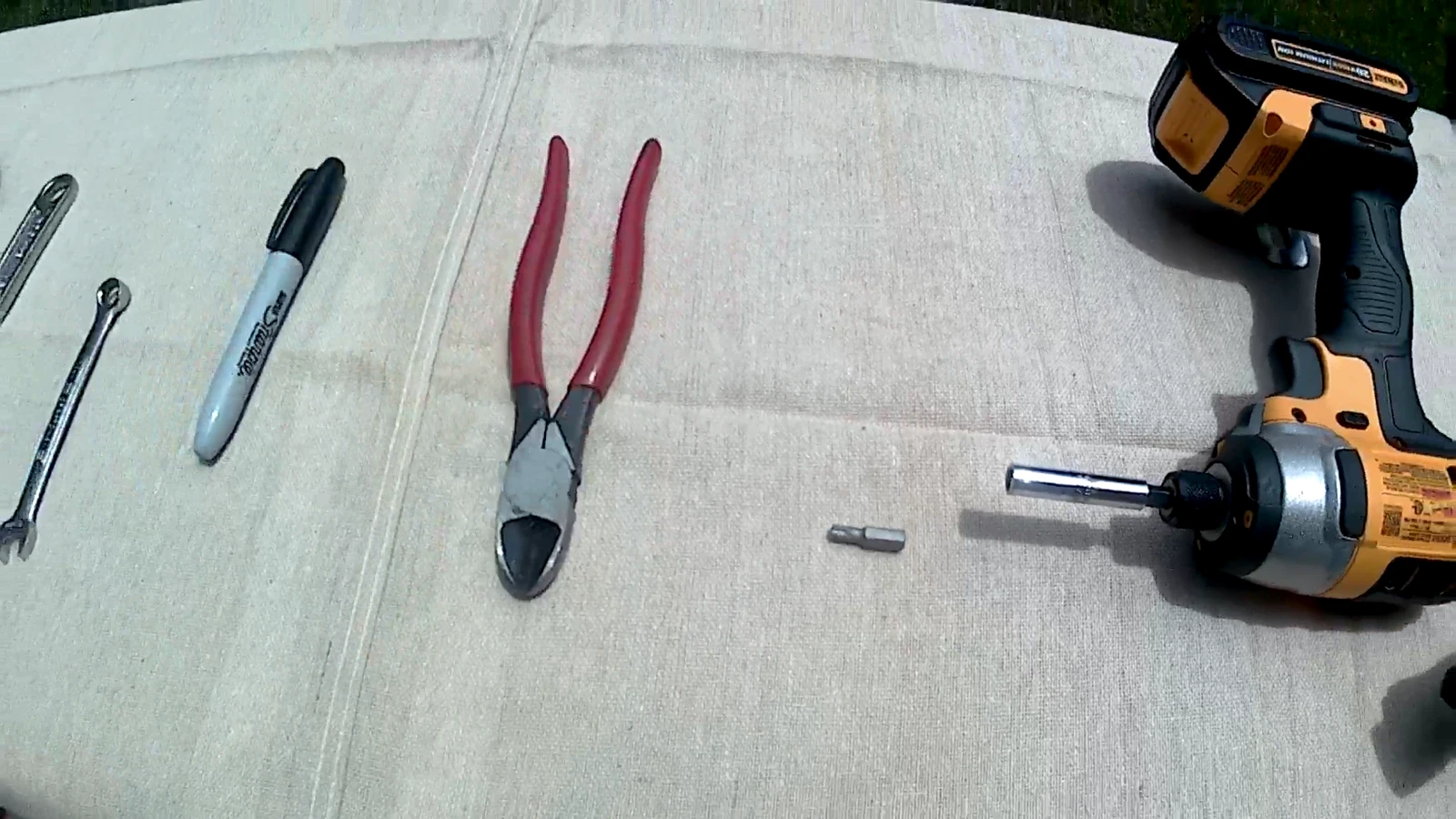
For larger circular tank penetrations, a hole saw is the usual tool. Smaller controlled openings may suit a step bit, depending on the fitting and material.
Whatever you use:
- support the wall where practical;
- keep the drill square to the local surface;
- use eye protection;
- control loose clothing and hair;
- keep hands clear of the cutter;
- expect the drill to react if the cutter grabs.
Thin plastic can flex and chatter. The job is controlled cutting, not forcing the tool through as quickly as possible.
Let the Cutter Cut
Too much pressure can distort the wall. Excessive heat can smear or melt plastic instead of leaving a clean edge.
Keep the tool under control and let the teeth do the work.
When the pilot breaks through and the hole saw begins engaging the wall, be prepared for torque. A large hole saw can remind you very quickly that the drill has a motor.
Deburr Without “Fixing” the Diameter
After the cut, remove loose plastic, feathered edges and burrs.
Do not keep sanding because the fitting looks tight unless the manufacturer’s installation procedure calls for it.
A correctly sized hole that is aggressively enlarged can become a leak you manufactured yourself.
Uniseal installation guidance calls for a clean opening with burrs removed. The pipe end also needs appropriate preparation so it does not damage the seal during insertion.
Curved Tanks Are Less Forgiving
A hole saw enters a curved barrel or round tank at changing angles. If the tool wanders, the opening can become oval.
Rigid bulkhead flanges also need a surface they can seal against.
Before drilling a curved wall, confirm that the chosen fitting is suitable for the wall geometry and thickness.
My Rule After Building an IBC System: Every Hole Has to Earn Its Keep
I drilled and cut plenty of material building my system.
I also learned that an unnecessary tank penetration is an unnecessary leak path.
If the job can be done without another hole through a water container, I now consider that a feature.
That is not fear of drilling. It is respect for what happens after you fill the thing.
Install, Support, Then Wet-Test
Once the fitting is installed:
1. assemble it according to its instructions; 2. support the connected pipe so it does not lever against the tank wall; 3. fill and wet-test before fish; 4. inspect the connection at real operating water level and flow; 5. leave it accessible until you know it is dry.
Bottom Line
The fitting determines the hole.
Have the fitting in hand, confirm the required hole size, check both sides of the wall, cut under control, deburr without enlarging, support the plumbing and wet-test it.
The five extra minutes before drilling are cheaper than replacing a tank.
Continue with the plumbing guide, DIY tool guide, bulkhead fittings versus Uniseals, aquaponics-safe sealants, leak troubleshooting, PVC and threaded connections, wet testing, and building a media grow bed.
nn