
An outdoor aquaponics tank is a water source, a warm hiding place and, depending on what is growing around it, a pretty interesting destination for everything else in the yard.
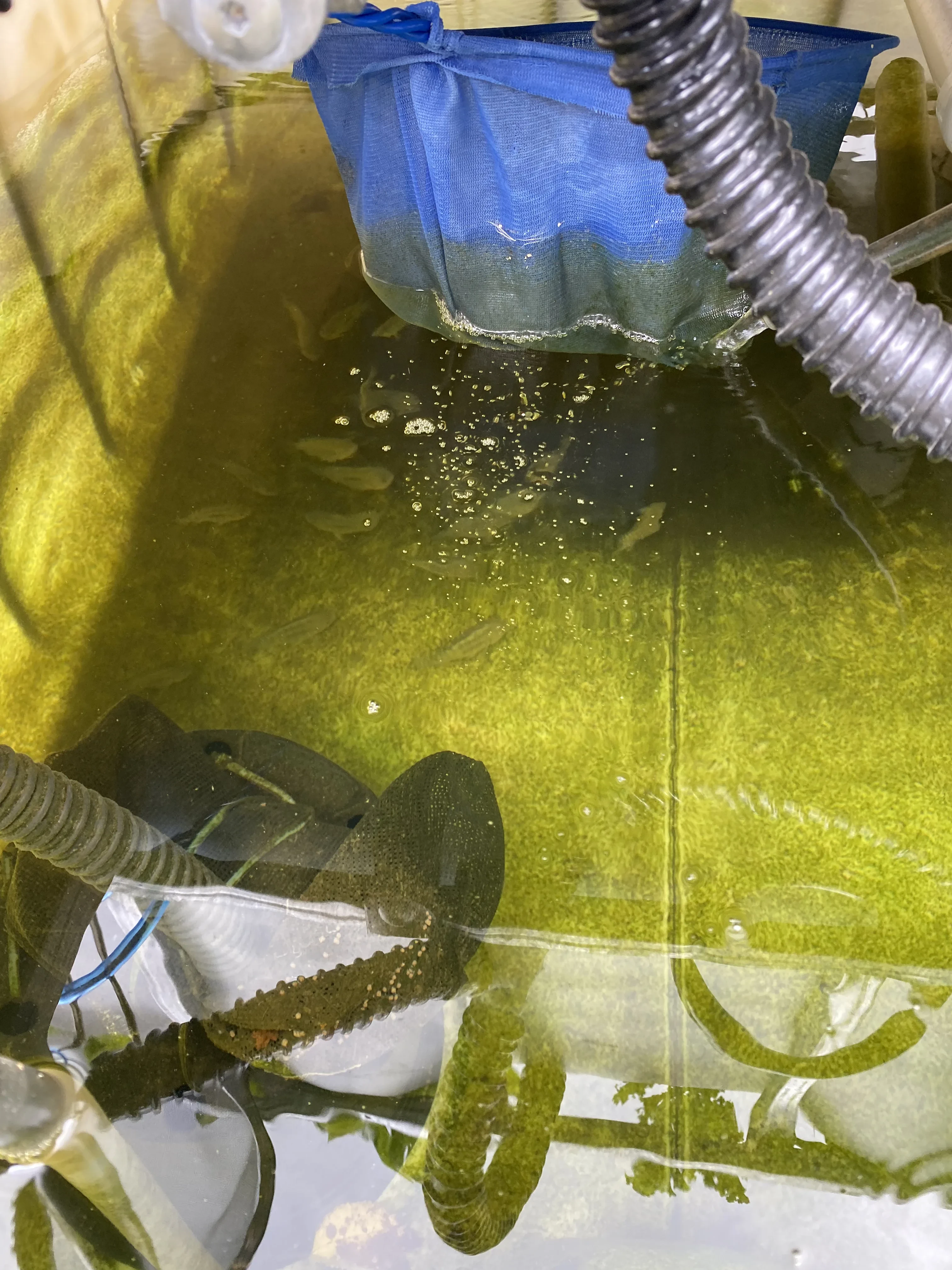
My IBC system dealt with flies and mosquitoes, occasional caterpillar trouble, squirrel pressure and concerns about birds getting into places I did not want them.
That does not make me a wildlife-control expert.
It does make one lesson obvious: physical exclusion and basic sanitation are easier than trying to solve contamination after it reaches the water.
Cover what you reasonably can
A fish tank does not need to be hermetically sealed.
It does need protection from easy entry by leaves, animals and debris while preserving:
- aeration and gas exchange;
- feeding access;
- inspection access;
- plumbing clearance;
- safe electrical routing;
- maintenance access.
A fitted lid, netting or rigid cover can work depending on the tank and fish.
Do not create a cover that can collapse into the tank or trap a person or animal.
Close the stupid gaps
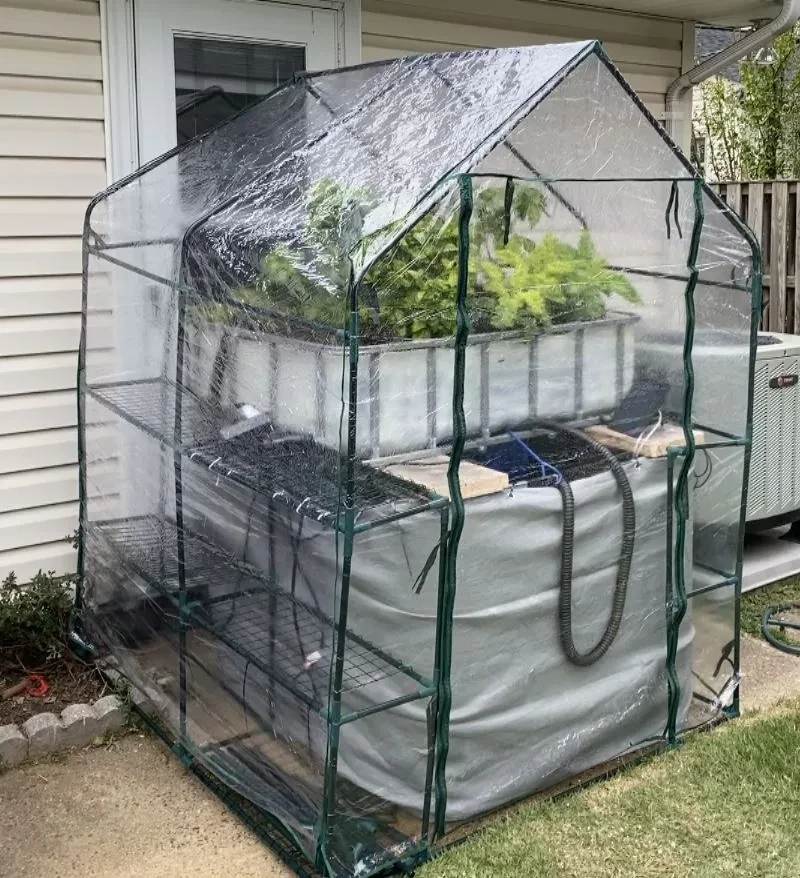
Plumbing and cords create openings.
If a tank is mostly covered but has a large gap around a pipe, that gap becomes the entrance.
Use appropriate screens or fitted pieces around openings where practical, but do not restrict ventilation or pinch hoses and electrical cords.
Inspect covers periodically. UV exposure, weather and animals can damage materials that looked fine when installed.
My small greenhouse enclosure helped with weather protection but eventually suffered zipper and plastic failures and was badly damaged in a blizzard. It is a useful firsthand example of why “covered” does not mean “maintenance-free.”
Do not create mosquito habitat around the system
Mosquitoes need standing water for their aquatic life stages.
The fish tank itself may have circulation and fish predation, but buckets, trays, clogged drains, folds in covers and puddles around the system can create separate stagnant water.
Dump or correct unnecessary standing water.
Keep gutters, drains and collection areas flowing.
Do not assume that because the main tank moves water, every wet corner around the system does too.
Keep feed contained
Spilled fish feed attracts pests and becomes organic waste.
Store feed in a sealed container appropriate for the environment. Clean up spills. Do not leave open bags where rodents, insects or moisture can reach them.
Inside the tank, remove significant uneaten feed rather than letting it decay.
That protects water quality as well as sanitation.
Remove dead material
Dead fish, decaying leaves and accumulated organic debris should not sit in the system.
Oklahoma State’s maintenance guidance includes clearing dead fish and plant material, removing solids and watching fish behavior as routine tasks.
A dead organism is both a water-quality problem and a clue.
Remove it, then determine whether the event was isolated or part of a larger system problem.
Birds and mammals: exclude rather than poison
Around an aquaponics system, chemical pest control deserves extra caution.
Water, edible crops, fish, pets, children and wildlife may all be nearby.
Physical barriers, secure feed storage and eliminating attractants are safer first-line approaches than scattering poison around a food-production system.
If a wildlife problem requires control beyond exclusion, use local authoritative guidance appropriate to the species and location.
Insects on plants are a different problem
Aphids, caterpillars and other crop pests belong to plant-pest management.
Do not solve a leaf problem by casually spraying something that can wash into the fish tank.
Aquaponics connects the plant and fish sides of the system. A product acceptable in an ordinary garden is not automatically acceptable over recirculating fish water.
Route crop-pest treatment decisions to the dedicated AQP pest-management guidance.
After suspected contamination
If droppings, a dead animal, spilled chemical or other suspect material enters the tank:
- remove the material if it can be done safely;
- stop adding feed until the situation is understood if fish are
stressed;
- inspect fish behavior;
- test relevant water-quality parameters;
- restore or increase aeration if fish show stress;
- identify what entered the water before choosing a treatment;
- use qualified local help for chemical, disease or significant
wildlife contamination.
Do not dump a random disinfectant into an operating aquaponics system.
The boring solution is usually the good one
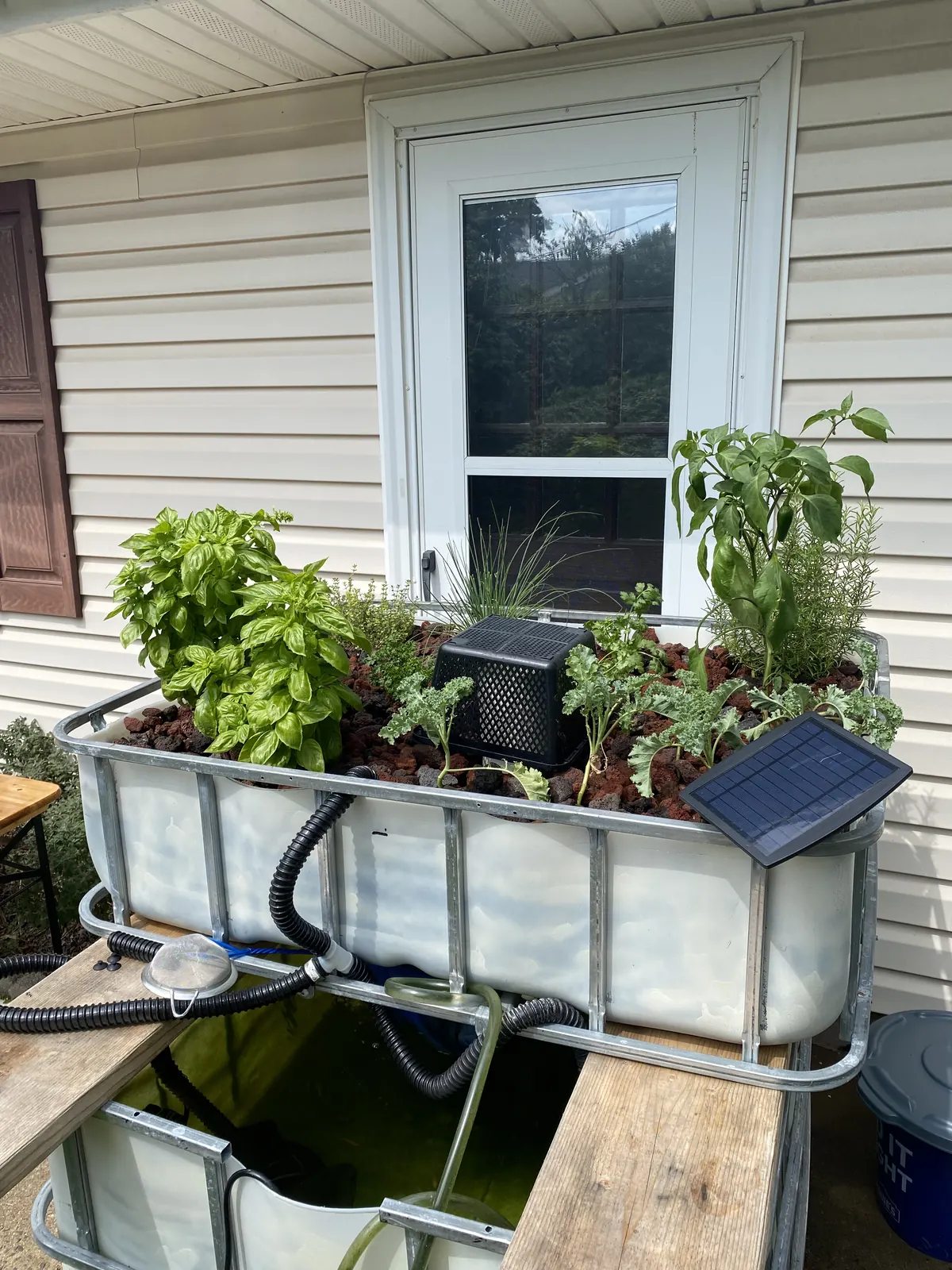
Covers. Screens. Clean feed storage. No stagnant buckets. Regular inspection. Removing dead material.
None of that is glamorous.
Neither is fishing a drowned squirrel out of a tank.
Build exclusion into the system and make inspection easy enough that you actually do it.
Research Sources
- Oklahoma State University, Nitrification and Maintenance in Media
Bed Aquaponics: https://extension.okstate.edu/fact-sheets/nitrification-and-maintenance-in-media-bed-aquaponics
- Oklahoma State University, Aquaponics:
https://extension.okstate.edu/fact-sheets/aquaponics
- University of Florida IFAS, Eastern Mosquitofish for Control of
Mosquito Larvae: https://edis.ifas.ufl.edu/publication/FA202/