
Growing herbs and peppers in aquaponics works well when the system is mature, the water remains stable, and the plants receive enough light. Herbs such as basil, mint, parsley, and chives are relatively forgiving. Bell peppers and hot peppers require more time, root space, light, warmth, and nutrient support before they produce well.
The main difference is demand. Herbs can produce useful harvests from a modest fish load. Fruiting peppers ask more from the system and expose weaknesses in lighting, temperature, potassium, calcium, iron, pollination, and water stability.
Aquaponics can grow both successfully, but peppers should be treated as a heavier crop rather than a larger version of basil.
Practical answer: Start with basil, parsley, chives, mint, or oregano while the system matures. Add peppers after ammonia and nitrite remain near zero, nitrate is available, the grow bed has enough root space, and the system can provide strong light and stable warmth.
Why Herbs Work So Well in Aquaponics
From my system: Field note: regular basil was so productive that I trimmed it every weekend and pinched flowers constantly. Jalapeños and habaneros produced multiple waves. Those were the plants that made the system feel productive even though the fish never justified the system economically.
Many culinary herbs grow quickly, tolerate regular harvesting, and perform well with the nitrogen-rich nutrient profile common in aquaponics. They also produce useful food without waiting months for flowers and fruit.
Herbs are a strong choice for beginners because they:
- Grow quickly
- Need less structural support than fruiting plants
- Respond well to frequent harvesting
- Fit in media beds, raft beds, towers, and some channel systems
- Use nitrate efficiently
- Show visible growth problems before complete crop failure
- Allow several varieties in a small growing area
That does not mean every herb wants the same conditions. Basil likes warmth. Cilantro prefers cooler conditions and bolts in heat. Mint grows aggressively enough to turn one planting pocket into a hostile takeover.
Why Peppers Are More Demanding
Bell peppers, jalapeños, cayenne peppers, banana peppers, and other fruiting varieties need time to establish roots, form branches, flower, pollinate, and develop fruit.
They generally require:
- Stronger light than leafy herbs
- Warm, stable temperatures
- More root space
- Longer growing time
- Reliable potassium, calcium, magnesium, and iron availability
- Good airflow and pollination
- Support for fruit-loaded branches
- Consistent water conditions without root-zone stagnation
A pepper plant may stay alive in weak conditions without producing much. Survival is not the same as a productive crop. If a pepper grows leaves for months but drops flowers or sets tiny fruit, the problem is usually light, temperature, pollination, plant maturity, or nutrient balance rather than a lack of optimism.
Best Herbs for Aquaponics
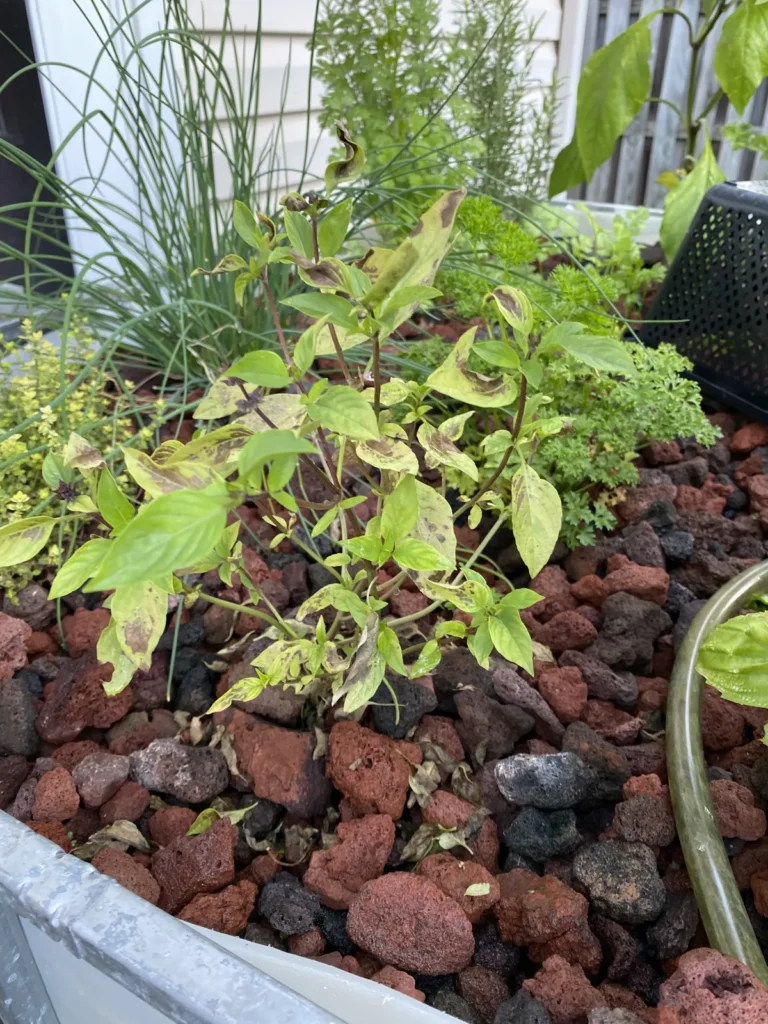
| Herb | Difficulty | Preferred Conditions | Main Concern |
|---|---|---|---|
| Basil | Easy | Warm water, strong light, regular harvesting | Cold damage and flowering |
| Mint | Easy | Moderate light, moist roots, broad temperature tolerance | Aggressive root growth |
| Parsley | Moderate | Cool to moderate temperatures, steady moisture | Slow germination |
| Chives | Easy | Moderate light and stable moisture | Overcrowding |
| Oregano | Moderate | Strong light and good airflow | Overly wet crowns |
| Thyme | Moderate | Strong light and well-aerated roots | Root and crown rot |
| Cilantro | Moderate | Cooler conditions | Bolting in heat |
| Dill | Moderate | Good light and root space | Height and early flowering |
Basil
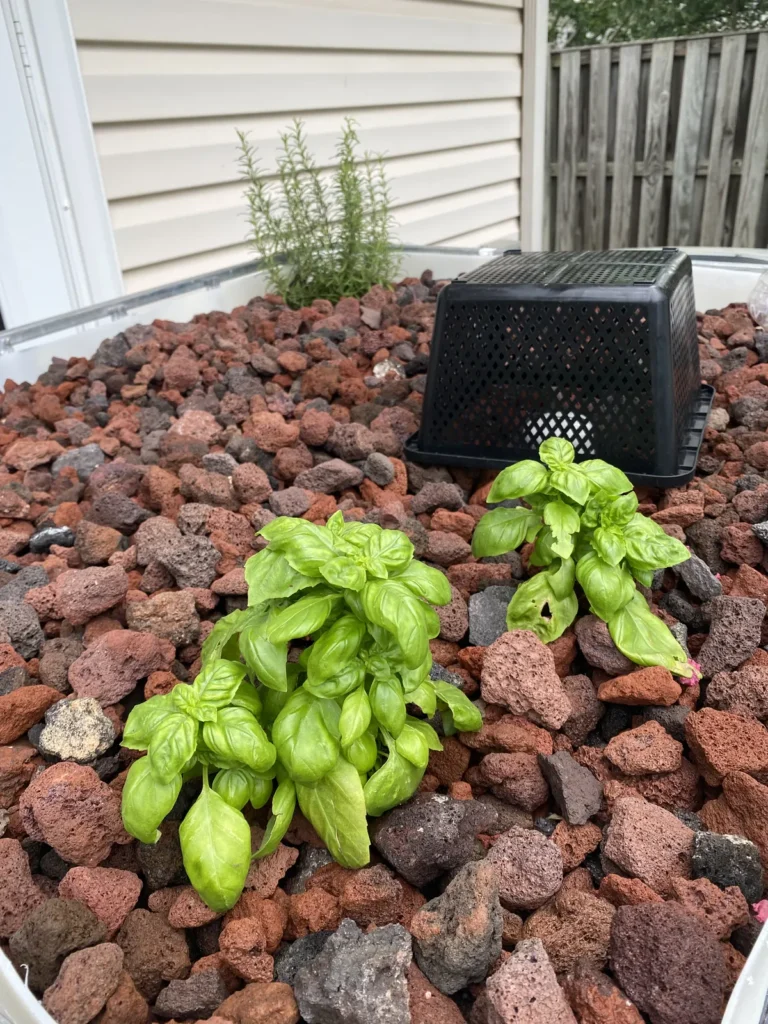
Basil is one of the strongest aquaponics crops. It grows quickly, responds well to nitrate-rich water, and becomes bushier when harvested correctly.
Pinch or cut stems just above a pair of healthy leaves. That encourages two new branches to form below the cut. Regular harvesting delays flowering and produces a fuller plant.
Once basil flowers heavily, leaf production and flavor may decline. Remove flower spikes early unless seed production or pollinator support is the goal.
Mint
Mint grows aggressively in aquaponics and tolerates repeated cutting. It is productive, resilient, and difficult to discourage.
The problem is root control. Mint can spread through media beds, wrap around drains, enter standpipe guards, and compete with neighboring crops. Plant it in a removable basket or isolated section when possible.
Mint is less of a plant and more of a long-term property dispute.
Parsley, Cilantro, and Chives
Parsley performs well but germinates slowly. Starting it separately in plugs or seedling trays can improve establishment.
Cilantro prefers cooler conditions and may bolt quickly in a warm greenhouse. Plant several small batches over time rather than expecting one planting to produce indefinitely.
Chives are compact, easy to divide, and productive under moderate light. Harvest by cutting leaves above the base rather than removing the entire plant.
Best Pepper Types for Aquaponics
Compact and medium-size pepper varieties are easier to support than giant plants bred for long outdoor seasons. The best choice depends on growing space, light intensity, and whether the system is indoors, outdoors, or inside a greenhouse.
| Pepper Type | Growth Habit | Production Time | Aquaponics Notes |
|---|---|---|---|
| Bell peppers | Medium to large | Long | Need strong light, warmth, support, and good nutrient balance |
| Jalapeños | Compact to medium | Moderate | Often more forgiving than large bell peppers |
| Cayenne peppers | Medium and upright | Moderate | Productive with strong light and regular harvesting |
| Banana peppers | Medium | Moderate | Good greenhouse option with steady warmth |
| Thai peppers | Compact | Moderate | Useful where grow-bed space is limited |
| Habaneros | Medium and bushy | Long | Need warmth and patience |
Water Conditions for Herbs and Peppers
Healthy plants depend on the same stable water conditions that protect fish and nitrifying bacteria. Ammonia and nitrite should remain near zero in a mature system. Nitrate should be available without rising uncontrollably.
Monitor:
- pH
- Ammonia
- Nitrite
- Nitrate
- Water temperature
- Fish feeding and waste production
- Root appearance
- Plant growth and leaf color
Use aquaponics water testing basics to establish a routine and understand what each reading means.
The pH Compromise
Aquaponics pH must support fish, bacteria, and plants at the same time. Fruiting plants often show micronutrient problems when pH remains too high because iron and other nutrients become less available.
A pH in the upper sixes to low sevens is workable for many mixed systems, although the correct range depends on fish species, source water, alkalinity, and crop selection.
Do not force pH downward quickly. Rapid changes can stress fish and bacteria. Confirm the reading, understand the source-water chemistry, and make controlled adjustments.
Lighting Requirements
Light is one of the biggest differences between herbs and peppers.
Many herbs produce acceptably under moderate light. Peppers need stronger light and a longer daily light period to flower and fruit well. A pepper plant receiving inadequate light may become tall, thin, leafy, and unproductive.
Signs of Insufficient Light
- Long weak stems
- Wide spacing between leaves
- Pale growth
- Plants leaning toward windows
- Slow flowering
- Flower drop
- Small fruit
- Low overall production
Greenhouse plastic, condensation, dirt, framing, shade cloth, nearby buildings, and winter sun angle all reduce usable light. A greenhouse that looks bright to people may still be weak for fruiting peppers.
Affiliate disclosure: This page contains affiliate links. As an Amazon Associate I earn from qualifying purchases.
View full-spectrum LED grow lights for peppers and herbs on Amazon.
Temperature and Seasonal Growth
Warm-season herbs and peppers perform best when water and air temperatures remain reasonably stable. Basil and peppers slow down in cold conditions. Cilantro and parsley often prefer cooler temperatures.
Peppers are especially sensitive to cold nights, large day-to-night swings, and extreme heat during flowering. Plants may remain alive while flowers fail to set fruit.
Greenhouse temperature should be measured near the plant canopy, while water temperature should be measured directly in the system. Do not assume one represents the other.
For cold-weather system planning, see how to heat aquaponics water in winter.
Grow Media and Root Support
Media beds work well for herbs and peppers because they support roots, provide biological surface area, and allow larger plants to anchor themselves.
Suitable media includes:
- Expanded clay
- Natural untreated lava rock
- Tested inert gravel
The media should be clean, stable in water, appropriately sized, and free from dyes, coatings, oils, salts, and unknown contaminants.
Read aquaponics grow bed media basics before filling a large bed.
Root Space
Small herbs can grow close together when airflow remains adequate. Peppers need more room for roots and canopy growth.
Crowded pepper plants compete for light, trap humidity, restrict airflow, and become harder to inspect for pests. Dense roots may also interfere with drains and bell siphons.
Allow enough spacing to reach the base of each plant, remove dead leaves, prune branches, inspect stems, and harvest fruit without damaging neighboring crops.
Flood-and-Drain Cycles
Bell siphons are commonly used in media beds to create automatic flood-and-drain cycles. The bed fills with nutrient-rich water and then drains, drawing fresh air into the root zone.
This cycling supports roots and beneficial bacteria when the flow remains consistent and the media surface stays dry.
A poor cycle can create:
- Constantly flooded roots
- Dry sections of media
- Standing water at the surface
- Algae and fungus gnats
- Uneven nutrient delivery
- Stagnant areas
- Root blockage around the standpipe
See how a bell siphon works in aquaponics systems for troubleshooting flood-and-drain operation.
Nutrients Beyond Nitrate
Fish waste supplies nitrogen and several other nutrients, but fruiting crops may expose deficiencies that leafy herbs tolerate.
Peppers commonly show problems related to:
- Iron
- Potassium
- Calcium
- Magnesium
- Phosphorus
Leaf color, growth pattern, flower production, and fruit condition can provide clues, but several deficiencies look similar. High pH can also make nutrients unavailable even when they are present in the water.
Iron Deficiency
Iron deficiency often appears as yellowing between the veins of newer leaves while the veins remain greener. The problem becomes more likely when pH is high.
Use only an iron supplement intended for aquaponics or food-production systems, and follow the product instructions. Do not assume every garden fertilizer is safe for fish.
Potassium
Potassium supports flowering, fruit development, plant strength, and water regulation. Fruiting peppers may use more potassium than the fish feed supplies.
Potassium supplementation must be handled carefully because every addition affects the same water used by fish and bacteria.
Calcium and Blossom-End Rot
Blossom-end rot appears as dark, sunken damage at the blossom end of pepper fruit. It is associated with inadequate calcium reaching developing fruit, but the cause may involve water stress, rapid growth, root damage, temperature, or nutrient imbalance rather than simply low calcium in the system.
Do not automatically add calcium after seeing one damaged pepper. Check root health, water stability, pH, temperature, and overall growth first.
Food-Safe Inputs Matter
Anything added to aquaponics water becomes part of the environment shared by fish, bacteria, roots, and edible crops.
That includes:
- Fish feed
- Water conditioners
- pH adjustments
- Mineral supplements
- Fish medications
- Algae treatments
- Pest-control products
- Cleaning products
- Paints, sealants, and plumbing materials
Use only products appropriate for fish systems and food production. Avoid unknown garden chemicals, systemic pesticides, copper-based treatments, household cleaners, and materials that could contaminate edible plants.
Food-safety rule: If the product label does not clearly support use around fish or edible crops, do not add it to shared aquaponics water.
Pest Control for Edible Aquaponics Plants
Aphids, whiteflies, mites, fungus gnats, caterpillars, and other pests can reach greenhouse and outdoor systems.
Start with physical and biological controls:
- Remove heavily infested leaves
- Use water spray away from the fish system
- Improve airflow
- Reduce overcrowding
- Use insect screening
- Install yellow sticky cards where appropriate
- Inspect new plants before adding them
- Use beneficial insects when practical
Do not spray products over open water, grow media, fish containers, or filters unless the product is specifically safe for that use. Even common organic pest products may harm fish or aquatic organisms.
Pollinating Pepper Flowers
Pepper flowers are self-fertile, but they still need movement to release pollen. Outdoors, wind and insects usually handle this. Inside a greenhouse or enclosed growing area, pollination may be weaker.
Improve fruit set by:
- Running circulation fans
- Gently shaking the plant or support line
- Tapping flower clusters
- Using a small electric toothbrush near the flower stem
- Encouraging pollinating insects where practical
Pollinate during dry daytime conditions. Excess humidity can cause pollen to clump and reduce release.
Supporting Pepper Plants
Fruit-loaded pepper branches can split, lean into plumbing, or fall across neighboring plants. Support should be installed before branches become heavy.
- Plant stakes
- Tomato cages
- Overhead strings
- Horizontal trellis netting
- Greenhouse support wires
Do not depend on loose grow media to support a mature pepper plant carrying several fruit. The roots may anchor the plant, but the branches still need help.
View pepper plant cages and trellis supports on Amazon.
Pruning and Harvesting Herbs
Regular harvesting keeps many herbs productive.
- Basil: Cut above a leaf pair to encourage branching.
- Mint: Cut stems back regularly and thin roots when they spread.
- Parsley: Harvest outer stems near the base.
- Chives: Cut leaves above the crown and allow regrowth.
- Oregano and thyme: Trim lightly and avoid cutting deeply into old woody growth.
- Cilantro: Harvest leaves early and replant in succession.
Remove dead leaves and old stems before they fall into the grow bed and add unnecessary solids.
Pruning Pepper Plants
Peppers do not require aggressive pruning to produce. Remove damaged leaves, weak interior growth, branches touching wet surfaces, and growth that blocks airflow.
Heavy pruning can reduce production and expose fruit to excessive sun. The goal is an open, supported canopy rather than a stripped plant.
Early flowers on very small plants may be removed to encourage stronger root and branch development, but this is optional. Healthy plants under strong light can often support early fruit without intervention.
Starting Seeds and Transplanting
Seeds can be started in plugs, inert cubes, small pots, or other clean seed-starting materials. Avoid potting soil entering the aquaponics system because it can carry fine particles, fertilizers, and contaminants.
When transplanting soil-grown seedlings:
- Remove the plant from the pot.
- Gently loosen the root ball.
- Wash away as much soil as practical in a separate container.
- Inspect for insects, eggs, and damaged roots.
- Place the clean roots into the grow media.
- Keep the crown above the normal high-water level.
- Provide temporary shade if the transplant wilts.
Do not wash potting soil directly into the fish water or grow bed.
Common Herb Problems
When several plants struggle at once, the cause may be system-wide rather than crop-specific. The common aquaponics beginner mistakes guide helps widen the diagnosis.
| Problem | Likely Causes | What to Check |
|---|---|---|
| Pale new leaves | Iron availability, high pH, weak roots | pH, root health, iron supplementation |
| Long weak growth | Insufficient light | Fixture distance, greenhouse shading, day length |
| Root or stem rot | Water too high, poor airflow, stagnant roots | Flood level, drainage, aeration |
| Early flowering | Heat, plant maturity, stress | Temperature, harvest schedule |
| Slow growth | Cold water, low nutrients, immature system | Temperature, nitrate, fish feeding, pH |
| Leaf spots | Wet foliage, fungal disease, poor airflow | Humidity, leaf contact, circulation fans |
Common Pepper Problems
| Problem | Likely Causes | What to Check |
|---|---|---|
| Flowers dropping | Heat, cold, poor pollination, weak light, stress | Air temperature, humidity, lighting, water chemistry |
| No flowers | Immature plant, excessive nitrogen, weak light | Plant age, lighting, nutrient balance |
| Small fruit | Low light, crowding, root restriction, heavy fruit load | Spacing, support, light, root condition |
| Blossom-end rot | Calcium transport problem, water stress, root damage | Water stability, roots, pH, calcium availability |
| Yellow new leaves | Iron deficiency or high pH | pH and iron availability |
| Leaf-edge damage | Potassium issue, salt stress, heat | Nutrient balance, temperature, source water |
| Wilting with wet roots | Low root oxygen, disease, excessive heat | Aeration, drainage, root color and odor |
Root Health
Healthy roots are generally light-colored, firm, and free from strong odor. Some staining from media or mature system water is normal.
Warning signs include:
- Black or mushy roots
- Rotten or sour odor
- Heavy slime
- Roots blocking drains
- Constantly flooded crowns
- Plants wilting despite wet media
Root problems often connect to weak aeration, poor drainage, high temperature, solids buildup, or disease. See aeration in aquaponics systems and aquaponics solids filtration basics.
Spacing Guide
| Plant | Practical Starting Spacing | Notes |
|---|---|---|
| Basil | 8 to 12 inches | Harvest regularly to keep compact |
| Parsley | 8 to 10 inches | Allow airflow around dense leaves |
| Chives | 6 to 8 inches | Can be divided into clumps |
| Mint | 12 inches or isolated container | Roots spread aggressively |
| Oregano | 10 to 12 inches | Prune to prevent sprawling |
| Bell pepper | 18 to 24 inches | Needs support and canopy space |
| Compact hot pepper | 12 to 18 inches | Variety size matters |
| Large hot pepper | 18 to 24 inches | Provide trellis or cage support |
What I Would Plant First
For a new or recently stabilized backyard system, I would begin with basil, parsley, chives, and one contained mint plant. Those crops produce quickly and help show whether light, pH, temperature, and nutrient levels are working.
After ammonia and nitrite remain near zero and the plants show steady growth, I would add one or two compact hot peppers before filling the bed with bell peppers.
That sequence lets the system prove itself before committing a large amount of root space to slow fruiting plants.
A Practical Crop Plan for One Media Bed
- Two basil plants near easy harvesting access
- One parsley plant
- One clump of chives
- One oregano or thyme plant near a drier edge
- One mint plant in a removable basket
- One or two pepper plants with overhead support
Leave space around the drain, standpipe, and bell siphon guard. A mature pepper root system or determined mint plant can make future maintenance unnecessarily personal.
Harvesting Peppers
Peppers can be harvested green or allowed to mature to their final color. Leaving fruit on the plant longer may improve sweetness or heat, but it also slows production of additional fruit.
Use clean pruners or scissors rather than pulling fruit from the branch. Pepper stems can be brittle, and one enthusiastic twist can remove more plant than pepper.
Harvest damaged fruit promptly so the plant does not continue investing energy in it.
Frequently Asked Questions
Do herbs grow well in aquaponics?
Yes. Basil, mint, parsley, chives, oregano, and several other herbs grow well when water chemistry, temperature, light, and root oxygen remain stable.
Can bell peppers grow in aquaponics?
Yes, but bell peppers require strong light, warmth, root space, support, pollination, and a mature nutrient-producing system. They are more demanding than leafy herbs.
What is the easiest herb to grow in aquaponics?
Basil is one of the easiest and most productive choices. It grows quickly, responds well to regular harvesting, and fits the warm conditions common in many aquaponics systems.
Why are my pepper flowers falling off?
Common causes include excessive heat, cold nights, poor pollination, high humidity, weak light, unstable water conditions, and plant stress.
Do peppers need hand pollination?
Not always. Outdoor wind and insects may be enough. In enclosed greenhouses, gently shaking plants, using circulation fans, or vibrating flower stems can improve fruit set.
Can I use normal garden fertilizer in aquaponics?
No. Many garden fertilizers and supplements are not safe for fish or shared recirculating water. Use only products appropriate for aquaponics, aquaculture, or food-production systems.
How much light do peppers need?
Peppers need stronger light than most herbs. Indoors or during dark winter conditions, they usually require a properly sized full-spectrum grow light and a consistent daily schedule.
Can mint clog an aquaponics grow bed?
Yes. Mint roots spread aggressively and can enter drains, standpipe guards, and neighboring planting areas. Keep it in a removable basket or isolated section.
Why are my herbs yellow?
Possible causes include high pH, iron deficiency, weak light, cold water, damaged roots, low fish load, or an immature system. Test the water and inspect new growth and roots before adding supplements.
Final Takeaway
Herbs and peppers can both produce well in aquaponics, but they should not be treated as equally demanding crops. Herbs provide fast, forgiving harvests. Peppers require a mature system, strong light, stable warmth, more root space, good pollination, and closer attention to nutrient balance.
Start with herbs, prove the water and lighting, then add peppers gradually. Keep the grow media clean, maintain dependable flood-and-drain cycles, support mature plants, and use only food-safe inputs around the shared water.
For broader crop selection, see what plants grow well in aquaponics systems. For pumps, lighting, testing, aeration, filtration, and other system components, see the Aquaponics Equipment Guide.