
An aquaponics bell siphon automatically fills and drains a media grow bed without a timer, sensor, or electronic valve. Water enters the bed continuously until the siphon starts, rapidly drains the bed, then stops so the filling process can begin again.
The repeating flood-and-drain cycle delivers nutrient-rich water to plant roots, pulls fresh air into the media as the bed drains, and keeps water moving through the bacterial surface area inside the grow bed.
A bell siphon is mechanically simple, but it depends on the correct relationship between pump flow, standpipe diameter, bell size, drain plumbing, grow-bed depth, and the gap where air enters to stop the siphon.
Quick answer: Water rises above the standpipe inside the bell, pushes trapped air out, and creates a full siphon. The grow bed drains rapidly until air enters beneath the bell and breaks the siphon. The bed then begins filling again.
What a Bell Siphon Does
From my system: Field note: once I found the flow window, the siphon became boring in the best way. The bed filled in roughly nine minutes, drained in about one minute, and I did not touch the tuning again until teardown 16–18 months later.
A bell siphon controls the water level in a flood-and-drain media bed. It allows the pump to run continuously while the grow bed cycles between a high-water level and a lower drained level.
Without a siphon, water flowing into a grow bed would normally rise to the height of an overflow standpipe and then leave at roughly the same rate it entered. The bed would remain continuously flooded near that level.
The bell changes that behavior. Once the water rises high enough, the bell and standpipe create a siphon that drains water much faster than the pump supplies it. When the water falls far enough, air enters the bell, the siphon stops, and the bed starts filling again.
Why Use Flood-and-Drain Aquaponics?
Flood-and-drain operation alternates between wet and oxygen-rich conditions around plant roots and beneficial bacteria.
- The fill stage distributes fish water and dissolved nutrients through the grow media.
- The drain stage pulls fresh air into spaces between media particles.
- Repeated movement reduces stagnant areas.
- The cycle supports nitrifying bacteria throughout the bed.
- Continuous pump operation avoids depending on frequent timer switching.
- The changing water level can help move fine solids through the bed.
A bell siphon is not mandatory for a successful media bed. Constant-flood beds and timer-controlled flood-and-drain systems can also work. The siphon is simply a reliable way to produce automatic cycles using water flow and gravity.
The Main Bell Siphon Components
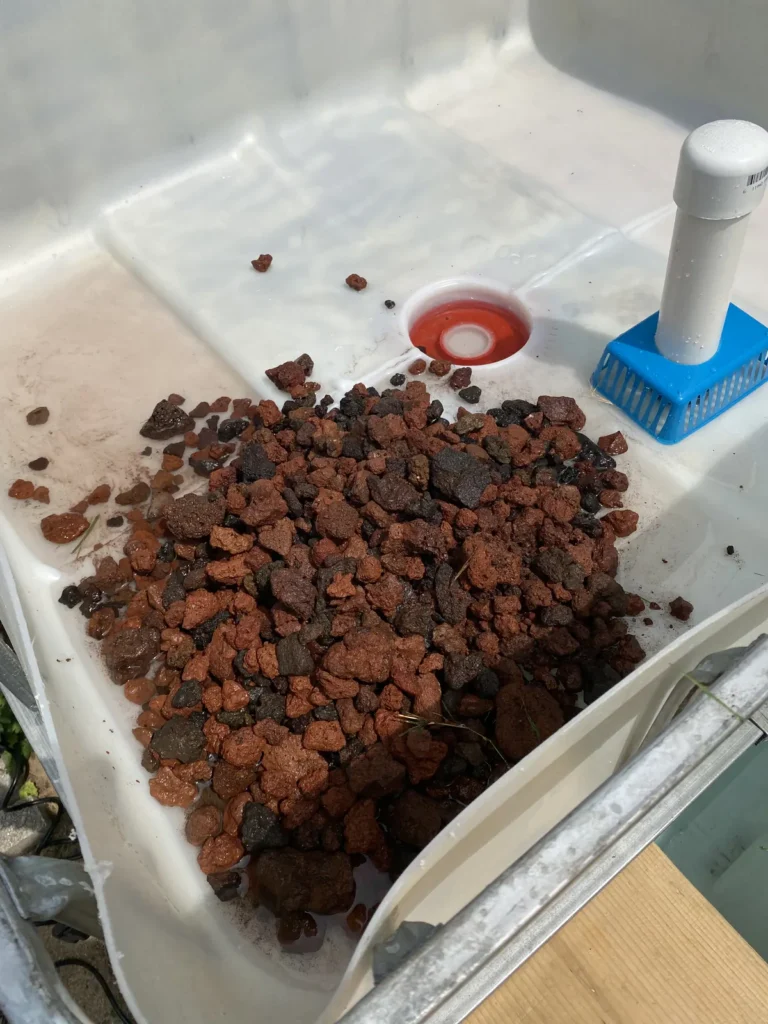
| Component | Main Job | What It Controls |
|---|---|---|
| Standpipe | Carries water out of the grow bed | Maximum flood height and drain capacity |
| Bell | Traps and evacuates air around the standpipe | Siphon formation and breaking behavior |
| Media guard | Keeps grow media and roots away from the bell | Maintenance access and blockage prevention |
| Bulkhead or uniseal | Creates a watertight drain connection | Leak protection and standpipe stability |
| Drain plumbing | Moves discharged water away from the bed | Back pressure and total drain performance |
| Inlet plumbing | Supplies water to the grow bed | Fill time and siphon triggering |
The Standpipe
The standpipe is the vertical drain pipe inside the bell. Its top determines the approximate maximum water level in the grow bed.
When the bed fills, water eventually reaches the top of the standpipe and begins spilling into the drain. As the flow increases and air is removed from beneath the bell, the standpipe changes from a simple overflow into the inlet of a full siphon.
The standpipe must be large enough to drain faster than the incoming water once the siphon starts. If it is too small, the bed may drain slowly or fail to lower the water level enough to break the siphon.
Setting the Maximum Water Level
The top of the standpipe should normally sit below the surface of the grow media. Many media beds maintain approximately one to two inches of dry media above the highest water level.
Keeping the surface dry helps reduce:
- Algae growth
- Fungus gnats
- Mosquito access
- Stem and crown rot
- Evaporation
- Constantly wet planting surfaces
The exact standpipe height depends on the grow-bed depth, crop, media size, and how much water remains after draining.
The Bell
The bell is a larger pipe or chamber placed over the standpipe. The top is sealed, while the lower edge contains openings or stands above the grow-bed floor so water can enter.
As the water level rises, water enters beneath the bell and begins flowing over the standpipe. Increasing water flow pulls air out of the sealed chamber. Once enough air leaves, the bell fills with water and creates a low-pressure siphon around the standpipe.
The bell must provide enough space around the standpipe for water to move freely. If the gap is too narrow, flow becomes restricted. If the bell is excessively large, it may take longer or require more inflow to remove enough air and start the siphon.
Bell Openings
The bottom of the bell needs openings that allow water to enter during draining and allow air to enter when the water level falls.
These openings may be:
- Vertical slots cut into the lower edge
- Round holes drilled around the base
- A raised bell with an open gap beneath it
- A removable notched base
The openings must provide more flow area than the standpipe so they do not choke the siphon. They must also remain clear of roots, stones, and settled debris.
The Media Guard
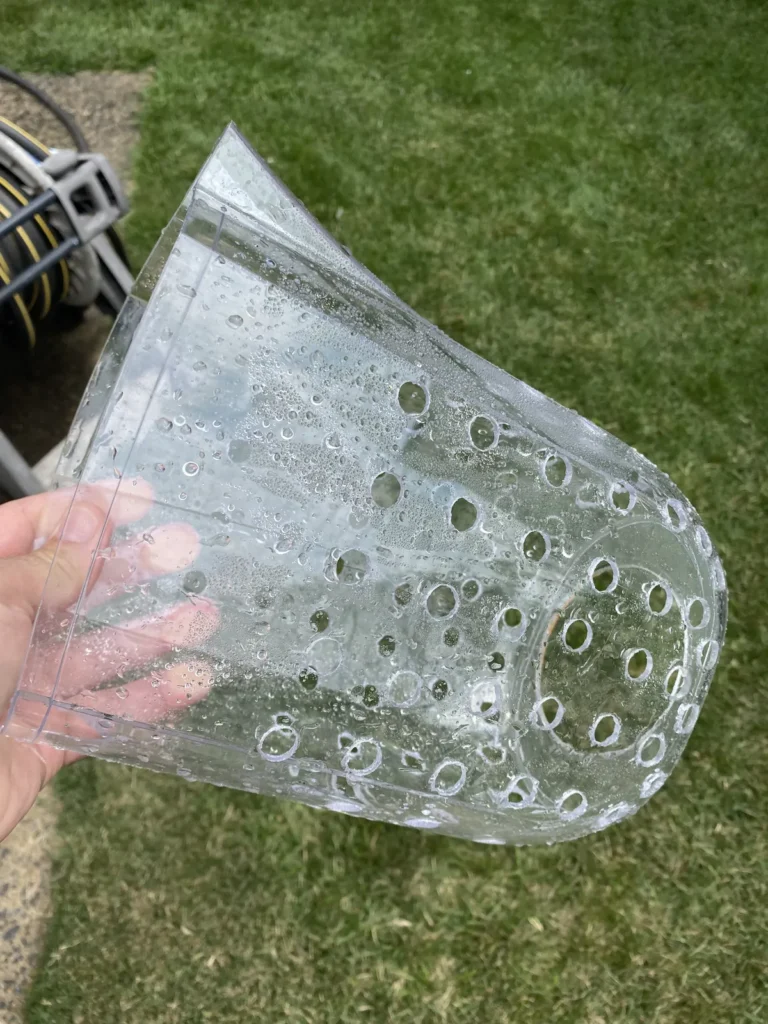
The media guard is a perforated pipe or removable enclosure surrounding the bell. It keeps lava rock, expanded clay, gravel, roots, and plant debris away from the siphon components.
A good media guard should:
- Allow water to move freely from the bed toward the bell
- Keep grow media outside the working area
- Be large enough for the bell to be removed
- Provide access for cleaning and root removal
- Extend above the media surface
- Resist crushing from the weight of the media
A media guard that is too narrow makes maintenance difficult. Bell siphons eventually need inspection, and roots have a special talent for locating any drain you hoped never to touch again.
How the Bell Siphon Cycle Works
- The grow bed begins filling. The pump supplies water faster than the open standpipe drains it.
- Water reaches the standpipe. Water begins spilling into the drain while air remains trapped under the bell.
- Flow increases. Rising water pushes more air out through the standpipe and drain plumbing.
- The siphon starts. Once the bell fills and the air path closes, the drain changes to full siphon flow.
- The bed drains rapidly. Water leaves faster than the pump supplies it.
- The water reaches the bell openings. Air begins entering the lower part of the bell.
- The siphon breaks. Air destroys the continuous water column and drain flow drops sharply.
- The bed starts filling again. The cycle repeats as long as the pump maintains the required inflow.
Why the Siphon Starts
A siphon starts when water forms a continuous path from the grow bed, over the standpipe, and down through the drain plumbing without enough air entering to interrupt the flow.
The falling water in the drain creates lower pressure inside the bell. That pressure difference pulls water from the grow bed into the bell and down the standpipe.
For the siphon to start reliably, the incoming flow must be high enough to remove trapped air and fill the standpipe and drain line. If water only trickles over the standpipe, air continues entering and the system remains a normal overflow.
Why the Siphon Stops
The siphon stops when enough air enters beneath the bell to break the continuous water column.
As the grow-bed water level falls, the lower openings in the bell become exposed. Air is drawn through those openings and into the bell. The standpipe begins swallowing air, drain flow loses suction, and the siphon collapses.
A siphon that refuses to stop usually has one of these problems:
- The incoming water flow is too high
- The bell openings remain submerged
- The drain plumbing creates excessive suction
- The standpipe or outlet arrangement does not admit enough air
- The grow bed is not draining below the required break level
- Roots or media are blocking the air-entry path
Pump Flow Is the Main Tuning Variable
A bell siphon needs an inflow range rather than one exact pump rate. The flow must be high enough to start the siphon but low enough to let the bed drain and the siphon break.
| Flow Condition | Likely Behavior | Typical Correction |
|---|---|---|
| Inflow too low | Water trickles over the standpipe but the siphon never starts | Increase flow or reduce drain resistance |
| Inflow within working range | Siphon starts, drains the bed, and breaks reliably | No correction needed |
| Inflow too high | Bed drains slowly, remains flooded, or siphon will not break | Reduce inlet flow or increase drain capacity |
| Flow varies | Cycles become inconsistent | Clean the pump, filter, inlet valve, and distribution plumbing |
A valve on the grow-bed inlet makes tuning easier. Adjust the flow in small steps and allow several complete cycles before deciding whether the change worked.
For overall pump selection and head-loss planning, see how to size a pump for an aquaponics system.
Typical Bell Siphon Sizing
Exact sizing depends on grow-bed area, pump flow, bed depth, and drain plumbing. The following combinations are common starting points for backyard systems, not universal specifications.
| Standpipe | Typical Bell Diameter | Typical Media Guard | Common Use |
|---|---|---|---|
| 3/4 inch | 2 inch | 4 inch | Small grow beds with modest flow |
| 1 inch | 2 to 3 inch | 4 to 6 inch | Common backyard media beds |
| 1 1/4 inch | 3 to 4 inch | 6 inch | Larger beds or higher flow |
| 1 1/2 inch | 4 inch or larger | 6 to 8 inch | Large beds with substantial drain demand |
The drain pipe below the grow bed should normally remain at least as large as the standpipe. Reducing the pipe immediately below the bed can restrict flow and make siphon behavior unpredictable.
Grow-Bed Depth and Water Level
Many backyard media beds use approximately 10 to 12 inches of grow media. The standpipe is usually set so the maximum water level remains one to two inches below the surface.
The bed does not need to drain completely dry. Some water normally remains below the bell openings and in low areas of the bed.
A useful cycle provides enough flooded depth to wet the active root zone and enough drainage to pull fresh air into the media.
See aquaponics grow bed media basics for media depth, particle size, weight, washing, and flow considerations.
The Drain Outlet Matters
The plumbing below the standpipe affects how easily the siphon starts and stops. A long vertical drop can strengthen siphon action. Too many elbows, undersized pipe, trapped air, or a submerged outlet can create back pressure and inconsistent cycling.
Common drain arrangements include:
- A straight vertical drop
- A short horizontal run followed by a drop
- A 90-degree elbow beneath the bed
- A drain returning directly to a pond, stock tank, IBC container, or sump
A small horizontal outlet or elbow near the bottom of the standpipe is sometimes called an affnan-style outlet. This arrangement can help create a stronger initial surge and improve siphon starting in some systems.
Keep the discharge end above the receiving water level when possible. A deeply submerged outlet may trap air or create changing back pressure as the receiving water level rises and falls.
How Long Should a Flood-and-Drain Cycle Take?
There is no required universal cycle time. A practical backyard media bed may fill and drain several times per hour, but the correct timing depends on bed volume, crop, water temperature, fish load, pump arrangement, and total system flow.
The cycle should:
- Wet the root zone consistently
- Drain far enough to bring air into the bed
- Keep the media surface dry
- Avoid standing stagnant water
- Remain stable as the pump and filter collect normal debris
- Provide enough overall system circulation
Do not chase a specific number of cycles simply because another system uses it. A reliable 20-minute cycle is better than a five-minute cycle that fails every third afternoon.
Installing a Bell Siphon
The IBC tote build guide shows how a bell siphon fits into the complete chop-and-flip grow-bed construction sequence.
- Install the bulkhead or uniseal. Create a watertight drain connection through the grow-bed floor.
- Fit the standpipe. Set the top at the intended maximum water level below the media surface.
- Connect the drain plumbing. Avoid unnecessary restrictions and provide a stable discharge path.
- Build the bell. Use a sealed top and sufficient clearance around the standpipe.
- Create lower openings. Provide enough area for water and air to enter freely.
- Install the media guard. Leave enough room to remove the bell for inspection.
- Test before adding media. Fill the bed and tune the flow while every component remains visible.
- Add washed media. Keep rocks and expanded clay outside the guard.
- Retest the completed bed. Media changes water distribution and can alter siphon behavior.
Do not skip the dry test: A bell siphon is much easier to adjust before the grow bed contains eleven cubic feet of lava rock.
Troubleshooting a Bell Siphon That Will Not Start
If water rises and flows gently over the standpipe but the bed never begins draining rapidly, the siphon is not evacuating enough air.
| Possible Cause | What to Check | Correction |
|---|---|---|
| Inflow is too low | Water only trickles over the standpipe | Increase grow-bed inflow gradually |
| Bell is leaking air | Loose cap, drilled hole, cracked fitting | Seal the bell top |
| Bell is too large | Large air volume remains trapped | Use a smaller bell or increase flow |
| Standpipe is too large for the inflow | Drain never fills completely | Increase flow or use a smaller standpipe |
| Drain plumbing traps air | Gurgling or irregular discharge | Simplify the outlet and remove high spots |
| Media blocks the bell openings | Weak flow into the media guard | Clear debris and enlarge access openings |
Troubleshooting a Bell Siphon That Will Not Stop
A siphon that continues draining at a low rate prevents the bed from beginning a new fill cycle.
| Possible Cause | What to Check | Correction |
|---|---|---|
| Inflow is too high | Water enters as fast as the final drain flow | Reduce inlet flow |
| Bell openings are too low | They remain submerged at the intended drain level | Raise or enlarge the air-entry openings |
| Drain suction is too strong | Long vertical drop keeps pulling water | Add a controlled air break or revise outlet plumbing |
| Bell sits tightly against the bed floor | Air cannot enter beneath the bell | Add feet, slots, or a lower gap |
| Roots block air entry | Dense roots surround the bell base | Remove roots and clear the media guard |
| Bed floor holds excessive water | Bell openings stay submerged in a low spot | Adjust the bell opening height or bed drainage |
Troubleshooting Inconsistent Cycling
A siphon that works sometimes but not always usually has changing flow or partial blockage.
- Clean the water pump intake.
- Check the grow-bed inlet valve.
- Inspect filters for restricted flow.
- Remove roots from the media guard and standpipe.
- Clear air locks in the drain plumbing.
- Verify that the receiving sump or tank level is not submerging the outlet.
- Check whether several grow beds are competing for pump flow.
- Confirm that media has not settled and blocked the bell openings.
Flow often changes gradually as pumps collect debris, pipes develop biofilm, and roots spread. A siphon tuned at the edge of its operating range will become unreliable sooner than one with a wider margin.
Bell Siphon Maintenance
A bell siphon has no motor, but it still needs inspection. Roots, snails, gravel, biofilm, and settled solids can change how water and air move through the assembly.
| Maintenance Task | What to Look For | Typical Timing |
|---|---|---|
| Observe several cycles | Slow starting, incomplete draining, failure to break | Weekly |
| Inspect media guard | Roots, shifted media, blocked openings | Monthly |
| Remove and inspect bell | Slime, roots, snails, damaged cap | Every few months |
| Check standpipe | Root intrusion and internal blockage | Every few months |
| Inspect drain outlet | Submergence, restriction, sagging pipe | Seasonally |
| Verify pump flow | Reduced output from debris or wear | Monthly |
Do not wait until the bed remains flooded for several days. An occasional visual check is easier than removing mature pepper roots from a completely blocked standpipe.
Bell Siphons and Solids
Media beds can capture and process some fish waste, but excessive solids eventually restrict flow around the media guard and drain.
Warning signs include:
- Slower filling or draining
- Standing water near the media surface
- Foul odor
- Dark sludge around the guard
- Roots coated with fine waste
- Repeated siphon failures
Heavily stocked systems may need a swirl filter, radial flow settler, or another mechanical filter before water reaches the grow bed. See aquaponics solids filtration basics.
Bell Siphon vs Timer-Controlled Flood and Drain
| Feature | Bell Siphon | Timer-Controlled Pump |
|---|---|---|
| Pump operation | Usually continuous | Starts and stops on schedule |
| Electronic controls | Not required | Timer required |
| Flow tuning | Critical | Less sensitive |
| Moving electrical parts | Pump only | Pump and timer switching |
| Drain consistency | Depends on siphon tuning | Depends on pump and drain timing |
| Maintenance concern | Roots, air gaps, flow range | Timer failure and pump cycling |
| Best fit | Continuous-flow media beds | Simple beds where siphon tuning is undesirable |
Neither method is automatically better. A bell siphon removes the timer but adds hydraulic tuning. A timer simplifies the drain but repeatedly starts and stops the pump.
Bell Siphon vs Constant Flood
A constant-flood media bed maintains a steady water level and uses continuous circulation. It has fewer drain components and can work well when water remains oxygenated and solids are controlled.
A flood-and-drain bed provides stronger periodic air exchange through the media. It also creates changing water levels that may expose plumbing mistakes more quickly.
Constant flood may be the better choice when:
- The siphon cannot be made reliable
- The pump flow changes frequently
- The bed contains crops tolerant of constant moisture
- Aeration and water circulation are already strong
- Simple maintenance matters more than cycling
Do not keep a bad siphon merely because the original plan included one. Reliable water movement matters more than loyalty to a piece of PVC.
Can One Pump Feed Several Bell Siphons?
Yes, but each bed needs a stable inflow. When several beds share one pump, changes in one valve or drain can affect the others.
Use a distribution manifold with individual valves so each grow bed can be adjusted separately. Size the pump for the combined flow at the actual head height.
Shared systems become inconsistent when:
- One bed receives most of the pump flow
- A filter begins restricting the common supply
- One siphon drains and changes the system water level
- The sump becomes too small
- Roots or debris alter one branch
The sump must hold enough water to fill all connected beds without allowing the pump to run dry.
Common Bell Siphon Mistakes
A troublesome siphon may expose a larger planning issue. The common aquaponics beginner mistakes guide covers pump sizing, service access, solids, and other connected problems.
Testing Only After Adding Media
Test the siphon before filling the bed. Adjusting a bulkhead, standpipe, or bell after adding heavy media is needlessly difficult.
Using a Media Guard That Is Too Small
The bell must be removable for cleaning. Leave room for hands, tools, and root removal.
Tuning at Maximum Pump Flow
Pump output often declines as debris accumulates. Tune the siphon with enough operating margin that a small flow change does not stop the cycle.
Submerging the Drain Outlet
A submerged outlet can create inconsistent back pressure and trapped air. Keep the discharge visible and accessible when practical.
Ignoring Roots
Roots can wrap around the bell, enter the standpipe, and block media-guard openings. Large herbs and peppers require regular root inspection near the drain.
Making Every Component Permanent
The bell, standpipe, and media guard should remain removable whenever possible. Gluing every joint creates impressive commitment and terrible maintenance access.
Frequently Asked Questions
Does a bell siphon need electricity?
The siphon itself does not need electricity, but the pump supplying water to the grow bed usually does. The siphon works through gravity and pressure differences.
Does the pump run continuously with a bell siphon?
Usually, yes. Water flows into the grow bed continuously while the siphon automatically controls the fill-and-drain cycle.
Why will my bell siphon not start?
The most common causes are insufficient inflow, an air leak in the bell, restricted drain plumbing, or a standpipe that is too large for the available flow.
Why will my bell siphon not stop?
The inflow may be too high, the bell openings may remain submerged, or the drain may be creating too much suction. Roots and debris can also block the air-entry path.
How high should the standpipe be?
Set the standpipe so the maximum flood level remains below the media surface. Many beds keep approximately one to two inches of dry media at the top.
How often should a bell siphon cycle?
There is no universal requirement. The cycle should wet the root zone, drain reliably, maintain a dry surface, and support overall system circulation. Reliability matters more than matching another system’s exact timing.
Can I use a bell siphon with lava rock?
Yes. Use a strong media guard that keeps lava rock and small fragments away from the bell. Wash the rock thoroughly before filling the bed.
Does a bell siphon completely empty the grow bed?
No. Some water normally remains below the bell openings and in low areas of the bed. The goal is a useful water-level change, not a completely dry container.
Can a bell siphon work without a media guard?
It may work temporarily, but grow media and roots will make maintenance difficult and can block the siphon. A removable media guard is strongly recommended.
Is a bell siphon better than constant flood?
Not always. Bell siphons provide automatic cycling and root-zone air exchange. Constant-flood beds are simpler and can work well with strong aeration and circulation. Choose the method that operates reliably in the actual system.
Final Takeaway
A bell siphon uses continuous inflow, gravity, trapped air, and a standpipe to create automatic flood-and-drain cycles. The standpipe sets the high-water level, the bell creates the siphon, and the media guard keeps the working parts accessible.
Reliable operation depends on balance. The pump must supply enough water to start the siphon, the drain must remove water faster than it enters, and the bell must admit air at the correct low-water level so the siphon stops.
Test the system before adding media, install valves for flow adjustment, keep the bell removable, and leave enough space to clear roots. When tuned correctly, a bell siphon can cycle for long periods with little attention. When tuned poorly, it becomes a PVC mood ring that changes behavior every time the pump gets dirty.
For related equipment, pumps, plumbing, filtration, grow media, and system-support components, see the Aquaponics Equipment Guide.