
Aquaponics does not need constant fiddling, but it does need regular attention. Fish, plants, bacteria, pumps, plumbing, aeration, and water quality are all connected. Ignoring one part long enough can turn a small maintenance job into a system problem.
With my IBC system, maintenance became less about following a perfect calendar and more about knowing what needed to be checked frequently, what could wait, and what changes were warning signs. I fed fish, tested water, watched temperature, checked circulation and aeration, cleaned equipment, and dealt with problems as the system evolved.
A practical aquaponics maintenance schedule
The exact schedule depends on the size of the system, number and type of fish, plant load, weather, feeding rate, plumbing design, and equipment. The useful approach is to divide maintenance into frequent observations and less-frequent service.
Every day
- Feed the fish and watch how they respond.
- Confirm that water is circulating normally.
- Confirm that aeration is running.
- Look for unusual fish behavior, dead fish, damaged plants, leaks, or obvious blockages.
- Check the water level and investigate unexpected water loss.
- Watch the weather and water temperature when temperature is a concern.
A daily check does not have to take long. The important part is recognizing what normal looks like. Changes in sound, water level, fish behavior, bubbles, flow, or temperature can tell you something is wrong before a test kit does.
Several times a week
The API Freshwater Master Test Kit is the liquid test kit I used in my IBC system for checking pH, ammonia, nitrite, and nitrate. It does not measure KH/alkalinity.
- Look closely at plant growth, leaf color, wilting, and pest damage.
- Inspect the grow bed for unusual flooding, dry areas, or changes in drainage.
- Check exposed plumbing connections and valves.
- Look at pump intake areas for accumulating debris.
- Make sure air stones or other aeration outlets are still producing useful airflow.
These are the checks that catch gradual problems. A pump may still run while its flow is falling. An air stone may still bubble while producing much less air than it did when clean. A grow bed may still drain while solids slowly accumulate in places you cannot see.
Weekly
- Test the important water parameters for your system.
- Review temperature trends rather than relying on one reading.
- Inspect the pump, tubing, fittings, and aeration equipment.
- Remove dead plant material.
- Check for excessive solids accumulation.
- Inspect electrical connections and outdoor equipment for obvious problems.
- Compare current water flow with what the system normally produces.
Water testing is especially useful when something changes: new fish, heavier feeding, unusual fish behavior, plant trouble, temperature swings, or changes in water clarity. A mature system can become predictable, but predictable is not the same thing as maintenance-free.
If you are still getting comfortable with the chemistry, the aquaponics water testing basics page explains the main measurements and why they matter.
Temperature deserves its own routine
Temperature became a much bigger maintenance issue in my system once I tried to operate through colder weather. Outdoor air temperature and fish-tank water temperature are not the same thing, and a heater setting is not proof that the water is actually at the temperature you expect.
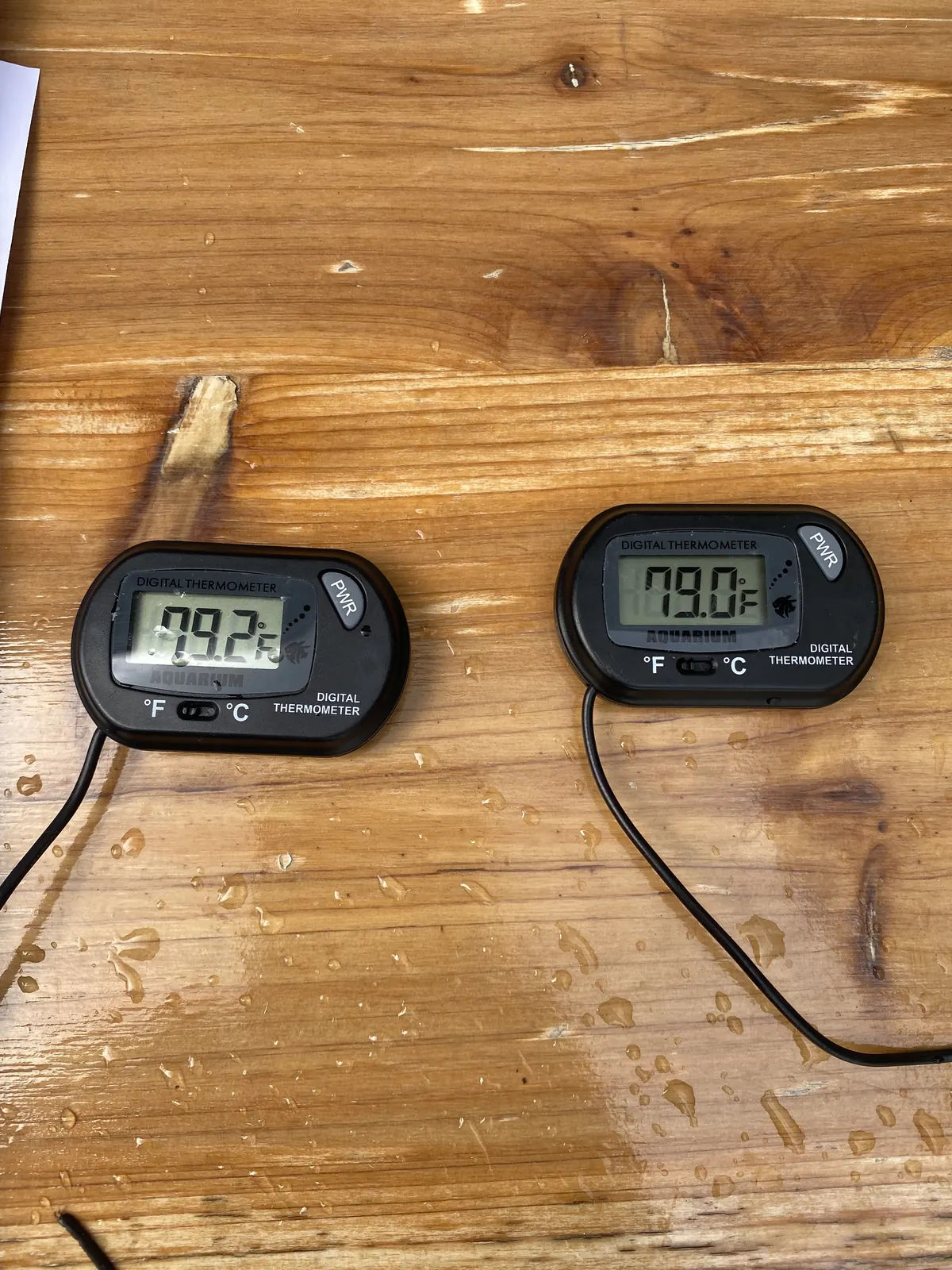
When temperature matters for the fish you are keeping, check the actual water temperature and watch the direction it is moving. Seasonal changes, cold nights, direct sun, greenhouse conditions, heater operation, and equipment failures can all change the thermal behavior of a small system.
Monthly aquaponics maintenance
Once a month is a reasonable time to do a more deliberate inspection instead of simply looking at whatever is visible during feeding.
- Inspect and clean pump components as needed.
- Check hoses and plumbing for buildup, restriction, cracking, or loose connections.
- Inspect air lines, air stones, and the air pump.
- Look for solids accumulating where normal water movement is not removing them.
- Inspect grow-bed drains, standpipes, siphon components, or other drainage hardware.
- Check heaters, thermometers, timers, and other equipment being relied on.
- Inspect cords, plugs, power strips, weather protection, and drip loops.
- Review fish load and plant growth instead of assuming the original balance is still appropriate.
I would not treat “monthly” as permission to ignore a problem for four weeks. If flow changes, the pump gets noisy, bubbles disappear, the water level drops, or the fish behave strangely, that becomes a now problem.
Pump maintenance matters more than it looks
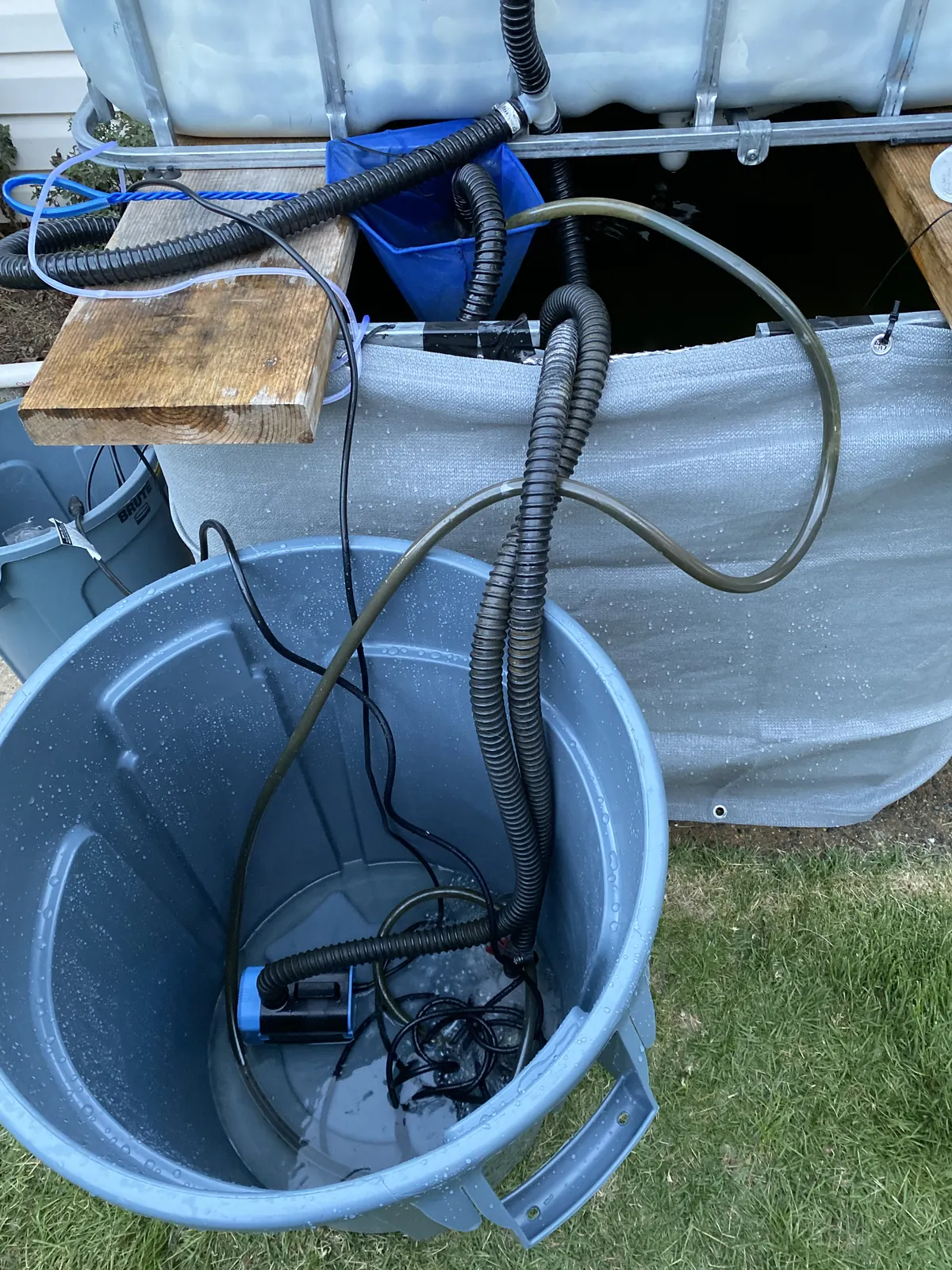
A pump can continue running while delivering less water. Debris around the intake, buildup inside the pump, restricted plumbing, or changes elsewhere in the system can reduce useful flow before the pump actually quits.
That is why I prefer checking what the water is doing instead of merely listening for the pump motor. Watch the return flow, grow-bed fill behavior, and circulation in the tank. Those tell you whether the pump is accomplishing its job.
If you are still designing the circulation side of a system, see how to size a pump for an aquaponics system.
Aeration should be obvious
I used dedicated aeration in addition to water circulation. Fish need oxygen whether the plumbing is behaving perfectly or not, and warm water can make oxygen management more important.
Check the bubbles. Check the tubing. Listen for changes in the air pump. Look for disconnected lines or blocked air stones. If the system depends on one air pump, think about what happens when the electricity stops.
For more on that part of the system, see aeration in aquaponics systems and backup power for aquaponics systems.
Seasonal maintenance
An outdoor aquaponics system does not have the same maintenance needs in every season. Temperature, sunlight, evaporation, plant growth, algae pressure, and equipment demands change through the year.
Before hot weather
- Verify strong aeration.
- Make sure pumps and air equipment are clean and operating well.
- Plan for increased evaporation.
- Watch direct sunlight and algae growth.
- Pay closer attention to water temperature.
Before cold weather
- Decide whether you are operating through winter or shutting the system down seasonally.
- Inspect heaters and temperature controls before you actually need them.
- Check insulation and weather protection.
- Protect plumbing and equipment that can be damaged by freezing.
- Watch actual water temperature during cold nights.
My system became considerably more complicated when I pushed it into cold-weather operation. Heating, insulation, and the greenhouse extended what the system could do, but they also created more equipment to inspect and more things capable of failing.
Do maintenance based on symptoms too
A calendar is useful, but the system gets the final vote. Some conditions should trigger an immediate inspection regardless of when you last performed maintenance.
- Fish suddenly stop eating.
- Fish gather near the surface or near water returns.
- Water flow noticeably falls.
- Aeration weakens or stops.
- The grow bed stops filling or draining normally.
- Water level drops unexpectedly.
- Water becomes unusually cloudy or green.
- Plants develop widespread yellowing, wilting, or stalled growth.
- Temperature moves outside the range expected for the system.
- A pump, heater, or air pump begins sounding different.
Those are not jobs for the next scheduled maintenance day. They are reasons to find out what changed.
The maintenance routine that worked for me
I did not operate my IBC system by wandering outside once a month with a clipboard and checking boxes. I interacted with it constantly enough to know what normal looked and sounded like. Feeding fish doubled as a fish-health check. Looking at the grow bed showed me how the plants and water level were behaving. Testing water and checking temperature gave me numbers to compare with what I was seeing.
The bigger maintenance jobs happened when the system told me they were needed: pump work, heating changes, plumbing adjustments, cleaning, equipment experiments, and fixes to things that did not behave the way I expected.
That is probably the most useful maintenance habit I took from the project: learn what normal looks like, then investigate changes early. Aquaponics is much easier to maintain when you catch a weakening pump, blocked line, temperature problem, or unhappy fish before it becomes an emergency.