
A media grow bed is one of the simplest ways to combine plant support, water movement and biological filtration in a small aquaponics system.
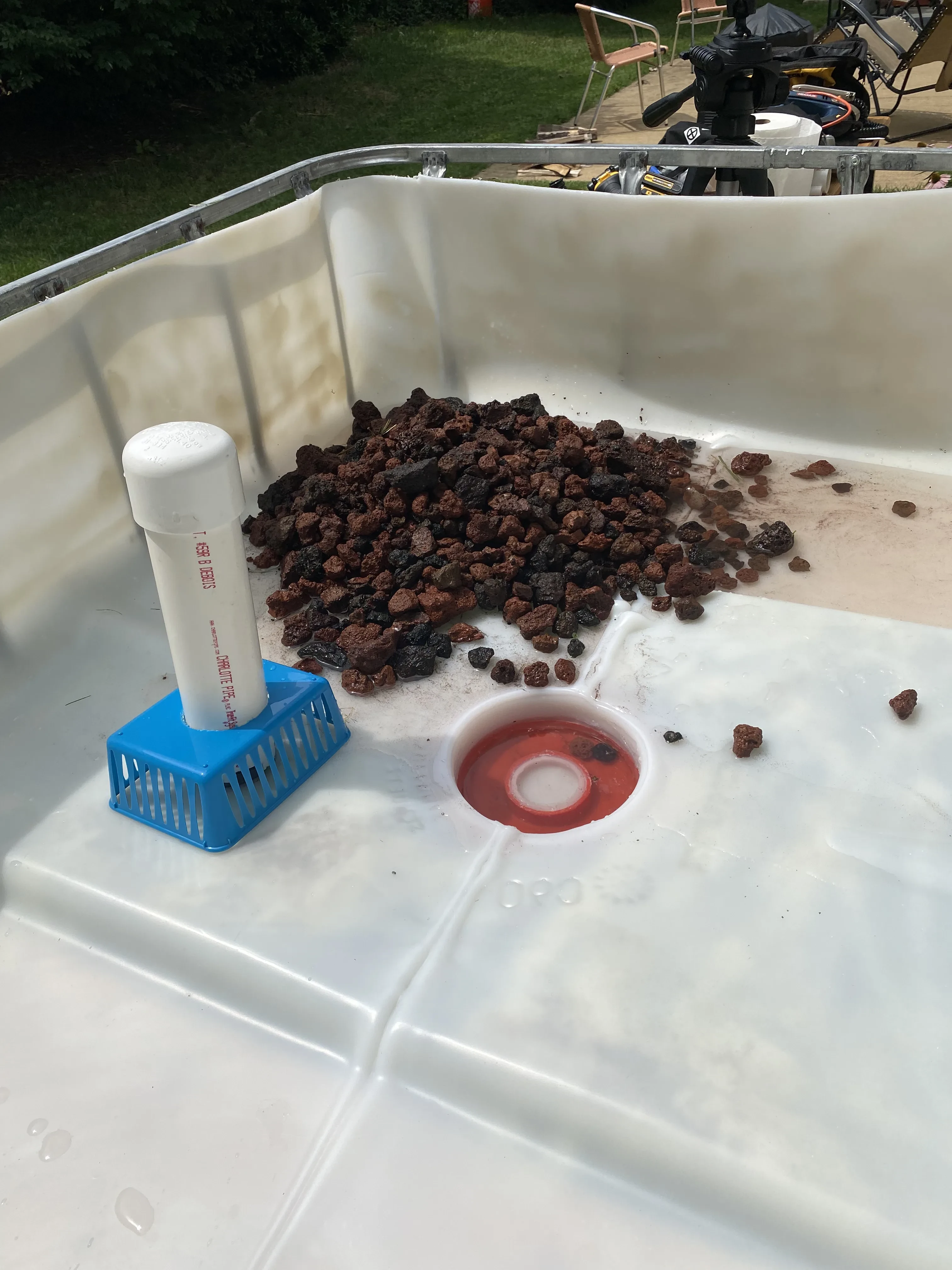
Simple does not mean you can throw rocks in any plastic box and call it done.
A filled grow bed gets heavy. The drain has to stay accessible. The container has to tolerate constant contact with water. The media should not change the water chemistry. And the flood level needs to stay below the top surface instead of turning the bed into a shallow algae pond.
I built my system from an IBC tote, so this is not a claim that I personally tested every container style described here. What I did build and operate firsthand was a flood-and-drain IBC media bed using lava rock, a standpipe, bell siphon and media guard.
The same design questions apply to a purpose-built bed, barrel, stock tank or lined structure.
1. Choose the grow-bed container first
Start with a container that is structurally suitable for the weight and is made from material appropriate for contact with system water.
Oklahoma State University recommends non-toxic, inert materials and warns that some unlined metals, uncoated concrete and recycled plastics can leach into the system.
A media bed also needs enough depth for roots and a useful volume of media. Extension guidance varies by design, but roughly 6 to 12 inches is common, while other Oklahoma State guidance notes that deeper beds around 12 to 14 inches provide more root room and biological surface area.
Do not treat one number as sacred. The crop, media, bed design and structural support matter.
2. Support the entire loaded bed
Water weighs about 8.3 pounds per gallon. Rock media adds a lot more.
That means a grow bed that feels manageable while empty can become a very different object after filling.
Support the base evenly. Avoid improvised point supports that concentrate the load in a few places. Check that the stand, frame or platform cannot rack sideways and that you can still reach the drain plumbing.
My IBC build had the advantage of the tote cage and a cut-down container designed to carry liquid. A homemade wooden or lined bed needs its own structural plan.
For structural questions beyond ordinary backyard construction, use appropriately qualified help rather than guessing.
3. Decide how the bed will drain
A media bed can operate as flood-and-drain or continuous flow.
My bed used flood-and-drain with a bell siphon. The drain area included a standpipe, bell and perforated media guard.
The important part is not copying my dimensions. It is making sure the drain arrangement matches your pump flow, bed size and intended water level.
If you use a bell siphon, build the drain area so the bell and standpipe can be reached later. Burying the whole assembly permanently in rock is a fine way to make future-you hate present-you.
4. Install the tank penetration correctly
The drain passes through the bottom or wall of the bed, so this is one place where a small mistake can create a persistent leak.
Use a proper bulkhead, Uniseal or other fitting designed for the container and pipe involved. Follow the fitting manufacturer’s required hole size and gasket orientation.
Do not assume a tube of random caulk will rescue a badly drilled hole.
I used proper tank fittings elsewhere in my system and learned the hard way that unnecessary holes below the waterline can become a disproportionate pain in the ass.
5. Protect the drain with a media guard
The media guard keeps rocks away from the standpipe or siphon while preserving access.
It needs openings large enough to pass water freely but small enough to keep the grow media out. It also needs enough open area that roots and biofilm do not turn it into the system’s new bottleneck.
My system used a perforated guard around the drain assembly. It let me get to the siphon without excavating the entire bed.
That is the standard I would use again: keep media out, keep water moving, keep the drain serviceable.
6. Test and wash the grow media
Aquaponics grow media should be stable, inert and appropriately sized.
Oklahoma State notes that media should not decompose or alter pH and that particles must be large enough to avoid washing into drains while still supporting root growth.
I used lava rock.
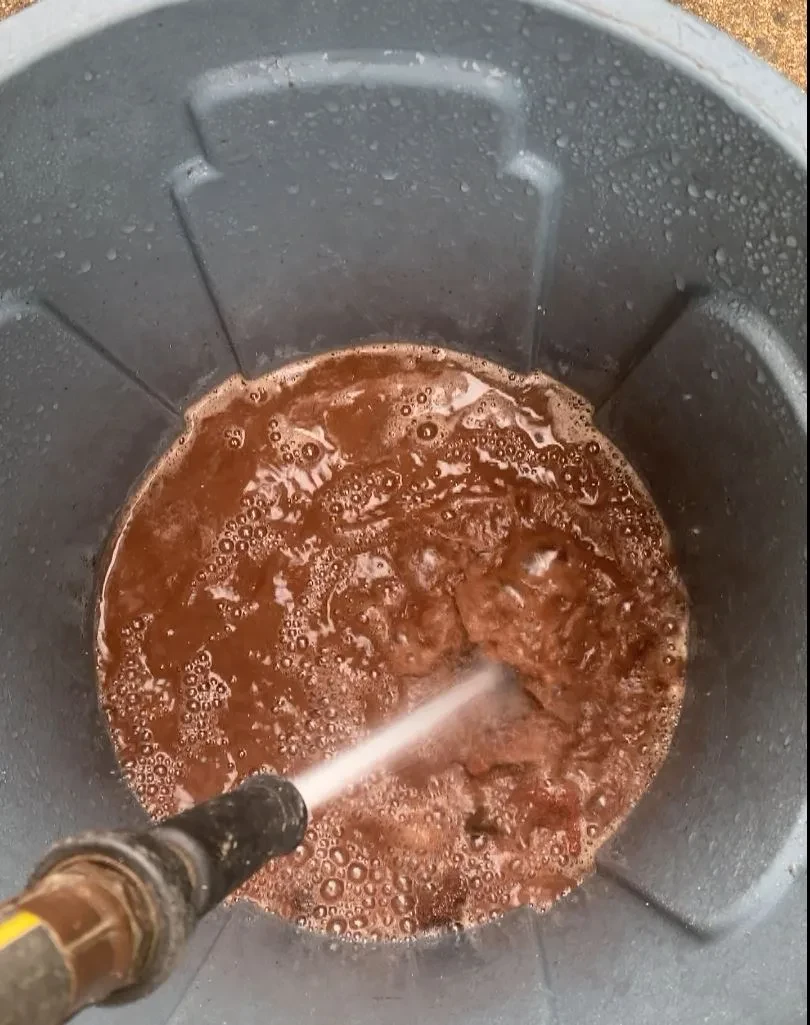
It worked, but it was not clean out of the bag. I washed the rock before installation, and the real photos from my build show exactly why that step belongs in the job rather than in the optional-nice-to-do category.
Lava rock is porous and inexpensive compared with some manufactured media, but it can also be rough on hands and roots.
Whatever you use, verify that it is appropriate for aquaponics before filling the bed.
7. Keep the flood level below the media surface
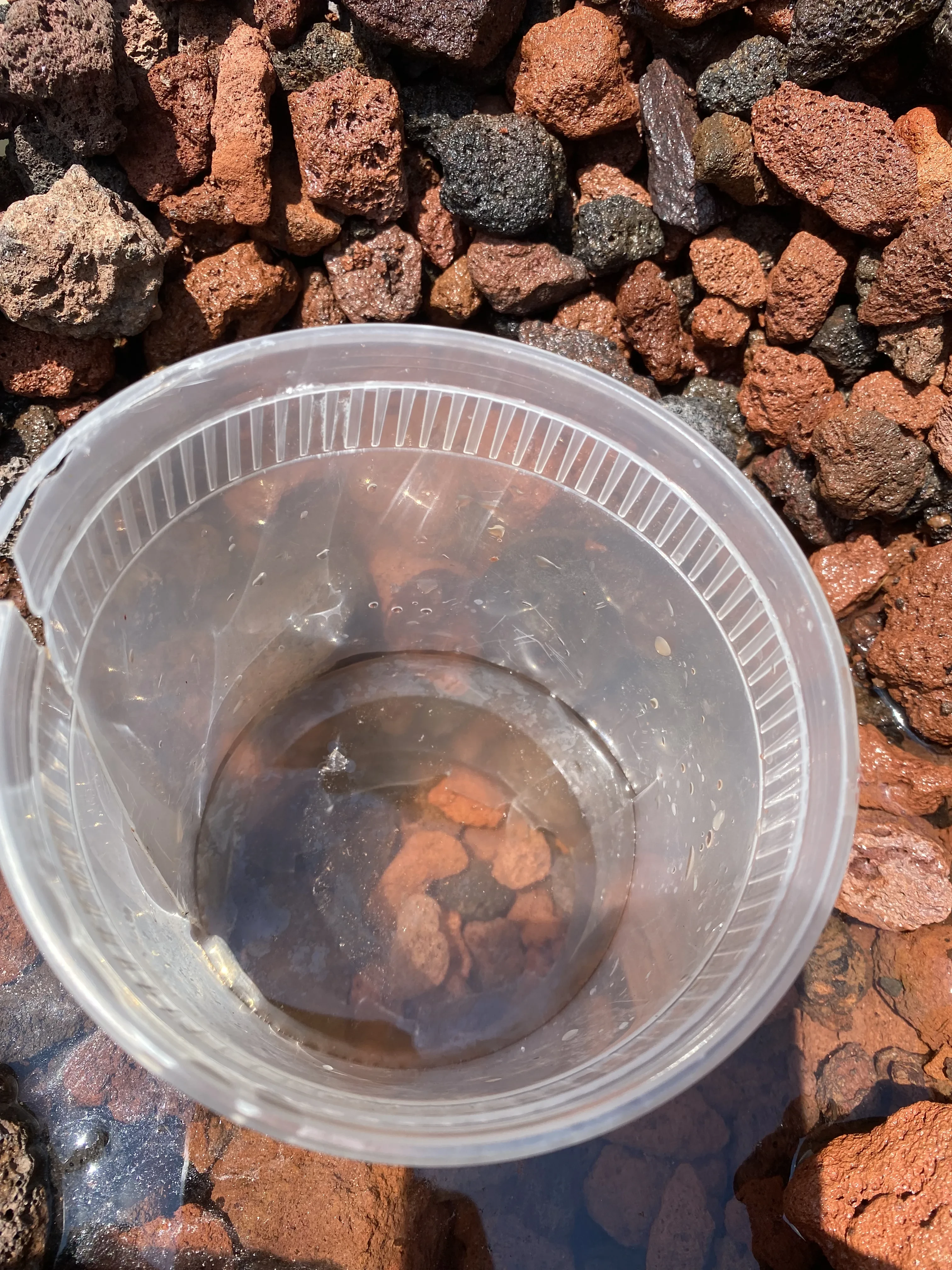
The top of a media bed should generally stay dry.
Oklahoma State’s small-scale aquaponics guidance recommends keeping the water about an inch below the top of the media to limit algae and pest problems.
On my system I kept the high-water level roughly one to two inches below the top of the lava rock.
The exact depth is adjustable. The principle is not: roots should have access to water without keeping the entire exposed surface wet.
8. Fill in stages and watch what moves
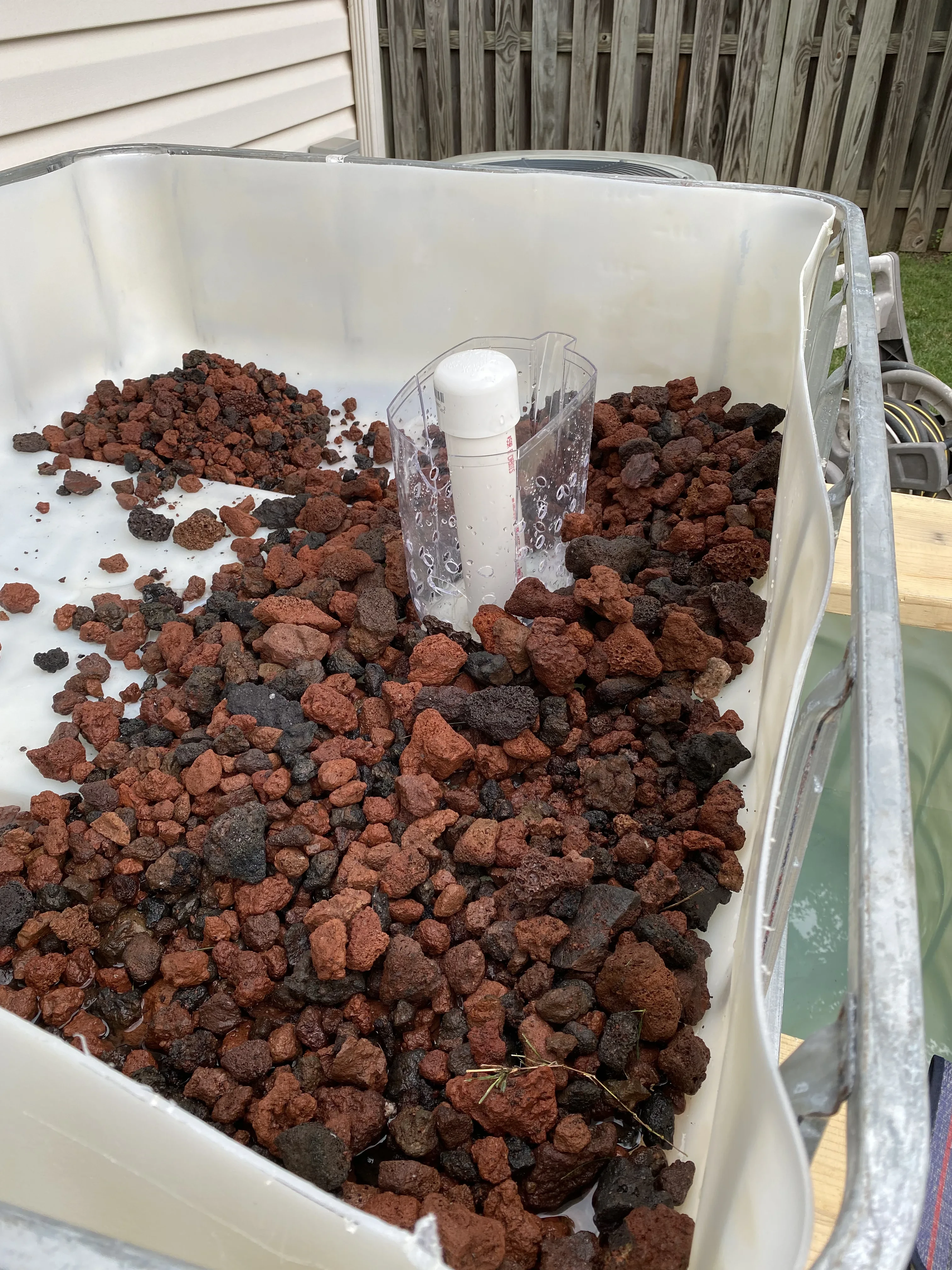
Do not dump all the media in and discover afterward that the standpipe shifted, the bed bowed or the drain leaks.
A better sequence is:
- install and inspect the drain fitting;
- add enough water to leak-test the penetration;
- install the standpipe/siphon components;
- position the media guard;
- add washed media in stages;
- confirm the guard stays vertical and accessible;
- fill and cycle the bed;
- adjust the high-water level;
- verify that the bed drains as intended;
- inspect the support and plumbing under full operating load.
This is slower than dumping rock. It is faster than removing it.
What I would watch most closely
From my own build, the three areas most likely to consume stupid amounts of time are the drain penetration, siphon tuning and media preparation.
None is technically exotic. They just punish sloppy setup.
A well-built media bed should eventually become boring. Water arrives, the root zone gets wet, the drain works, the top stays dry and you can reach the plumbing when something needs attention.
That is success.
Research Sources
- Oklahoma State University, Aquaponics:
https://extension.okstate.edu/fact-sheets/aquaponics
- Oklahoma State University, Principles of Small-Scale Aquaponics:
https://extension.okstate.edu/fact-sheets/principles-of-small-scale-aquaponics
- FAO, Small-scale aquaponic food production: