
If your goal is to harvest both vegetables and fish, choosing the right species is one of the biggest decisions you’ll make when designing an aquaponics system. Tilapia, catfish, and bass can all produce excellent results, but each has different temperature requirements, feeding habits, growth rates, and management challenges.
Unlike ornamental systems that use goldfish or koi, food fish are raised to market size. That means planning for faster growth, heavier feeding, larger waste production, and eventually harvesting fish while keeping the biological filter stable.
The good news is that all three species can work well in backyard aquaponics when matched to the right climate and system design.
Quick answer: Tilapia are usually the easiest food fish for warm climates and greenhouses, catfish perform well across a wider range of conditions, and bass are best suited to experienced growers willing to provide excellent water quality and careful feeding management.
Affiliate disclosure: This page contains affiliate links. As an Amazon Associate I earn from qualifying purchases.
Choosing the Right Fish
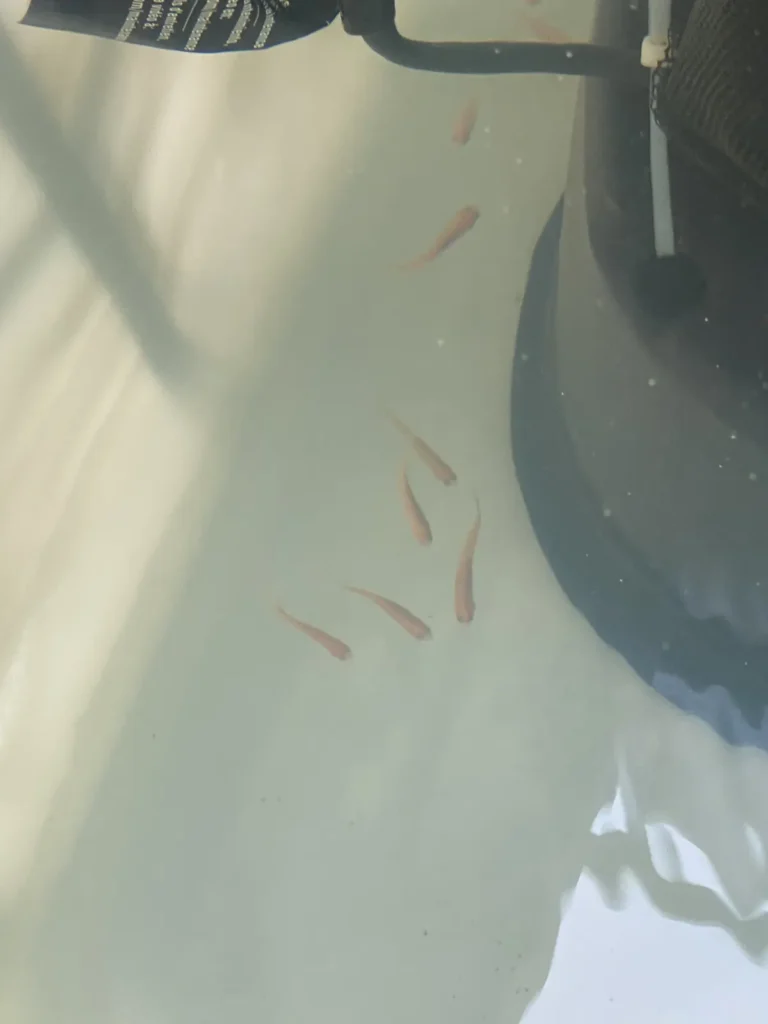
From my system: Field note: I started with roughly 20 tilapia and harvested roughly 16–18 after about 16 months. The fish grew well, but by the end the system was effectively overstocked for one grow bed and I was constantly chasing water-quality numbers. If I built again for plant production, I would probably use koi rather than harvest fish.
Start with three filters before comparing growth rates: is the species legal to possess, can you buy healthy fingerlings from a dependable source, and can your system hold its preferred water temperature without heroic energy bills? Tilapia ownership is restricted or permitted differently in some states because escaped fish can become invasive. Bass may also be regulated as game fish. Check the current rules for your state and locality before ordering live fish.
Climate should do as much of the work as possible. A fish that naturally fits the seasonal water temperature usually costs less to maintain and leaves more margin for power failures. Oklahoma State University Extension likewise recommends considering water temperature, tank needs, intended use, state laws, and availability when selecting aquaponics fish.
Authority reference: Oklahoma State University Extension — Aquaponics.
The best fish isn’t necessarily the fastest growing one. Consider:
- Your local climate
- Whether the system operates outdoors or inside a greenhouse
- Winter heating costs
- Available water volume
- Electricity reliability
- How much maintenance you’re comfortable performing
- Local regulations regarding fish ownership
Choosing a species that naturally fits your environment is almost always easier than trying to force unsuitable conditions year-round.
Quick Comparison
| Decision factor | Tilapia | Channel catfish | Largemouth bass |
|---|---|---|---|
| Temperature fit | Warm-water specialist; growth slows sharply in cool water | Broad warm-water tolerance and a practical outdoor choice | Warm-water fish, but less forgiving of unstable management |
| Feeding behavior | Readily accepts floating pellets | Accepts prepared feed; observe that bottom-oriented fish are eating | Predatory behavior makes feed training and uniform feeding more important |
| Handling concern | Cold stress and uncontrolled reproduction | Sharp pectoral and dorsal spines | Aggression, size variation, and cannibalism among uneven fish |
| Best practical fit | Heated greenhouse or reliably warm climate | Many backyard and outdoor North American systems | Experienced keeper with reliable sourcing and close observation |
Published temperature ranges are not permission to operate at the edge of survival. Fish can remain alive outside their best growth range while eating poorly, growing slowly, or becoming more vulnerable to disease. Design around the preferred operating range, then keep emergency margin above and below it.
| Species | Difficulty | Growth Rate | Temperature | Best For |
|---|---|---|---|---|
| Tilapia | Easy | Fast | Warm water | Greenhouses and warm climates |
| Channel Catfish | Easy to Moderate | Moderate | Cool to warm water | Outdoor backyard systems |
| Bass | Advanced | Moderate | Cool to moderate water | Experienced aquaponics growers |
Tilapia
Tilapia earn their reputation because they accept pelleted feed, tolerate crowding better than many food fish, and grow efficiently when the water stays warm. That final condition carries most of the fine print. Extension references commonly place strong tilapia growth in the upper 70s through the 80s Fahrenheit. Below the high 60s, feeding and growth decline; prolonged cold can become lethal depending on species and strain.
The practical question is not whether a heater can warm the tank on an average afternoon. It is whether the heater, insulation, electrical service, and backup plan can protect the fish through the coldest night. A bargain fingerling becomes a surprisingly expensive roommate when several hundred gallons must be kept tropical through winter.
Tilapia also reproduce readily. Mixed-sex populations can fill a tank with small fish that compete for feed and oxygen. Buy from a reputable hatchery, understand whether the stock is mixed-sex or predominantly male, and plan how you will prevent or manage reproduction.
Tilapia are the most popular food fish used in aquaponics around the world. They grow quickly, tolerate handling well, readily accept prepared feed, and convert food into growth efficiently.
They also produce a steady nutrient supply that supports productive vegetable gardens.
Advantages
- Fast growth
- Excellent feed conversion
- Generally disease resistant
- Good tolerance for crowding
- Reliable breeding
- Popular food fish
Challenges
- Require warm water
- Need winter heating in many climates
- May be restricted or regulated in some states
- Breed readily, leading to overcrowding if unmanaged
In colder regions, heating costs often become the deciding factor. Many backyard growers switch to catfish or seasonal production rather than heating several hundred gallons of water all winter.
See How to Heat an Aquaponics Fish Tank in Winter.
Catfish
Channel catfish are often the most practical middle road for a backyard food system. They handle a broad seasonal range, accept prepared floating feed, and do not require tropical water merely to remain comfortable. They still grow best in warm water, and cold water reduces appetite and nutrient input to the plants.
Tank shape deserves attention. Catfish use the bottom and need room to turn without scraping against sharp cage wire, cut plastic, pumps, or exposed fittings. Cover openings because startled fish can jump. Handle them carefully: the dorsal and pectoral spines are not decorative suggestions.
Because catfish may feed lower in the water column, watch the fish rather than measuring feed by habit. Floating feed makes it easier to confirm consumption and remove leftovers before they become ammonia with ambitions.
Channel catfish are an excellent choice for many North American backyard systems. They tolerate a broader temperature range than tilapia and generally require less supplemental heating.
Catfish spend much of their time near the bottom of the tank and adapt well to ponds, stock tanks, and IBC systems.
Advantages
- Good food fish
- Broad temperature tolerance
- Hardy species
- Less sensitive to handling
- Well suited for outdoor systems
Challenges
- Sharp spines require careful handling
- Produce significant waste
- Need strong filtration
- Can become quite large
Catfish generally make an excellent compromise between ease of care and food production.
Bass
“Bass” covers several possible culture fish, but largemouth bass are the usual backyard reference. They can live in tank systems, yet dependable feed-trained fingerlings may be harder to source than tilapia or channel catfish. Wild-caught fish are not a sensible shortcut: they bring legal questions, parasites, disease risk, and uncertain acceptance of prepared feed.
Uniform size matters. Bass are predators, and a large size spread can turn the stocking plan into a lunch menu. Buy fish of similar size, confirm they are trained to eat pellets, provide excellent aeration, and watch feeding closely enough to see whether timid individuals are being excluded.
Bass make the most sense when the keeper specifically wants bass, has lawful access to healthy cultured stock, and accepts slower or less predictable management. They are not the automatic “premium” upgrade from easier species.
Bass can certainly be raised in aquaponics, but they demand more attention than tilapia or catfish.
They are active predators, require excellent water quality, and do not tolerate poor conditions nearly as well as other common aquaponics fish.
Advantages
- Excellent table fish
- Popular recreational species
- Can perform well in cooler water
Challenges
- Require high water quality
- Less forgiving of mistakes
- Can become aggressive
- Need careful feeding management
- Generally better suited to experienced growers
Water Quality Matters More Than Species
Oxygen demand rises with fish biomass, feeding, bacterial activity, and water temperature. Warm water simultaneously holds less dissolved oxygen, which is why a heavily fed summer tank can move from fine to frightening faster than expected. Dedicated aeration should continue even when the returning water makes an impressive splash.
Test ammonia and nitrite frequently after increasing feed, adding fish, changing filters, or losing power. Temperature and pH affect ammonia toxicity, so a test result cannot be interpreted in isolation. The system should be sized for the fish at harvest weight, not the polite little fingerlings that arrived in the bag.
Technical reference: Oklahoma State University Extension — Nitrification and Maintenance in Media Bed Aquaponics.
Regardless of which fish you choose, stable water quality is far more important than chasing maximum growth rates.
- Maintain strong aeration
- Remove solids regularly
- Test water weekly
- Avoid overfeeding
- Provide adequate biological filtration
- Monitor temperature daily
Food fish produce considerably more waste than most ornamental systems, making filtration and oxygen critical.
See Aquaponics Water Testing Basics, Aeration in Aquaponics Systems, and Aquaponics Solids Filtration Basics.
Feeding Food Fish
Fish feed becomes plant fertilizer, so quality matters. Feed only what fish consume quickly and adjust feeding as water temperature changes.
Uneaten feed increases ammonia, encourages algae, reduces oxygen, and creates unnecessary maintenance.
Browse aquaculture fish feed on Amazon.
Stock Conservatively
Stocking rules expressed only as fish per gallon hide the variables that keep fish alive: final body weight, daily feed, oxygen transfer, biofilter capacity, solids removal, water temperature, and emergency response time. Ten small fish and ten harvest-size fish are the same head count and very different biological loads.
Plan from expected harvest biomass backward. Increase feeding gradually, confirm that ammonia and nitrite remain controlled, and leave reserve capacity for hot weather, dirty filters, pump wear, and the afternoon when the air line chooses personal freedom.
Quarantine new fish when practical. At minimum, obtain them from a reputable hatchery, inspect the shipment, equalize temperature carefully, and avoid pouring transport water into the main system. Do not add a second batch simply because the first group is hiding and makes the tank look empty.
Every beginner wants to maximize fish production. Nearly every experienced grower recommends starting lighter than you think you need.
Higher stocking density increases:
- Ammonia production
- Oxygen demand
- Filtration requirements
- Pump sizing
- Power outage risk
- Maintenance time
You can always add fish later. Recovering from a system crash is much harder.
Harvest Planning
Decide before stocking whether fish will be harvested all at once or in stages. A single large harvest sharply reduces feed input and therefore the nutrient supply reaching plants. Staggered harvest and restocking can smooth that change, but mixed sizes complicate feeding and may increase aggression in bass.
Also plan the unglamorous logistics: a suitable net, a clean holding container, ice or refrigeration, humane dispatch, local processing rules, and a safe way to reach every fish. Harvest day is a poor time to discover that the tank opening is smaller than the landing net.
Food fish require long-term planning. As fish are harvested, nutrient production decreases until replacement fish grow.
Many growers stagger stocking throughout the year so plants continue receiving a relatively stable nutrient supply.
Equipment Worth Buying
- Freshwater test kit
- Continuous-duty air pump
- Submersible water pump
- Water thermometer
- Battery backup aerator
For additional recommendations, visit the Aquaponics Equipment Guide.
Frequently Asked Questions
Which fish grows fastest?
Tilapia generally have the fastest growth rate under warm conditions.
Which fish is easiest for beginners?
Tilapia and channel catfish are generally easier than bass, although local climate often determines which species is the better choice.
Can I mix different species?
It’s usually better to raise one species per system. Different temperature preferences, feeding habits, and growth rates complicate management.
Do food fish require more maintenance than goldfish?
Generally yes. Food fish systems usually involve higher stocking densities, heavier feeding, harvest planning, and closer monitoring of water quality.
Final Thoughts
Tilapia, catfish, and bass can all produce outstanding results in aquaponics, but success depends on matching the fish to your climate and your ability to maintain stable water conditions.
For most backyard growers, tilapia and channel catfish provide the best balance of growth, reliability, and ease of management. Bass reward careful attention but leave much less room for mistakes.
The healthiest aquaponics system is rarely the one with the most fish. It’s usually the one where the fish, plants, bacteria, and filtration are all working together without drama.
Choosing the system goal: Compare tilapia and koi for backyard aquaponics before deciding between harvest fish and a plant-first system.