
Every hole below the waterline is a decision you get to live with.
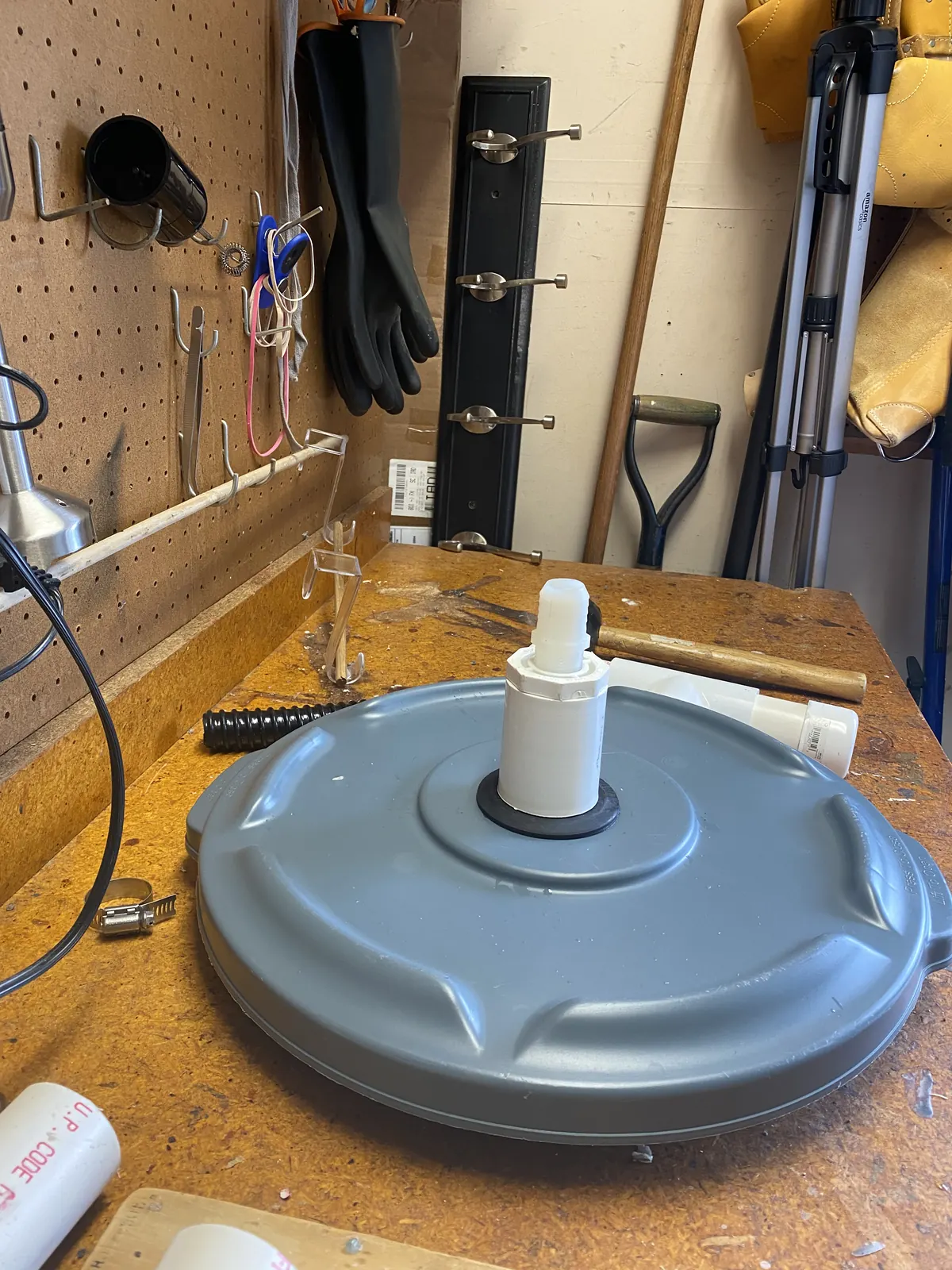
I used both bulkhead-style fittings and a 1½-inch UNISEAL in my IBC system. Both can make useful tank penetrations. Neither is permission to drill a sloppy hole and hope rubber, caulk and optimism finish the job.
Bulkhead fitting
A bulkhead mechanically clamps through the wall with a gasket. It is useful when you want a conventional threaded or slip connection and can reach both sides of the wall during installation.
Advantages: – positive mechanical clamping; – familiar pipe connection options; – easy to adapt with threaded/slip fittings; – often straightforward to service when access is good.
Watch for: – curved or irregular walls; – limited access to the back side; – incorrect gasket placement; – overtightening plastic components; – a hole that is oversized or out of round.
Uniseal
A Uniseal-style fitting uses a flexible rubber seal in a correctly sized hole. Pipe is pushed through the seal.
Advantages: – compact penetration; – some flexibility around the pipe; – useful where a conventional bulkhead is awkward; – no large nut required behind the wall.
Watch for: – exact hole-size requirements; – rough or damaged hole edges; – container wall geometry; – pipe outside diameter; – difficult insertion on larger pipe.
Oklahoma State lists bulkheads and Uniseals as effective aquaponics plumbing connections and notes that both cost more than simply trying to seal a penetration with silicone.
Which one should you use?
Use a bulkhead when you want a rigid, mechanically clamped connection and have suitable wall geometry and access.
Consider a Uniseal when a flexible pipe-through-wall connection suits the vessel and you can drill the required hole accurately.
Do not choose based only on price. Think about how you will install it, reach it, connect pipe to it and replace it later.
My firsthand use
I used 1-inch bulkhead connectors in my filter system and a 1½-inch UNISEAL for a flexible PVC pass-through.
Both are verified firsthand components.
I also drilled an unnecessary low hole in an IBC tank for a temperature-sensor experiment. Sealing that mistake took far more caulk and swearing than the idea deserved.
That experience changed my rule: if the penetration is not necessary, do not drill it.
Installation rules that matter
- Confirm the fitting’s required hole size before drilling.
- Mark the hole where you can actually reach both the fitting and
attached plumbing.
- Keep the hole round and clean.
- Remove burrs without enlarging the hole.
- Follow the fitting maker’s gasket/orientation instructions.
- Support attached pipe so its weight does not lever on the tank wall.
- Leak-test before the system is stocked.
The fitting is only one part of the connection. Tank wall, hole quality, pipe alignment and mechanical load all matter.
n