
Aquaponics equipment is light right up until you add the water and rocks.
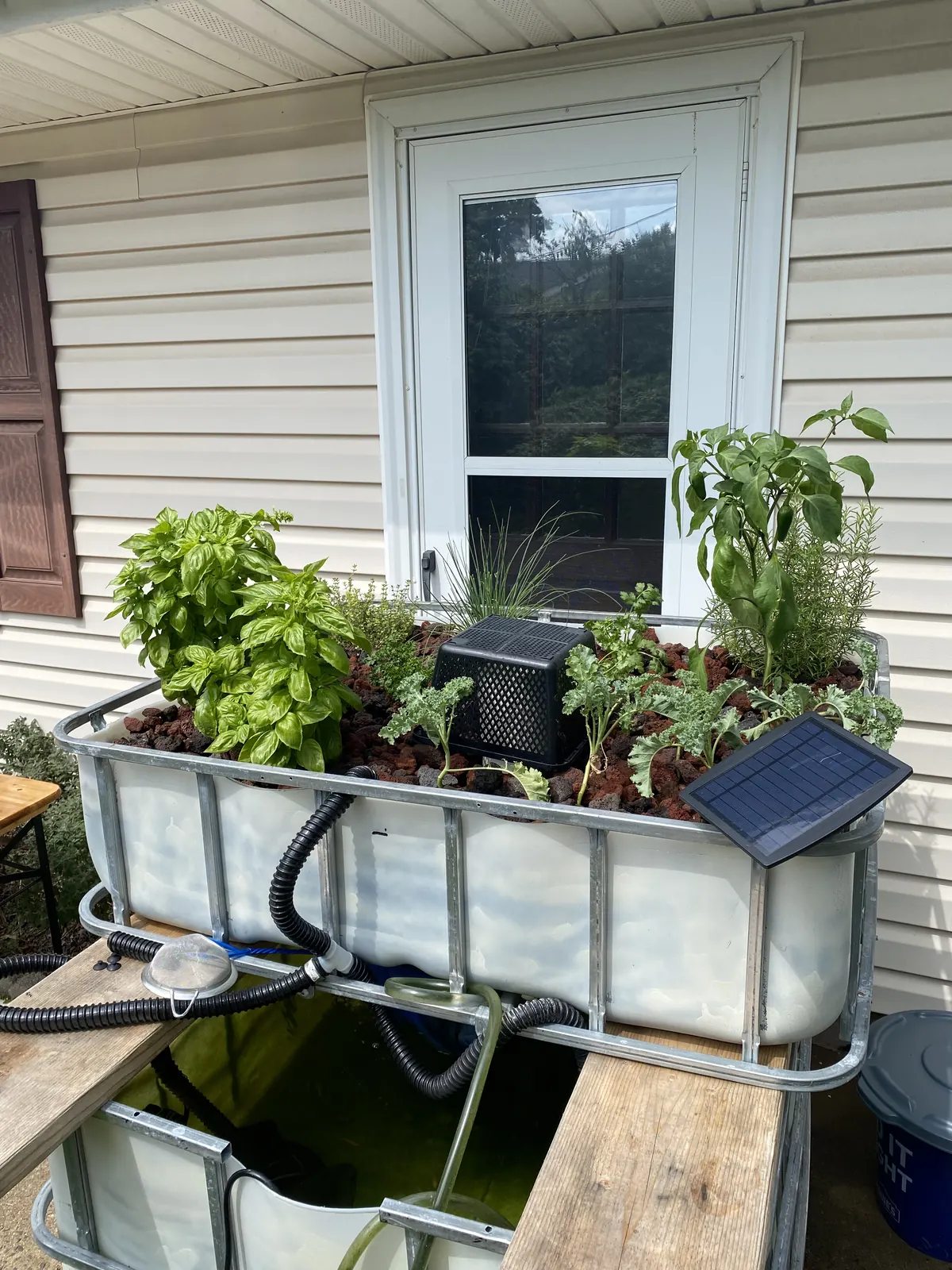
Then it becomes landscaping.
Water weighs about 8.3 pounds per gallon. A 275-gallon IBC filled with water is therefore carrying well over a ton of water before you count the container, cage, plumbing or anything else.
Media beds add their own substantial load.
Start with a stable base
A tank needs a base that can support the filled load without unacceptable settlement, tipping or distortion.
Outdoor soil can settle. Pavers can shift. Timber can rot. A surface that looks level when empty can change after months of water weight and weather.
Use a stable, level base appropriate to the actual load and site.
Support the container as designed
Do not assume a plastic tank can bridge unsupported gaps.
IBC totes are designed to work with their cage and base structure. Other tanks have their own support requirements.
Follow the container manufacturer’s support instructions where available.
For improvised beds or stands, structural adequacy is a real safety issue. AQP is not providing structural-engineering certification.
Media beds are heavier than they look
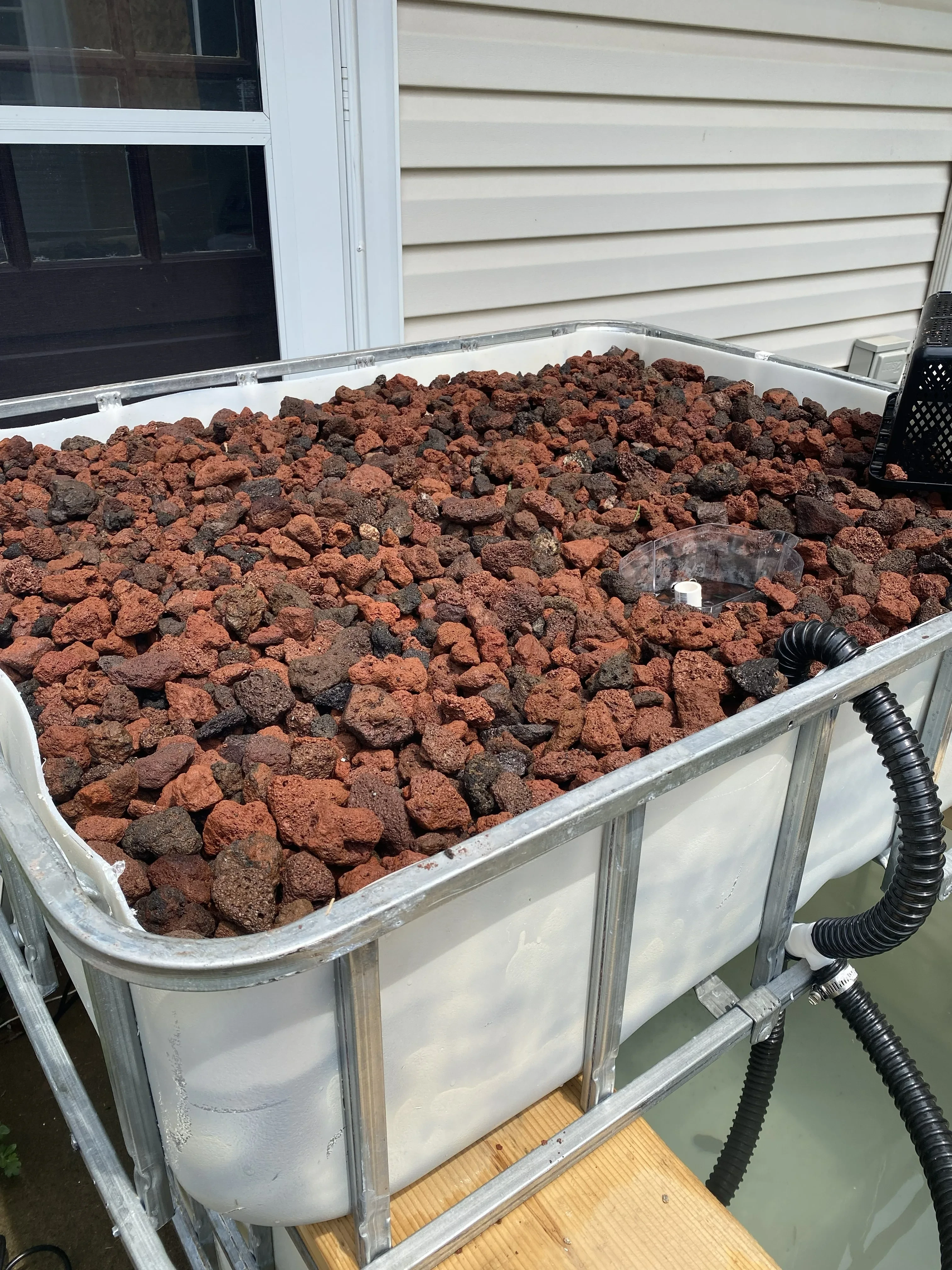
Rock media is heavy even before it is wet.
Support the full bed footprint or the structural members intended to carry it. Avoid narrow point loads that can distort plastic.
My IBC grow bed used the cut tote and cage structure. The lava rock still made the upper bed a serious load, not a planter box you casually move after lunch.
Level affects water behavior
An out-of-level grow bed can create: – uneven flood depth; – wet media on one side and dry media on the other; – misleading standpipe height; – unexpected overflow points; – poor drainage.
Check level in both directions before filling and again after the system is loaded.
Preserve access
Do not make a support structure so massive that you cannot reach: – the pump; – bulkheads; – drain plumbing; – valves; – siphons; – the bottom of the tank.
A structurally stable system that cannot be maintained is only half designed.
Recheck after weather and settling
Outdoor systems move.
Inspect the base after heavy rain, freeze/thaw cycles, severe storms and any visible settlement.
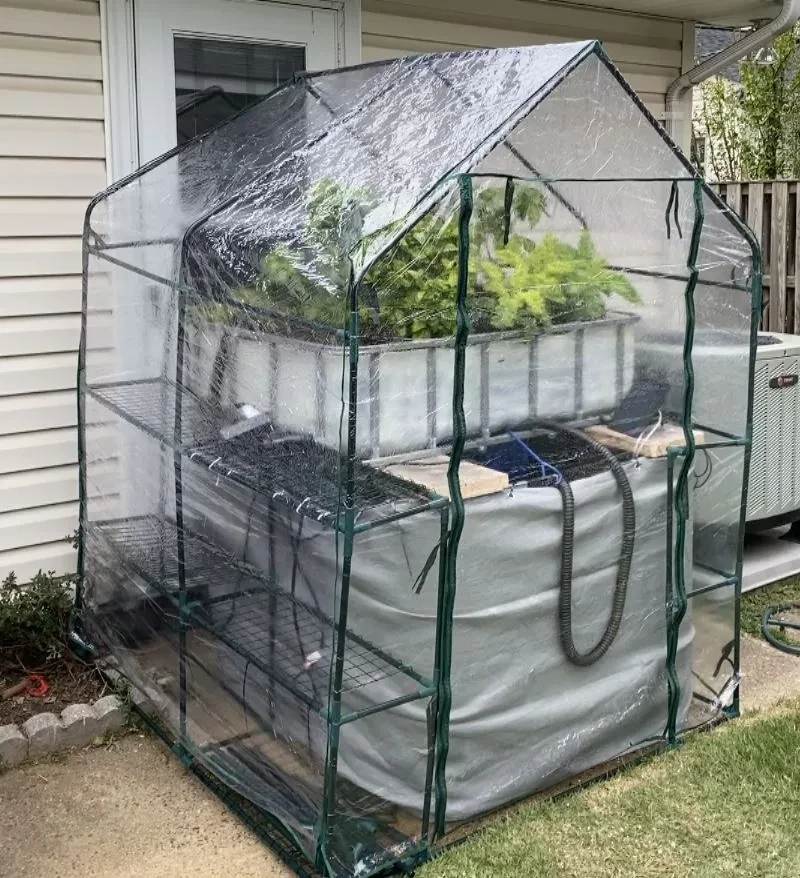
My greenhouse enclosure eventually failed in severe winter weather. The IBC system experience reinforced a broader point: outdoor structures do not stay in their day-one condition just because you would prefer them to.
Use weight calculations before construction
For water alone:
water weight (lb) ≈ gallons × 8.3
Then add: – tank/container; – grow media; – plants; – framing; – filters; – stored water; – people leaning or working on the structure where relevant.
Do not use the simple water calculation as a structural design certification. It is a planning number that tells you whether you are dealing with hundreds of pounds or thousands.
n