
I Would Build It Again. I Would Not Build the Same System Again.
That is probably the shortest useful summary of my IBC aquaponics experiment.
I built one heavily researched backyard system, operated it, modified it, fought with it, grew fish and plants in it, and eventually dismantled it when I moved.
I am not comparing ten systems.
These are the things that one real system taught me.
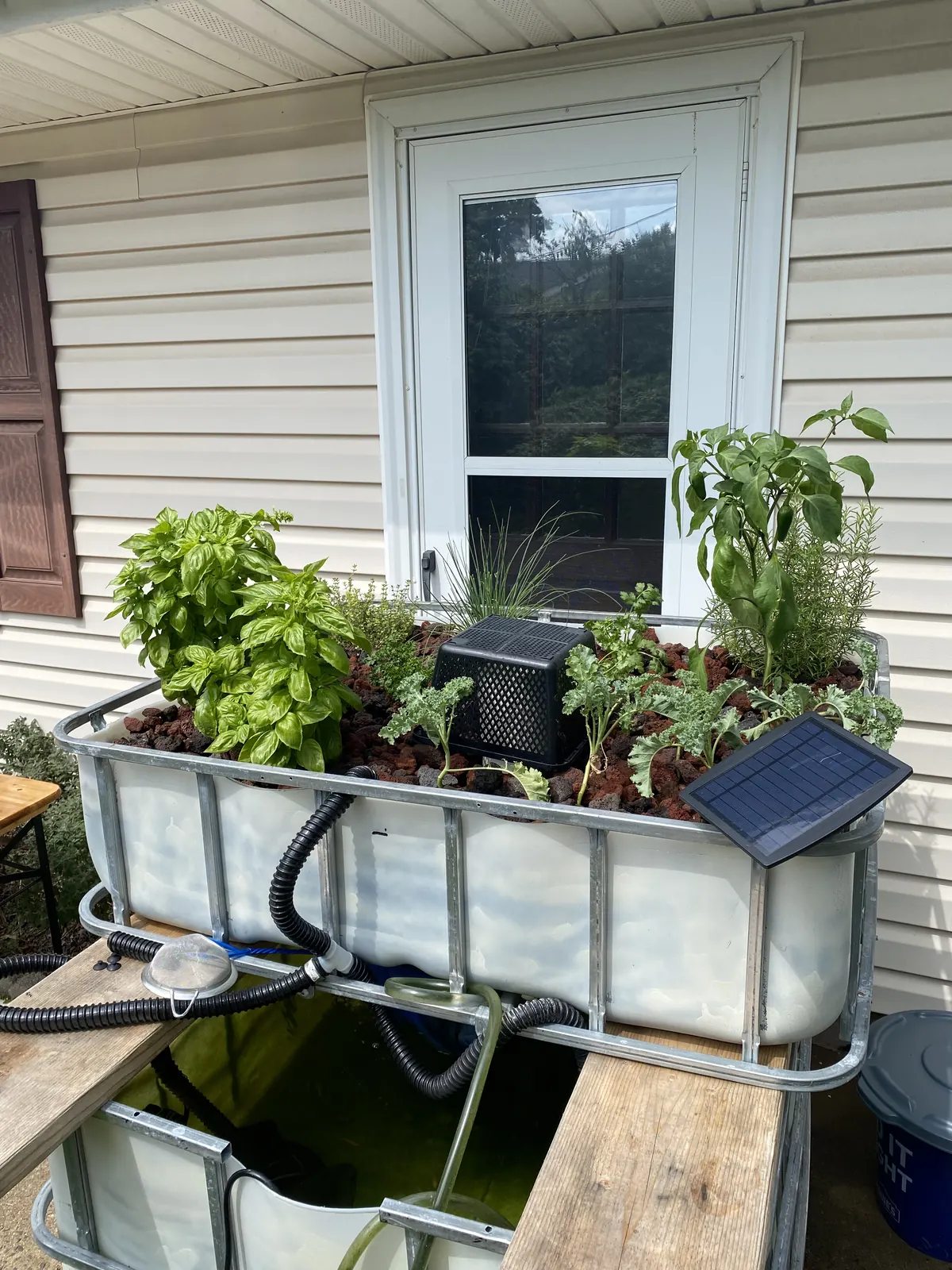
1. I Would Decide the Permanent Location First
An IBC tote is movable when it is empty.
Add hundreds of gallons of water, fish, lumber, lava rock, plumbing and electrical equipment and the word “movable” becomes theoretical.
If I built another system, I would decide where it is supposed to live before cutting the tote.
I would favor a location with:
- structural support for the load;
- permanent power;
- convenient water;
- drainage;
- weather protection;
- enough working room around the system.
The fact that I ultimately dismantled mine when I moved reinforced that lesson.
2. I Would Spend More on the Structure and Less on Clever Stuff
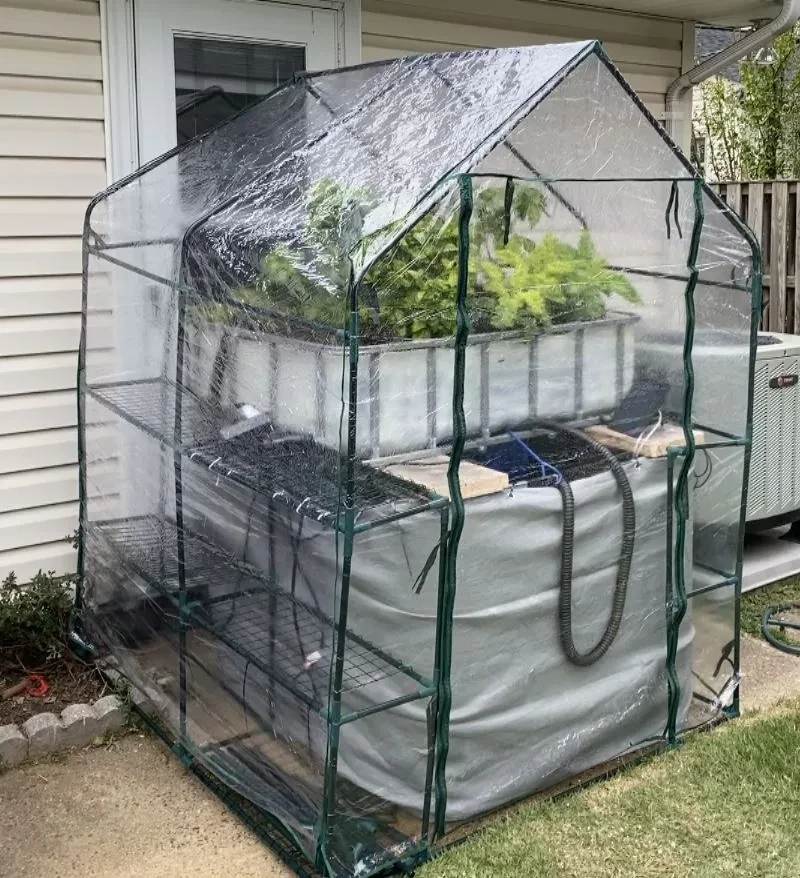
My inexpensive walk-in greenhouse did a job. It also showed its limitations when winter weather got serious.
Heating water inside a weak building envelope is an expensive way to discover that the building matters.
If I had to choose between a better enclosure and another clever accessory, I would put more money into the enclosure.
3. I Would Be Suspicious of Every Extra Hole in a Tank
One of my less brilliant ideas involved an instrumentation penetration.
The concept looked engineered.
The hole still had to remain watertight.
If I build another system, every penetration gets one question:
Does this actually need to go through the tank wall?
If the answer is no, I am not drilling the hole just because I own a hole saw.
4. I Would Size the Pump for Real Plumbing, Not the Box
My first pump was too weak for the actual system. The grow bed could take roughly 35–40 minutes to fill.
Then I overcorrected.
The replacement could fill the bed in roughly 2–3 minutes unrestricted. I throttled it with valves until I had a workable cycle of about 9–10 minutes filling and roughly 45 seconds to a minute draining.
Those timings are not a universal target.
The lesson is that pump rating, actual head and actual plumbing are different things.
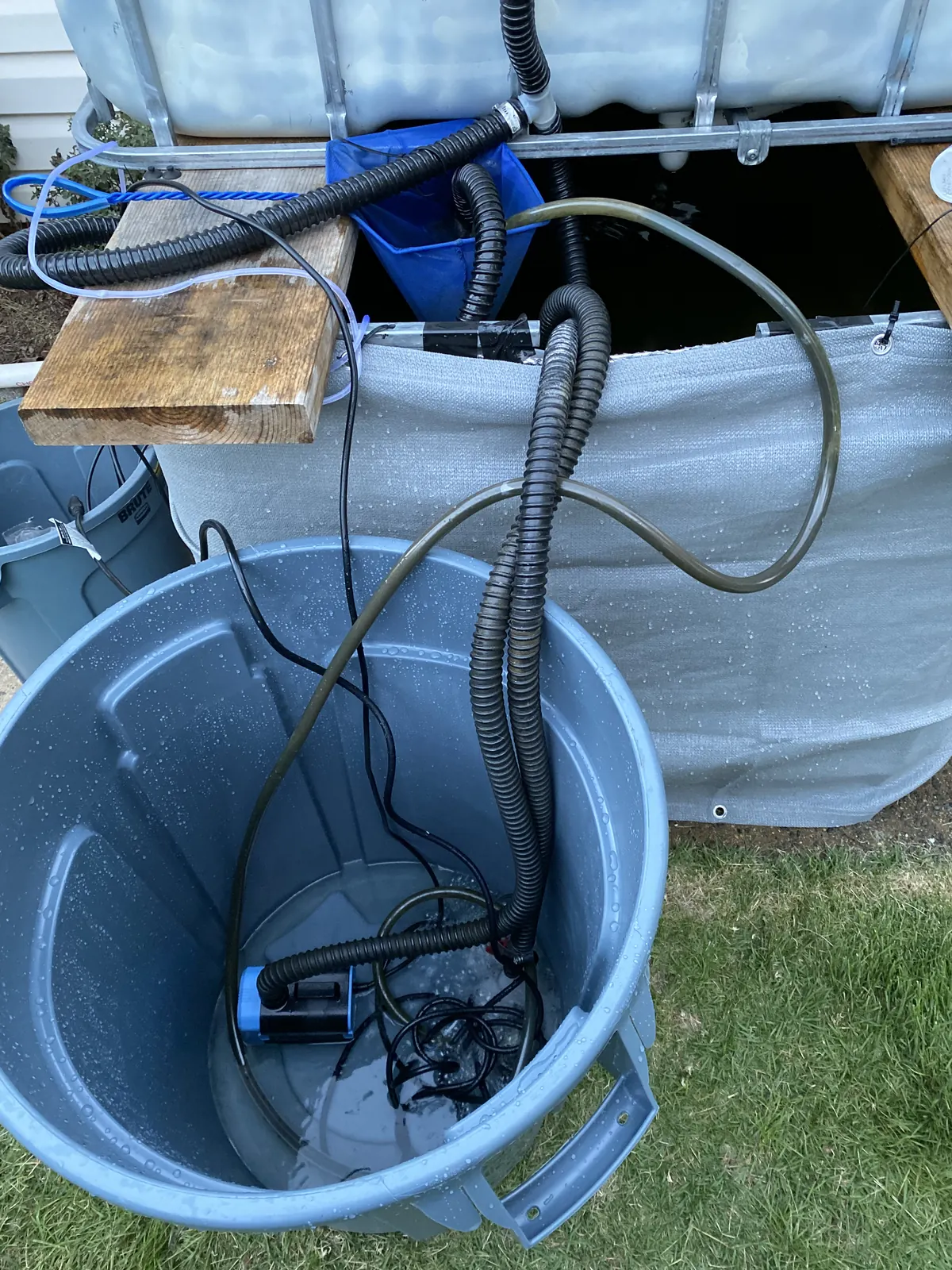
5. I Would Protect Pump Access Like I Knew It Would Clog
Because it will eventually need attention.
My pump intake was protected with mesh, and I still had a clog serious enough to require disassembly.
The right time to think about pump removal is before the tank is full and your hands are wet.
6. I Might Use Lava Rock Again. I Would Respect the Washing Job.
Lava rock worked as media for me.
It was also dirty, abrasive and a pain in the ass to rinse. I remember roughly 18–20 bags.
If the economics still favored it, I would consider using it again—but I would build the washing setup first and buy the rock second.
7. I Would Block Light From the Fish Water From Day One
I dealt with algae before improving shading and insulation.
That should have been a build decision rather than a later correction.
Light belongs on the plants. It does not need an invitation to the fish tank.
8. I Would Design Maintenance Access Before Final Plumbing
When the system behaved, daily attention could be around five minutes.
The unpleasant jobs were the ones where access turned a small problem into a production.
I would deliberately leave room around:
- pump;
- valves;
- drains;
- bell siphon;
- heaters;
- electrical connections;
- tank cover.
“Can I reach it?” belongs on the design drawing.
9. I Would Design Winter Protection Before Shopping for Heaters
I used heaters. I insulated. I monitored temperature.
A severe winter event still pushed the system into conditions I did not want.
Heaters are one component of winter design. They are not a substitute for the building envelope, insulation, backup planning and realistic heat loss.
Winter.
10. I Would Keep the Parts That Earned Their Place
This was not a story where everything went wrong.
The peppers did very well. Basil did well. The bell siphon became reliable once I tuned it. The tilapia grew. The lava-rock media bed worked. The plumbing largely became boring once it was sorted out.
Boring plumbing is a compliment.
The goal of a second system would not be to reinvent everything. It would be to keep what worked and remove the parts that created work without earning it.
My Five Rules for System #2
1. Pick the permanent location first. 2. Keep penetrations and plumbing as simple as the job allows. 3. Size circulation around real head and leave sensible flow control. 4. Spend on climate protection and service access before gadgets. 5. Assume every mechanical component will eventually need your hands on it.
I learned those rules from one system.
That is enough to make them useful. It is not enough to pretend they are universal laws.
Firsthand / Research Boundary
Intentionally firsthand-heavy. Research supports general engineering and aquaponics context; the judgments and outcomes belong specifically to Brian’s one IBC build.
Related planning: winter heating, pump sizing, the plumbing guide, the IBC build guide, IBC system cost, IBC case study, bell siphon troubleshooting, water flow, maintenance workload, and the build planning worksheet.
n