
Most Plumbing Leaks Start Before the Water Does
Aquaponics plumbing is not difficult because PVC is mysterious.
It becomes difficult when several different joint types get treated as though they seal the same way.
A solvent-welded socket, tapered pipe thread, bulkhead gasket, Uniseal and union O-ring each rely on a different sealing mechanism.
More sealant is not the universal answer.
Knowing what kind of joint you are making is.
Solvent-Welded PVC: Prep Matters
Charlotte Pipe’s current installation guidance starts with a square cut and removal of burrs before the solvent-welding steps. The cement chemically joins the pipe and fitting; it is not ordinary glue.
A practical sequence:
1. Cut the pipe square. 2. Remove burrs and prepare the edge. 3. Check that the pipe and fitting are clean and undamaged. 4. Use the primer/cement system specified for the material and application. 5. Apply the products as directed. 6. Assemble while the cement is still workable. 7. Seat and orient the joint promptly. 8. Hold it long enough to prevent push-out. 9. Allow the required cure before testing or service.
Charlotte’s current guidance also emphasizes that cure depends on conditions such as pipe size and temperature. Follow the actual cement and pipe manufacturer’s schedule rather than a universal internet number.
Dry-Fitting Can Lie to You
PVC socket fittings are tapered.
A dry pipe may stop before the final seated position it reaches during a properly made solvent-weld joint.
Use dry layout to confirm routing and general alignment, but do not assume the dry insertion depth proves the final joint position.
Marking alignment before cementing can help when orientation matters.
Threaded Plastic: Stop Trying to Win the Tightening Contest
Plastic tapered threads can keep turning while radial stress builds in the female fitting.
Spears explicitly warns that overtightening is a leading cause of threaded-joint failure and gives manufacturer-specific assembly guidance for its fittings.
The general lesson is simple:
Plastic threads need a seal, not brute force.
Use the sealant type and tightening method approved for the actual fittings. Do not assume that tape plus paste is “extra safe.” Spears specifically warns that some compounds can chemically stress thermoplastics and that its own fitting designs have defined sealant requirements.
Keep Sealant Where It Belongs
When a threaded joint requires sealant, apply it according to the fitting/sealant manufacturer’s directions.
Avoid excess material entering the waterway.
Also distinguish threaded joints from gasketed connections. A gasket or O-ring is designed to seal at a surface; burying it in unrelated thread compound does not improve the engineering.
Support the Pipe
A watertight joint can be turned into a leaking joint by bad layout.
Long pipe runs, valves, hoses and pumps have weight. Pumps can vibrate. Flexible tubing can pull sideways. A tank wall can flex.
Support the plumbing so a bulkhead, Uniseal or threaded adapter is not serving as a structural bracket.
Put Unions Where You Will Swear If You Don’t
Pumps, filters and major valves eventually need service.
A union lets a component come out without cutting the plumbing.
Install unions where:
- the component is likely to need removal;
- you can actually reach the union;
- the O-ring faces can be cleaned and inspected;
- there is room to separate the plumbing after the nut is loosened.
Serviceability is part of leak prevention because it reduces the temptation to wrench on fixed plumbing later.
My System Used Flow-Control Fittings for a Reason
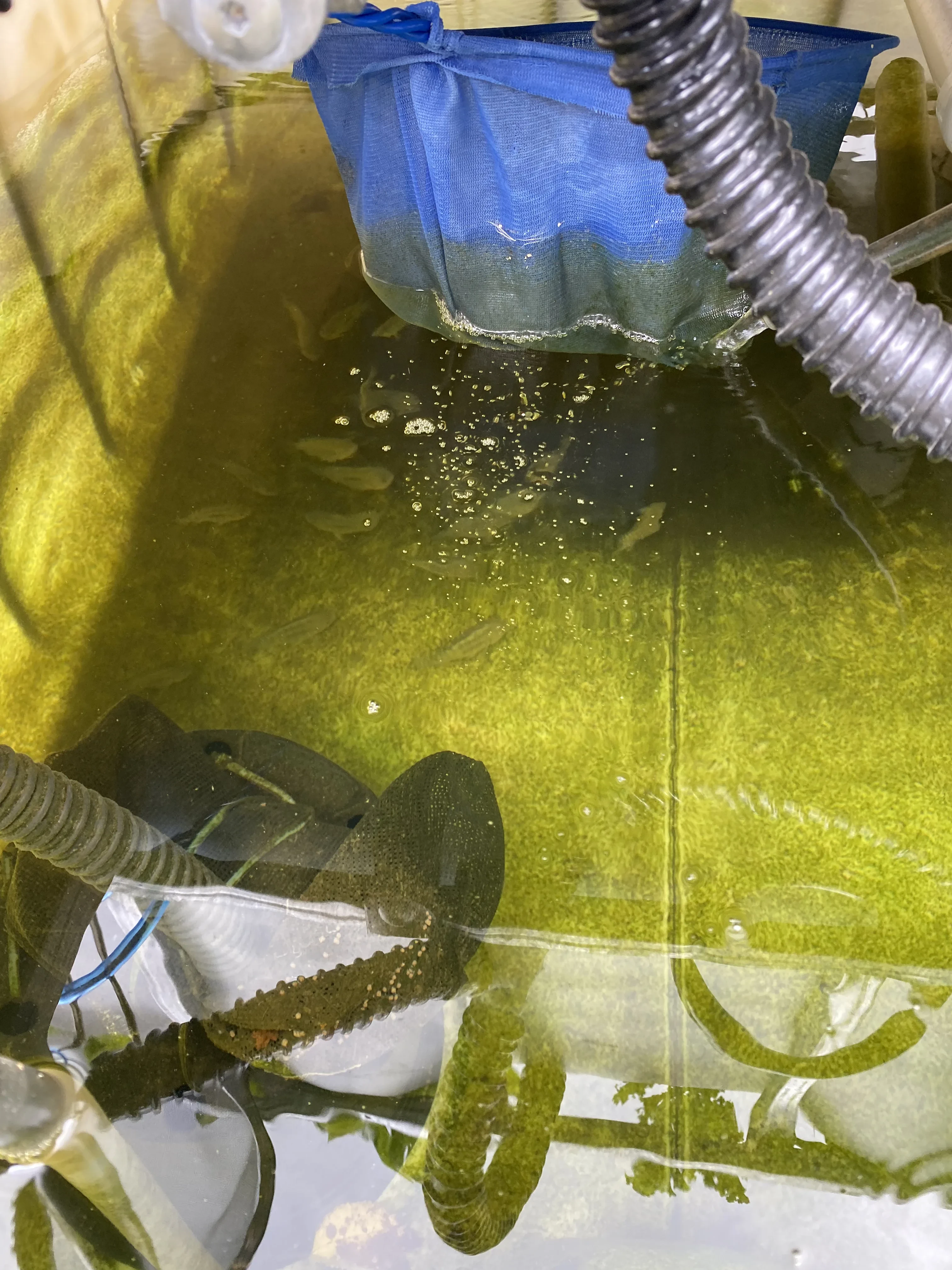
I used a hose-barb tee and barbed ball valve to split and tune flow in my IBC system.
That worked because the fittings had a real hydraulic job. They were not there because I wanted the plumbing to look complicated.
The same rule applies to every elbow, adapter and threaded transition: each connection is another place that has to remain sealed.
Use enough fittings to make the system serviceable and controllable.
Then stop.
Contextual affiliate opportunities
Brian’s verified firsthand inventory supports contextual links for: – Quickun 1-inch hose-barb tee; – DGZZI barbed ball valve; – 1-inch bulkhead connectors; – 1.5-inch Uniseal.
Use only where the product is actually relevant to the connection being discussed. Do not imply those products are required for every system.
Do Not Hide New Joints Before Testing
Run the system before covering joints with insulation or loading permanent structure around them.
Watch connections:
- at normal flow;
- at maximum expected water level;
- after pumps start and stop;
- after the pipe has had time to settle into its supports.
A slow seep is easier to fix when you can still see it.
If It Leaks, Identify the Joint Type Before “Adding More Stuff”
A solvent-weld joint, threaded fitting, gasketed bulkhead and Uniseal fail differently.
Do not automatically reach for silicone.
Find where the water is actually escaping, determine how that joint is supposed to seal, relieve mechanical stress, and repair or replace the connection accordingly.
Bottom Line
For solvent-welded PVC: square, clean, properly prepared joints and correct cure matter.
For threaded plastic: compatible sealant, restrained tightening and pipe support matter.
For every connection: build it so you can see it, test it and eventually service it.
See the plumbing guide, DIY tool guide, bulkheads versus Uniseals, drilling tank holes, safe sealants, leak troubleshooting, pipe and drain sizing, and wet testing.
nn