
Goldfish are one of the most practical fish for small backyard and indoor aquaponics systems. They are hardy, widely available, tolerant of cooler water, and capable of producing a steady nutrient supply for herbs, leafy greens, and other plants.
They are especially useful when the goal is plant production rather than harvesting edible fish. A properly stocked goldfish system can operate year-round without the higher temperature demands associated with tilapia and other warm-water species.
Goldfish are forgiving, but they are not maintenance-free. They produce substantial solid waste, require dependable aeration and filtration, and can quickly outgrow small containers. A ten-gallon aquarium may hold juvenile goldfish temporarily. It is not a long-term aquaponics fish tank.
Quick answer: Goldfish work well in aquaponics when they have enough water volume, strong aeration, reliable solids removal, stable water chemistry, conservative feeding, and room to grow. Start with fewer fish than the system appears capable of holding.
Why Goldfish Work Well in Aquaponics
From my system: Evidence boundary: I did not operate my IBC system with goldfish. My firsthand fish experience was with tilapia and minnows. This guide remains research-based and routes readers to the tilapia/koi decision page for the operator perspective.
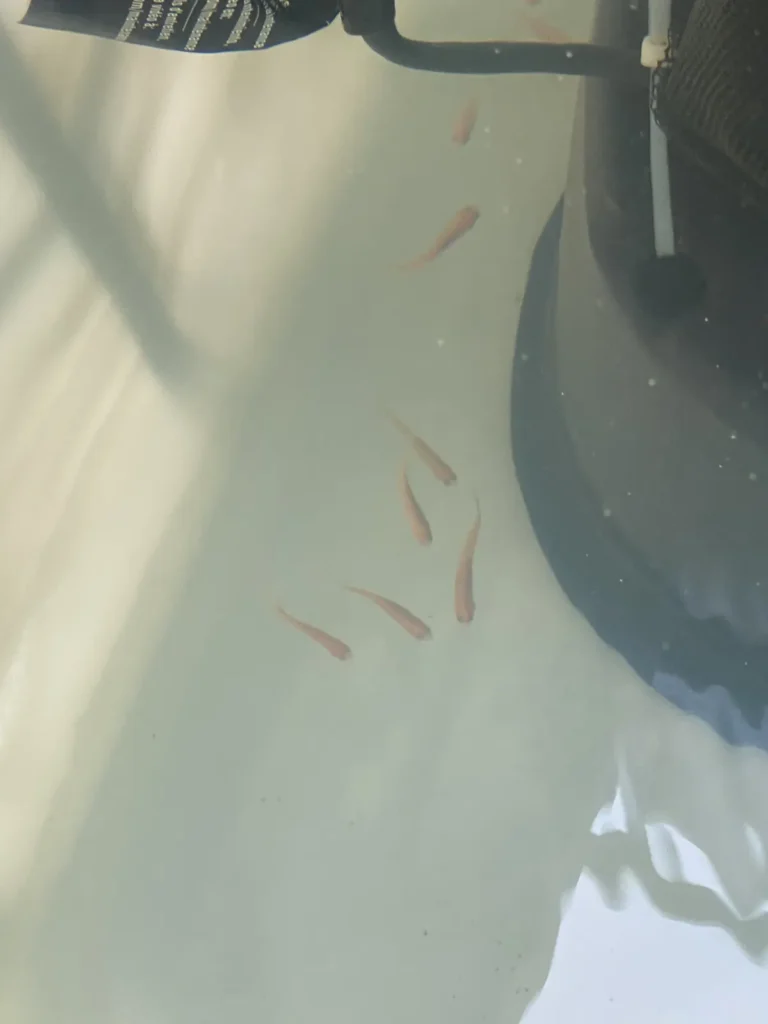
Goldfish have several advantages for hobby aquaponics systems:
- They tolerate cooler water better than many food fish.
- They are widely available and inexpensive.
- They accept common pellet feeds.
- They produce enough waste to support plant growth.
- They tolerate modest seasonal temperature changes.
- They are easier to keep through winter than tilapia in many climates.
- They work in indoor, greenhouse, stock-tank, and converted IBC systems.
- They can live for many years when given enough space and proper care.
The main tradeoff is that goldfish are ornamental rather than food fish for most growers. They also produce a large amount of waste for their size, which increases filtration and maintenance requirements.
Goldfish Are Not Small Fish
Pet stores often sell goldfish when they are only a few inches long. That creates the impression that they belong in small aquariums or desktop systems.
Common goldfish can grow much larger than most beginners expect. Even fancy varieties need significantly more swimming space and filtration than a small aquarium provides.
Plan the aquaponics system around the adult fish rather than the fish at purchase size. A lightly stocked stock tank, pond, or converted IBC container is a much better long-term home than a crowded glass aquarium.
Common Goldfish vs Fancy Goldfish
| Type | Body Shape | Swimming Ability | Aquaponics Suitability |
|---|---|---|---|
| Common goldfish | Long and streamlined | Strong | Excellent for ponds and larger stock tanks |
| Comet goldfish | Long body with extended tail | Strong | Good for larger systems with open swimming space |
| Shubunkin | Streamlined with calico coloring | Strong | Good for ponds and outdoor systems |
| Fantail | Rounded body with split tail | Moderate | Suitable for protected systems with gentle flow |
| Oranda | Rounded body with head growth | Moderate to weak | Requires stable water and careful handling |
| Ryukin and similar fancy types | Deep-bodied | Moderate | Best in lower-current systems |
Common, comet, and shubunkin goldfish are generally better for outdoor and greenhouse aquaponics because they are stronger swimmers and tolerate broader conditions.
Fancy goldfish can work, but they are more vulnerable to strong current, rough handling, poor water quality, and competition from faster fish. Do not mix slow fancy goldfish with aggressive or highly competitive fish.
Tank and Pond Size
Goldfish need more water than their purchase size suggests. Larger water volume also makes the aquaponics system more stable by slowing changes in temperature, pH, ammonia, and dissolved oxygen.
Suitable containers include:
- Large stock tanks
- Backyard ponds
- Converted IBC containers
- Large indoor aquariums
- Greenhouse chop tanks
- Food-safe lined tanks
Avoid narrow containers with poor surface area, unstable stands, sharp internal edges, exposed metal, or materials that may release unknown chemicals into the water.
The container should provide enough open water for swimming, easy access for observation, and a drain or collection area that allows solids to be removed.
How Many Goldfish Should an Aquaponics System Hold?
There is no reliable stocking number based on gallons alone. The safe fish load depends on mature fish size, filtration, aeration, temperature, feeding, water exchange, plant area, and maintenance.
For a beginner system, conservative stocking is safer than trying to maximize nutrient production immediately.
| System Size | Conservative Starting Point | Notes |
|---|---|---|
| 40 to 75 gallons | A few juvenile goldfish | Temporary for common goldfish unless upgraded as they grow |
| 100 to 150 gallons | Several juvenile goldfish | Requires strong filtration and future growth planning |
| 200 to 300 gallons | Small group of goldfish | Better long-term stability and swimming room |
| Large pond or multiple tanks | Stock by filtration and mature biomass | Do not use water volume as the only limit |
The correct approach is to add fish gradually while monitoring ammonia, nitrite, nitrate, oxygen, solids, and plant growth.
Never stock based on the maximum number the tank can physically contain. The biological system fails before the container runs out of visible room.
Start With Fewer Fish
Goldfish create a steady waste load, which is useful for plants but demanding on a new biological filter.
When starting a new system:
- Cycle the system before adding a full fish load.
- Add a small group of fish.
- Feed lightly.
- Test ammonia and nitrite daily.
- Increase feeding only when the system processes waste reliably.
- Add more fish only after the filtration and plants demonstrate enough capacity.
A new stock tank can hold water on the first day. That does not mean it can process the waste from twenty enthusiastic goldfish on the second day.
Water Temperature for Goldfish
Goldfish tolerate cool water and seasonal changes better than warm-water fish such as tilapia. That makes them useful for outdoor and greenhouse systems where winter heating is limited.
They still perform best when temperature changes gradually. Sudden drops or large differences during water changes can cause stress.
As water cools:
- Goldfish metabolism slows.
- Appetite decreases.
- Waste production declines.
- Plant nutrient production falls.
- Nitrifying bacteria process ammonia more slowly.
- Warm-season crops may stop growing.
Reduce feeding when the fish become less active. Do not try to maintain a summer feeding rate in cold water simply to keep nitrate production high.
For winter system planning, see how to heat aquaponics water in winter.
Water Quality Requirements
Goldfish are hardy, but poor water quality still damages them. Their tolerance should provide a safety margin, not an excuse to ignore testing.
Monitor:
- pH
- Ammonia
- Nitrite
- Nitrate
- Water temperature
- Dissolved oxygen when the fish load is high
- Fish behavior
- Water clarity and odor
Ammonia and nitrite should remain near zero in a mature system. Any confirmed reading deserves attention, especially when pH and temperature increase ammonia toxicity.
Use aquaponics water testing basics to establish a regular testing routine.
Affiliate disclosure: This page contains affiliate links. As an Amazon Associate I earn from qualifying purchases.
View freshwater master test kits on Amazon.
Goldfish Need Strong Aeration
Goldfish need reliable dissolved oxygen, especially as they grow and the system becomes more heavily stocked.
Water movement from a grow-bed return adds oxygen, but dedicated aeration provides better protection. If the main circulation pump stops, return-flow aeration stops with it.
Use:
- A continuous-duty air pump
- Two or more diffusers in larger containers
- Airline check valves where needed
- A dry and protected pump location
- A battery-powered backup aerator
Signs of oxygen stress include fish gathering near the surface, crowding around water returns, rapid gill movement, reduced feeding, and sluggish behavior.
See aeration in aquaponics systems for air-pump sizing, diffuser placement, and backup options.
View pond air pumps suitable for goldfish aquaponics on Amazon.
Goldfish Produce a Large Solids Load
Goldfish are effective nutrient producers because they eat consistently and generate substantial waste. That same trait makes mechanical filtration important.
Unmanaged solids can:
- Cloud the water
- Collect in tank corners
- Block pump screens
- Clog grow beds
- Coat plant roots
- Consume oxygen during decomposition
- Create foul-smelling anaerobic areas
- Increase maintenance
A swirl filter or radial flow settler can remove heavy waste before it reaches grow beds and biological filters. Brushes, screens, and filter pads may be used afterward for finer particles.
See aquaponics solids filtration basics for filter layouts and cleaning schedules.
Feeding Goldfish in Aquaponics
Goldfish should receive a quality feed appropriate for their size and water temperature. The feed becomes the main nutrient input for the plants, so quality matters to both fish and crop production.
A good feeding routine:
- Observe the fish before feeding.
- Offer a measured amount.
- Watch how quickly the feed is consumed.
- Remove or reduce feed if pellets remain.
- Adjust for temperature and appetite.
- Reduce feeding when ammonia or nitrite appears.
Feed floating pellets when practical because they make it easier to observe appetite and remove uneaten food.
Do not keep adding feed because the plants look hungry. Plant deficiencies may involve pH, iron, potassium, calcium, light, temperature, or root health rather than insufficient fish waste.
View floating goldfish pellets on Amazon.
Do Not Overfeed
Overfeeding is one of the fastest ways to turn a stable goldfish system into an ammonia and solids problem.
Uneaten feed:
- Breaks down into ammonia
- Consumes oxygen
- Clouds the water
- Clogs filters
- Encourages algae
- Creates surface foam and odors
- Increases bacterial load
Goldfish often act hungry even when they have been fed enough. Their willingness to beg is not a calibrated nutrient-management instrument.
What Plants Work Well With Goldfish?
Goldfish systems are well suited to plants that perform with moderate nutrient levels.
- Lettuce
- Basil
- Mint
- Parsley
- Chives
- Kale
- Swiss chard
- Watercress
- Asian greens
- Other leafy herbs and greens
Fruiting crops such as peppers and tomatoes can grow in goldfish systems, but they may require a larger fish population, more feeding, stronger light, and careful supplementation of nutrients such as iron and potassium.
Do not increase fish stocking simply to force more nutrients into a small system. It is safer to match the plants to the available nutrient production and supplement carefully when necessary.
See what plants grow well in aquaponics systems and growing herbs and peppers in aquaponics systems.
Goldfish and Grow Bed Media
Media beds work well with goldfish because they provide biological filtration, plant support, and some solids processing.
Suitable media includes expanded clay, natural lava rock, and tested inert gravel. The media should be clean, stable, and free from dyes, coatings, oils, and unknown contaminants.
Goldfish solids can accumulate in media beds when the fish load is high. Install mechanical filtration before the beds when waste begins restricting flow or creating odor.
See aquaponics grow bed media basics for media selection, depth, weight, and maintenance.
Water Circulation
Water circulation moves waste toward filtration and returns oxygenated, treated water to the goldfish.
A practical starting point is to circulate approximately the fish-holding volume once per hour, adjusted for head height, filtration, fish load, and system design.
Round ponds and stock tanks can use a gentle circular current to move waste toward a central collection area. Rectangular containers require more attention because solids collect in corners.
Goldfish are capable swimmers, but fancy varieties may struggle in strong current. Provide calmer areas where fish can rest.
See how to size a pump for an aquaponics system.
Goldfish Breeding and Overcrowding
Goldfish may reproduce when mature fish experience suitable temperature, daylight, feeding, and spawning surfaces.
Eggs may attach to plant roots, brushes, media guards, spawning mats, and other submerged surfaces. Adult goldfish may eat many of the eggs and fry, but some can survive in a protected system.
Unexpected reproduction can create overcrowding gradually. A system that began with a manageable fish load may contain dozens of juveniles before the filtration problem becomes obvious.
Manage breeding by:
- Monitoring fish numbers
- Inspecting protected areas for fry
- Removing spawning material when reproduction is unwanted
- Separating males and females when practical
- Rehoming excess fish responsibly
- Expanding filtration only when the system can support additional fish
Do not release unwanted goldfish into local ponds, streams, lakes, or drainage systems.
Introducing New Goldfish
New fish can introduce parasites, bacterial disease, and contaminated water. Additions should be handled carefully.
- Buy active fish from a clean and reputable source.
- Avoid fish with clamped fins, sores, white spots, abnormal swimming, or rapid breathing.
- Quarantine new fish when possible.
- Match temperature gradually.
- Avoid pouring store or transport water into the aquaponics system.
- Add fish in small groups.
- Test ammonia and nitrite after stocking.
- Watch the existing fish for stress or disease.
Quarantine is particularly important when the main system contains long-established fish that would be difficult to replace.
Signs of Healthy Goldfish
- Active and balanced swimming
- Regular feeding response
- Open fins
- Clear eyes
- Normal gill movement
- Intact scales and skin
- No persistent surface gasping
- No unusual isolation
- No repeated rubbing or flashing
Goldfish behavior should be observed before feeding because food can temporarily make even stressed fish appear active.
Warning Signs
| Behavior or Symptom | Possible Causes | First Response |
|---|---|---|
| Gasping at the surface | Low oxygen, nitrite, high temperature, gill damage | Increase aeration and test immediately |
| Refusing food | Cold water, poor water quality, disease, stress | Test water and inspect fish |
| Clamped fins | Stress, water quality, illness | Check ammonia, nitrite, pH, and temperature |
| Flashing or rubbing | Parasites, irritation, ammonia, chlorine | Test water and inspect skin and gills |
| Red streaks or sores | Injury, infection, chronic water-quality stress | Isolate when possible and identify cause |
| Floating or balance problems | Digestive issue, buoyancy disorder, severe stress | Stop feeding temporarily and test water |
| Crowding near returns | Low oxygen or poor circulation | Increase aeration and inspect pumps |
Do not assume every symptom requires medication. Poor oxygen, ammonia, nitrite, chlorine, temperature, and crowding commonly produce illness-like behavior.
Treatments Must Be Safe for Plants and Bacteria
Fish medications can affect nitrifying bacteria, plant roots, beneficial organisms, and food safety. Products designed for ornamental aquariums may not be appropriate in a shared aquaponics system growing edible crops.
When treatment is necessary, moving the fish to a separate hospital tank is often safer than medicating the entire aquaponics system.
Food-production rule: Do not add medication, algaecide, salt, pesticide, or other treatment to aquaponics water unless its use is appropriate for the fish, biological filter, and edible crops sharing that water.
Goldfish and Salt
Salt is sometimes used in ornamental fish care, but aquaponics plants vary widely in salt tolerance. Concentrations tolerated by goldfish may damage sensitive crops or accumulate after repeated dosing.
Do not add salt routinely. Confirm the purpose, calculate the full water volume, understand plant sensitivity, and account for salt already present in source water.
A separate treatment tank provides better control when salt is required for a specific fish-health problem.
Winter Operation With Goldfish
Goldfish are useful for cool-climate aquaponics because they can remain healthy at temperatures that would severely stress tilapia.
Winter operation still requires:
- Protection from freezing
- Insulated tanks and plumbing
- Reduced feeding
- Reliable aeration
- Temperature monitoring
- Enough water depth for stability
- Backup power
- Cold-tolerant crops
Do not allow pipes, filters, or pump housings to freeze even when the fish can tolerate the water temperature.
Summer Operation
Goldfish tolerate a broad range of conditions, but warm water holds less oxygen. Outdoor stock tanks and greenhouses can become dangerously warm during summer.
During hot weather:
- Shade the fish water.
- Increase aeration.
- Monitor temperature.
- Reduce feeding when fish become stressed.
- Keep algae under control.
- Maintain backup aeration.
- Avoid large additions of warmer replacement water.
See how to prevent algae growth in aquaponics systems.
Power Outages
Goldfish may be hardy, but they still need oxygen when the power fails. A heavily stocked tank can lose dissolved oxygen quickly, especially in warm water.
A practical backup plan includes:
- An automatic battery-powered air pump
- A UPS or portable power station
- A generator for extended outages
- A power-failure alarm
- A tested spare air pump
- A spare water pump
Stop feeding during an outage and restore aeration before worrying about grow lights or automatic feeders.
See backup power for aquaponics systems.
Common Goldfish Aquaponics Mistakes
Goldfish are hardy, but hardy is not the same as maintenance-free. The broader aquaponics beginner mistakes guide covers the surrounding system risks.
Keeping Goldfish in Too Little Water
Juvenile goldfish grow. Plan for adult size and long-term waste production.
Adding Too Many Fish at Once
A new biological filter cannot immediately process the waste from a full fish load.
Overfeeding
Goldfish beg constantly. Feed according to water conditions and actual consumption, not enthusiasm.
Relying Only on Grow Beds for Solids Removal
Goldfish produce enough waste to clog media beds in a heavily stocked system. Add dedicated mechanical filtration when needed.
Using Weak Aeration
Water-return splashing helps, but dedicated aeration provides more reliable oxygen and backup protection.
Ignoring Reproduction
Unexpected fry can increase the fish load without an obvious stocking decision.
Treating the Main System Without Checking Plant Safety
Fish medications and chemicals may damage plants, bacteria, or food safety.
Assuming Hardy Means Indestructible
Goldfish tolerate moderate mistakes better than many fish. They still suffer from ammonia, nitrite, oxygen loss, crowding, temperature shock, and poor maintenance.
A Practical Goldfish Aquaponics Setup
A reliable backyard goldfish system might include:
- A large stock tank, pond, or converted IBC container
- A continuous-duty circulation pump
- A swirl or radial flow solids filter
- A media grow bed or separate biological filter
- A continuous-duty air pump with multiple diffusers
- A secure opaque cover or shade
- A liquid water-test kit
- A waterproof thermometer
- A battery-backup air pump
- Easy drain and maintenance access
For pumps, filters, air pumps, test kits, heaters, plumbing, and backup equipment, see the Aquaponics Equipment Guide.
Useful Equipment for Goldfish Aquaponics
- Freshwater liquid test kit
- Continuous-duty pond air pump
- Automatic battery-backup aerator
- Submersible circulation pump
- Mechanical filter brushes
- Waterproof temperature probe
- Floating goldfish feed
Frequently Asked Questions
Are goldfish good for aquaponics?
Yes. Goldfish are hardy, tolerate cooler water, produce useful plant nutrients, and are widely available. They are especially suitable for hobby systems focused on plants rather than edible fish.
How many goldfish can I put in an aquaponics system?
The safe number depends on adult fish size, water volume, aeration, filtration, feeding, temperature, and maintenance. Start conservatively and increase only after testing confirms that the system remains stable.
Can goldfish live in an IBC aquaponics system?
Yes. A converted IBC container provides useful water volume, but it should be shaded or covered, properly filtered, strongly aerated, and stocked according to mature fish size.
Do goldfish produce enough waste for plants?
Yes. Goldfish produce enough waste for herbs, leafy greens, and other moderate-demand plants. Fruiting plants may require a larger mature system and careful supplementation.
Do goldfish need a heater in aquaponics?
Often they do not, provided the water does not freeze and temperature changes gradually. Heating needs depend on the climate, goldfish variety, plant selection, and winter production goals.
Can goldfish survive winter outdoors?
Goldfish can tolerate cool water, but the system must remain oxygenated and protected from freezing. Shallow containers, exposed pipes, pumps, and filters are more vulnerable than a deep pond.
How often should goldfish be fed?
Feed according to temperature, fish size, appetite, and water quality. Offer measured portions that are consumed promptly and reduce feeding when the water is cold or ammonia and nitrite are present.
Can goldfish overpopulate an aquaponics system?
Yes. Goldfish can reproduce, and surviving juveniles gradually increase the waste and oxygen load. Monitor fish numbers and rehome excess fish responsibly.
Can goldfish and tilapia live together?
They have different temperature preferences, growth patterns, and feeding behavior. Mixing them complicates temperature management and is usually unnecessary in a backyard system.
Why are my goldfish gasping at the surface?
Low dissolved oxygen is a common cause, but nitrite, high temperature, ammonia, gill damage, or contamination can create similar behavior. Increase aeration immediately and test the water.
Can I eat goldfish raised in aquaponics?
Goldfish are generally kept as ornamental fish rather than raised for food. Use an edible aquaculture species when fish harvest is part of the system goal.
Final Takeaway
Goldfish are a strong choice for small and medium aquaponics systems where reliable plant nutrient production matters more than harvesting fish. They tolerate cool water, adapt to several system styles, and provide a steady waste stream for herbs and leafy crops.
Their hardiness does not remove the need for proper care. Give them enough water volume, stock conservatively, provide strong aeration, remove solids, feed carefully, test the water, and plan for their adult size.
Goldfish can forgive a few beginner mistakes. They should not be expected to forgive the same mistake every Tuesday.