
An aquaponics greenhouse is not simply a clear roof placed over a fish tank. It is a climate system wrapped around another climate system: air temperature affects plants and equipment, while a large volume of water stores heat and refuses to change temperature on schedule. Good design uses that thermal mass; poor design pays to fight it.
This guide works from site and layout through summer ventilation, winter insulation, condensation, and emergency planning. The goal is not tropical weather in January. The goal is a stable operating envelope that matches the fish, crops, climate, and utility budget.
Affiliate disclosure: This guide contains Amazon affiliate links. If you buy through one of them, Aquaponics411 may earn a commission at no additional cost to you. As an Amazon Associate, Aquaponics411 earns from qualifying purchases.
Begin With the Climate, Not the Greenhouse Catalog
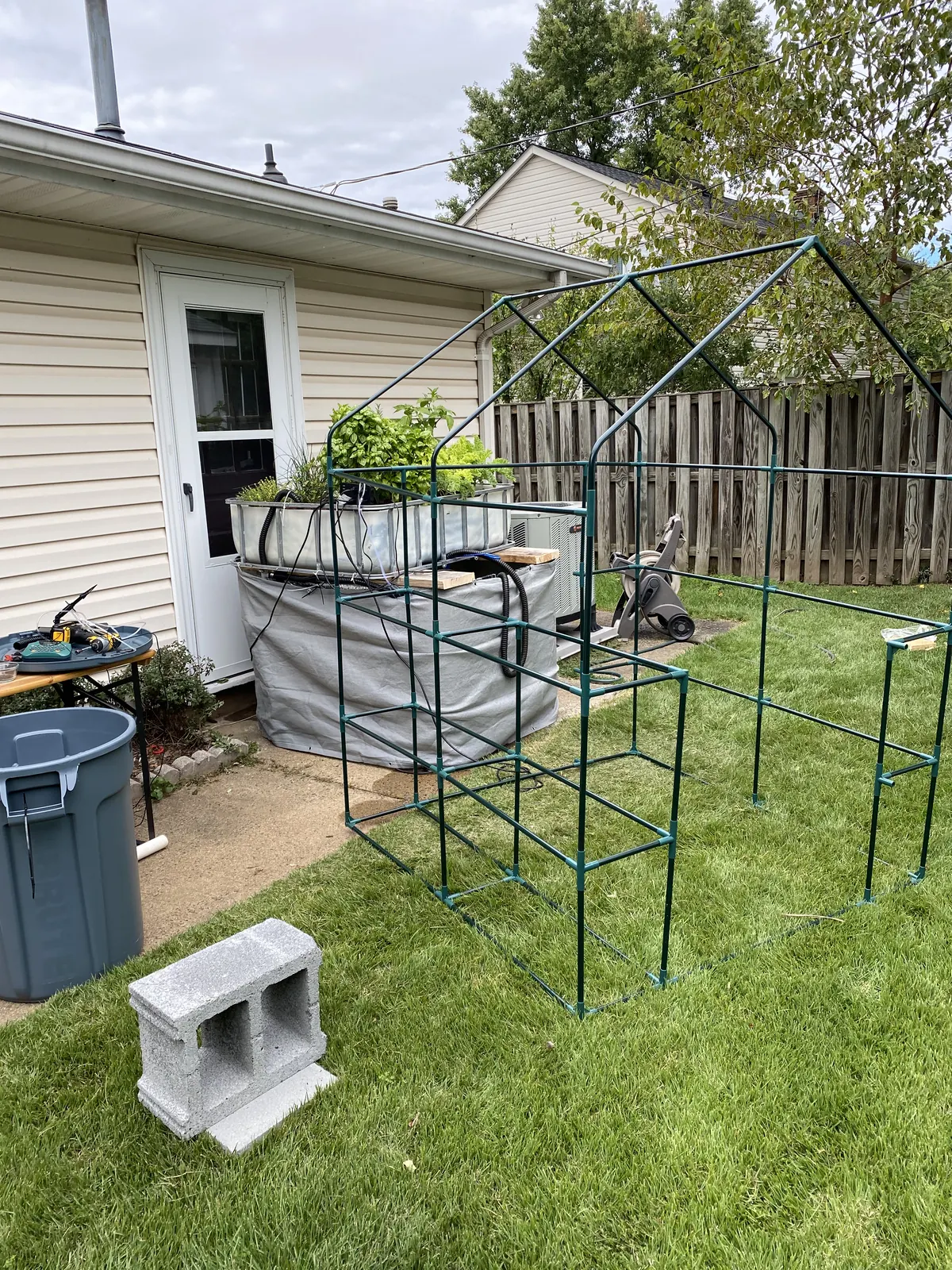
From my system: Field note: my inexpensive clear-tube greenhouse did what I bought it for at first: it kept squirrels and birds out and helped retain heat. It also made summer conditions hot and humid, and a severe winter storm eventually shredded it. I would still enclose the system, but I would spend more on the structure.
Record winter design lows, summer highs, wind exposure, snow load, sun path, shade, and access to power and water. Local building rules may govern setbacks, anchoring, glazing, electrical work, and snow or wind loading. A greenhouse kit’s marketing photograph is not a structural calculation for your address.
Orient for Useful Light and Controllable Heat
Solar access matters, but maximum sun is not always maximum production. In hot climates, afternoon exposure can drive water and leaf temperatures beyond useful ranges. In cold climates, winter sun and wind protection may be worth more than a perfect symmetrical view from the kitchen.
Leave exterior access for repairs, snow removal, glazing replacement, and drainage. Keep runoff from entering the system or undermining tank supports. Muddy access has a way of turning a two-minute inspection into tomorrow’s problem.
Lay Out the System for Human Reach
Provide aisles wide enough to carry a fish net, media bag, pump, or harvested plants. Keep electrical panels and controls above splash zones. Filters, unions, drains, and the fish-tank inspection opening should remain usable after plants reach full size.
The finished IBC build guide and plumbing guide should inform the floor plan. Greenhouse walls must not trap a pump behind the one panel that cannot be removed.
Summer Ventilation Is Core Equipment
Greenhouses collect solar heat quickly. Natural vents can work when inlet and outlet area, height difference, and wind exposure cooperate; powered exhaust provides more predictable exchange but depends on electricity. Size agricultural fans for the resistance created by shutters, screens, and inlets, not for an unrestricted laboratory number.
Useful categories include a thermostat-controlled greenhouse exhaust fan, greenhouse circulation fan, and moderate-density shade cloth. Confirm electrical, moisture, airflow, and outdoor ratings for the installation.
Air Exchange and Air Movement Are Different
Exhaust replaces hot humid air; circulation fans reduce stagnant pockets inside. Plants transpire, tanks evaporate, and cool glazing condenses that moisture. Gentle circulation helps leaf surfaces and framing dry, while excessive fan blast can stress plants and increase evaporation.
Shade Before Refrigeration
External shade intercepts solar energy before it enters the structure and is often more effective than shade placed inside. Apply only enough to manage heat while preserving crop light. Seasonal or retractable shade gives more control than permanently dimming a greenhouse through winter.
Winter Strategy: Reduce Loss First
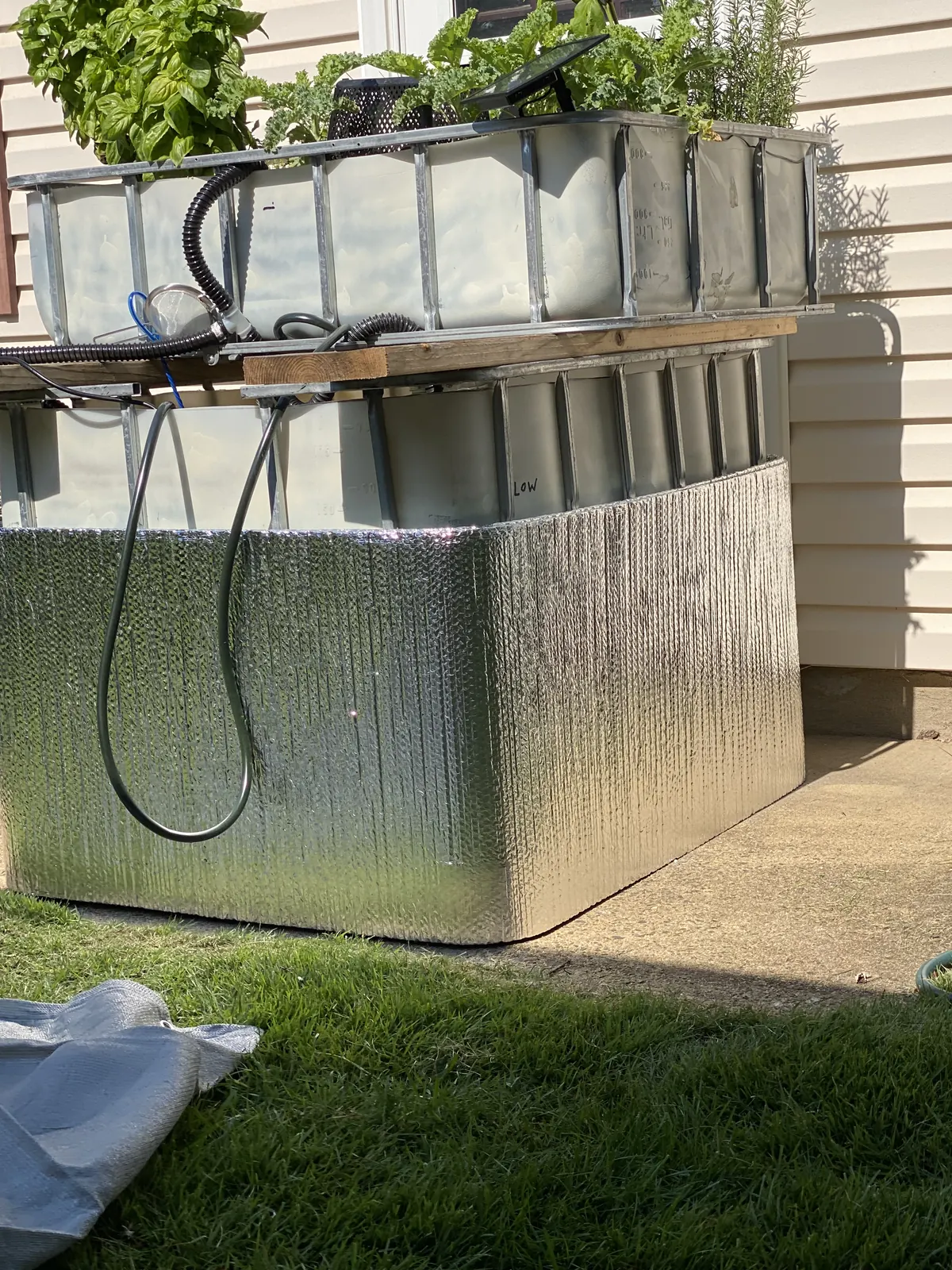
Seal uncontrolled drafts while preserving deliberate ventilation. Insulate opaque north walls where appropriate, protect plumbing from freezing, use removable tank insulation, and cover exposed water surfaces without blocking oxygen exchange or inspection. Heating uninsulated water inside a leaky shell is less a climate strategy than a charitable donation to the utility company.
Heat the Water or Heat the Air?
Fish and nitrifying organisms respond directly to water temperature, while plant leaves and roots respond to both water and air. In many backyard systems, protecting the tank and using targeted water heat is more efficient than holding the entire greenhouse at a warm daytime temperature overnight. The correct balance depends on crop and fish requirements.
Use the winter fish-tank heating guide for heater sizing, insulation, controllers, and outage realities. Do not run high-wattage heaters from an undersized extension cord or assume a small battery can carry them through a long outage.
Condensation, Corrosion, and Electrical Details
Condensation will find cold framing, fasteners, outlets, and control boxes. Choose corrosion-resistant materials, provide drainage paths, use drip loops, and follow electrical code for wet locations and ground-fault protection. Mount sensors where they measure representative conditions rather than directly above a heater or in an exhaust stream.
Water Management Inside the Greenhouse
Provide a safe place for overflow, filter flushing, water changes, and a failed hose connection to drain. A greenhouse floor should remain navigable when wet and should not direct dirty runoff back into the fish tank. Store amendments and cleaning products away from splash and accidental dosing.
Seasonal Operating Modes
| Season | Main risk | Primary controls |
|---|---|---|
| Spring | Rapid temperature swings | Automated venting, sensor checks, staged shade |
| Summer | Heat and low dissolved oxygen | Shade, exhaust, circulation, added aeration |
| Autumn | Cold nights after warm days | Seal checks, insulation, heater testing |
| Winter | Freeze and outage | Water insulation, alarms, emergency aeration, drain plan |
Backup Planning
Ventilation failure can overheat a greenhouse; power failure can also stop pumps, air, and heat. Prioritize oxygen and circulation according to season, use temperature alarms with meaningful thresholds, and keep a response plan that another person can follow. The backup-power guide separates survival loads from equipment that batteries cannot reasonably carry.
A Build-in-Stages Plan
- Prepare drainage, foundation, anchoring, and utilities.
- Erect a structure rated for local loads.
- Install vents, fan openings, and shade attachment points before equipment crowds the walls.
- Place tanks and beds with maintenance clearance.
- Complete wet-location electrical and water management.
- Test summer and winter controls before livestock depends on them.
Frequently Asked Questions
Does a greenhouse eliminate the need for a fish-tank heater?
Not automatically. Nighttime air can cool quickly, and water-temperature requirements depend on fish species. Insulation and solar gain reduce demand but do not guarantee a safe minimum.
Should the fish tank be in direct sun?
Usually no. Direct light encourages algae and can create unwanted temperature swings. Use the greenhouse to light plants while shading or insulating the tank appropriately.
Can one thermostat control everything?
A single sensor cannot represent leaf temperature, shaded air, sunlit air, and water. Separate controls and alarms for critical loads provide better information and fewer unpleasant surprises.
Technical Sources
Aquaponics design guidance was checked against the FAO small-scale aquaponics manual. Fan-selection principles were checked against Penn State Extension’s rated ventilation fan guidance.
Glazing and Covering Tradeoffs
Single-layer film is inexpensive and transmits useful light, but it has limited insulation and a finite service life. Inflated double film improves insulation when installed as a complete system. Polycarbonate panels are durable and can insulate better, though framing details, expansion allowance, condensation channels, and UV orientation matter.
Compare total installed cost, replacement access, local wind and snow requirements, expected life, and light transmission. A bargain covering that must be replaced over a full fish tank in February has discovered an inventive way to become premium-priced.
Match the Greenhouse to the Fish and Crops
Warm-water fish and heat-loving fruiting crops may align during summer but create a costly winter target. Cool-season greens can tolerate air conditions that would slow basil or peppers, while the fish tank may still need its own minimum temperature. Plan seasonal crop changes instead of forcing every organism to enjoy the same artificial July.
Water temperature changes slowly, which can protect fish from brief air swings but can also store unwanted summer heat overnight. Track both air and water, including daily minimum and maximum readings, before deciding whether the next investment should be shade, ventilation, insulation, or heat.
Sensor Placement and Calibration
Use separate sensors for representative shaded air and circulating water. Keep probes away from direct sun, heaters, exhaust outlets, and stagnant corners unless those locations are intentionally being studied. Compare inexpensive sensors periodically; two displays agreeing at purchase can become distant cousins after a damp season.
Set alarms around response time, not merely biological limits. If nobody can reach the greenhouse for an hour, the alert must arrive early enough to act. Test the notification path and backup batteries just as deliberately as the sensor itself.
Operating Cost Before Construction
Estimate fan, pump, aeration, lighting, and heating energy by wattage and expected runtime across each season. Heating usually dominates cold-climate scenarios, while ventilation and supplemental lighting can be significant elsewhere. Include replacement glazing, shade material, filters, and backup equipment rather than counting only the frame.
Then compare the cost of a smaller conditioned zone, seasonal fish choice, winter crop change, added insulation, or partial shutdown. The most economical greenhouse is often the one designed to change modes gracefully instead of defending one temperature all year.