
A pump outlet is not a pipe-sizing calculator.
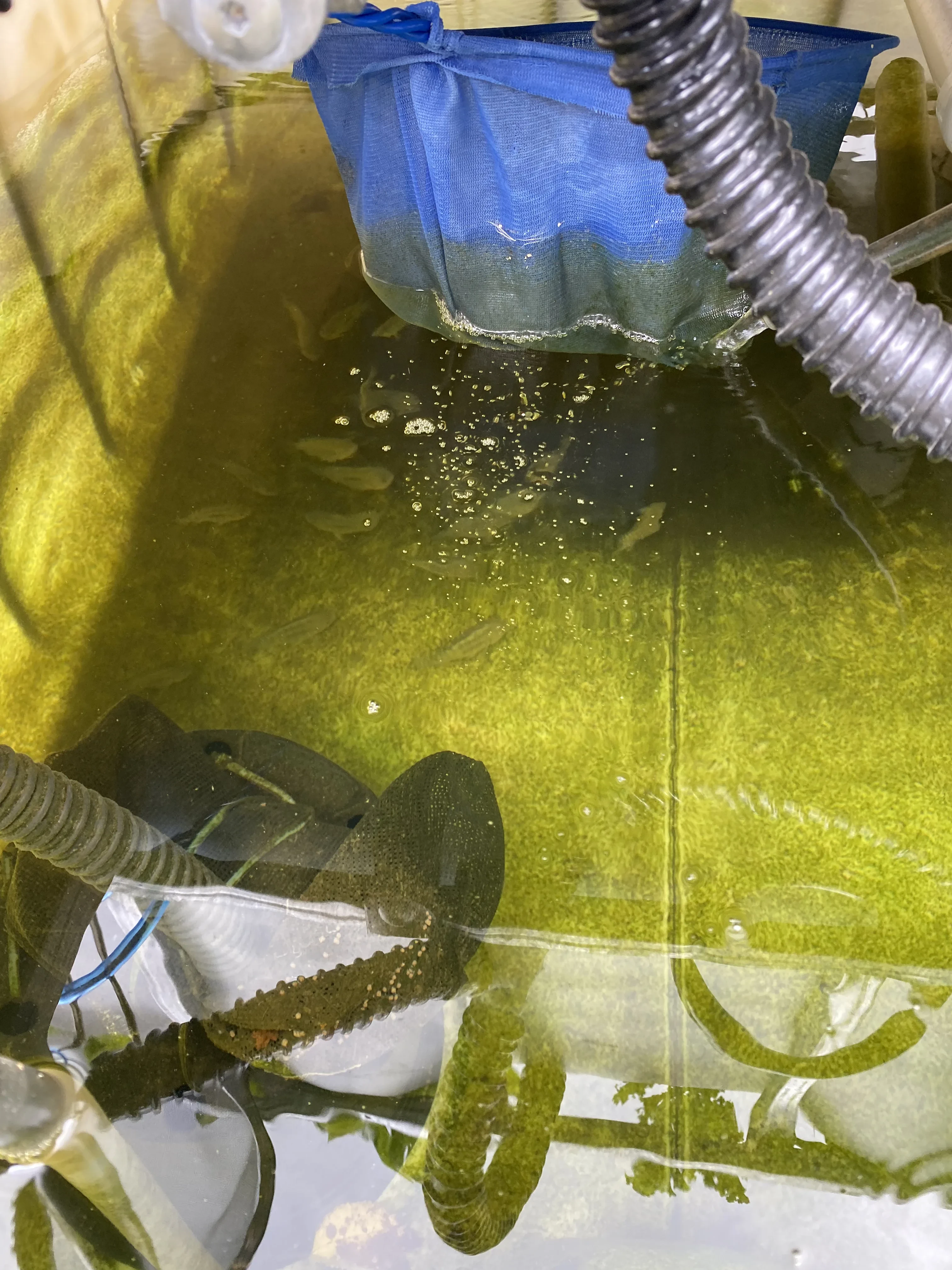
Aquaponics plumbing has two different jobs: pressure flow pushed by a pump and gravity flow that has to leave without help.
Treating those as the same thing is how you end up with a pump that can fill a container faster than the drain can empty it.
Start with required flow
Determine the actual water flow the system needs, then size the pump for that flow at the real head height.
After that, size plumbing so it can carry the flow without creating unnecessary restriction.
Oklahoma State recommends oversized pipes where practical because roots, solids and biofilm can reduce capacity over time.
Pumped lines
A pumped line has pressure behind it, but every restriction costs delivered flow.
Losses come from: – vertical lift; – long pipe runs; – small pipe; – elbows and tees; – valves; – reducers; – filters and fittings.
That is why the gallons-per-hour number printed on a pump box is not the flow at your grow bed.
My first pump filled the grow bed too slowly. The replacement was much stronger. I eventually split the discharge and used a valve to tune the grow-bed branch.
The plumbing had to manage the pump rather than merely connect to it.
Gravity drains
Gravity drains deserve more margin.
They have no pump forcing water through a partial obstruction. Roots, media, biofilm or a poorly placed fitting can reduce capacity.
Design the drain to carry more than the expected normal inflow.
If a component can receive pumped water, ask what happens if the drain loses part of its capacity.
Do not create a choke point
A large pipe does not help if the flow has to pass through one tiny valve, barb, screen or tank fitting.
Look at the smallest effective opening in the route.
Media guards and screens need enough total open area that partial fouling does not immediately become a restriction.
Returns and splashing
Gravity returns need a continuous downhill path without unintended high points that trap air or create backwater.
Plan where the return discharges. A drop can add useful surface agitation, but excessive splash wastes water and can create wet electrical areas.
Measure actual flow
After construction, measure delivered flow rather than assuming.
A simple timed-volume test can tell you how much water actually arrives at a branch.
Then watch operating levels under real conditions.
Pipe sizing is complete when the system works with margin, not when the fittings match on paper.
n