
Water under an aquaponics system has two explanations.
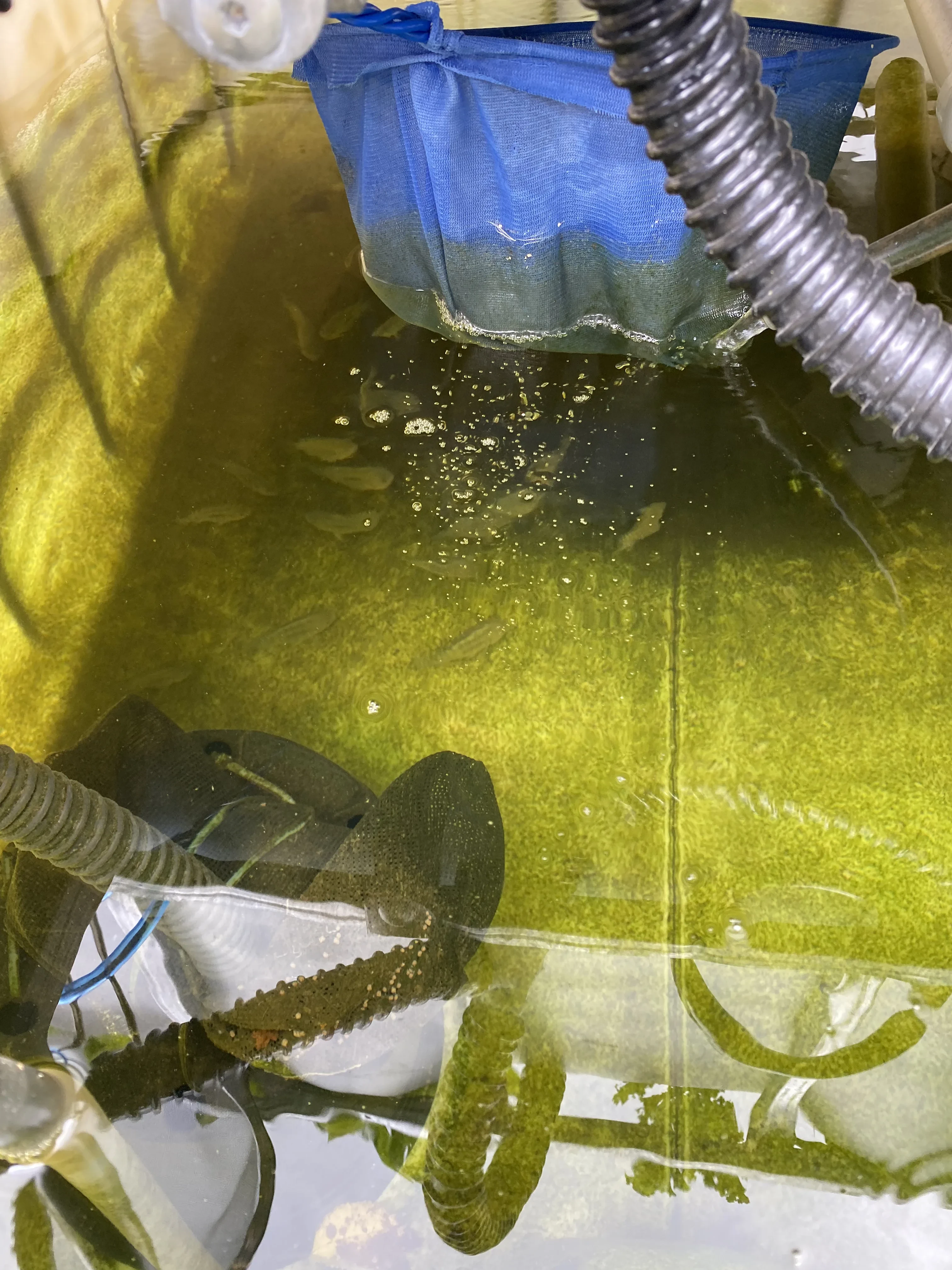
You spilled it, or the system did.
If it keeps coming back, stop pretending it was you.
Oklahoma State lists leaks among common aquaponics mechanical problems because a leak can lower system volume enough to stress fish and plants.
Find the source before fixing anything
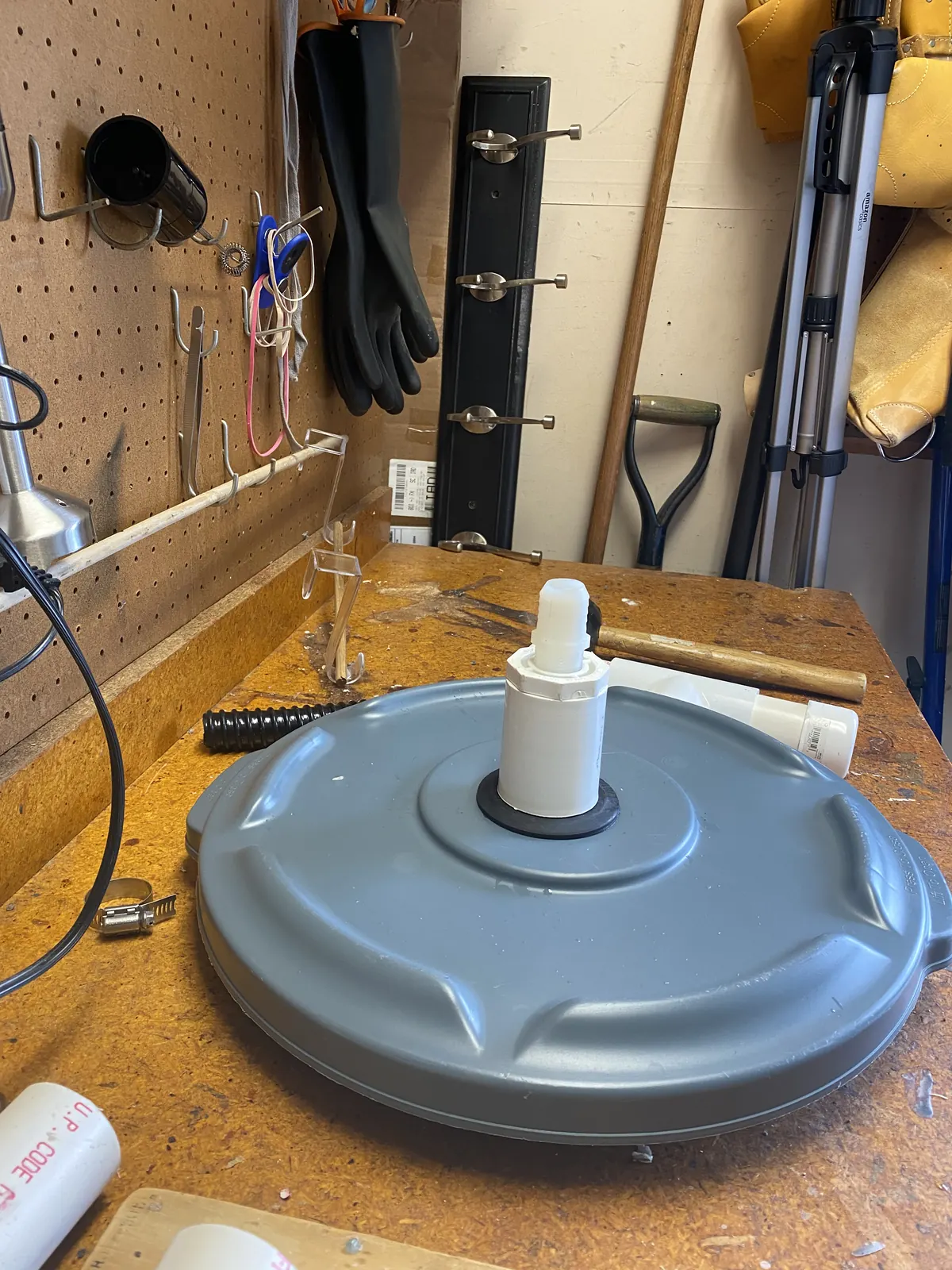
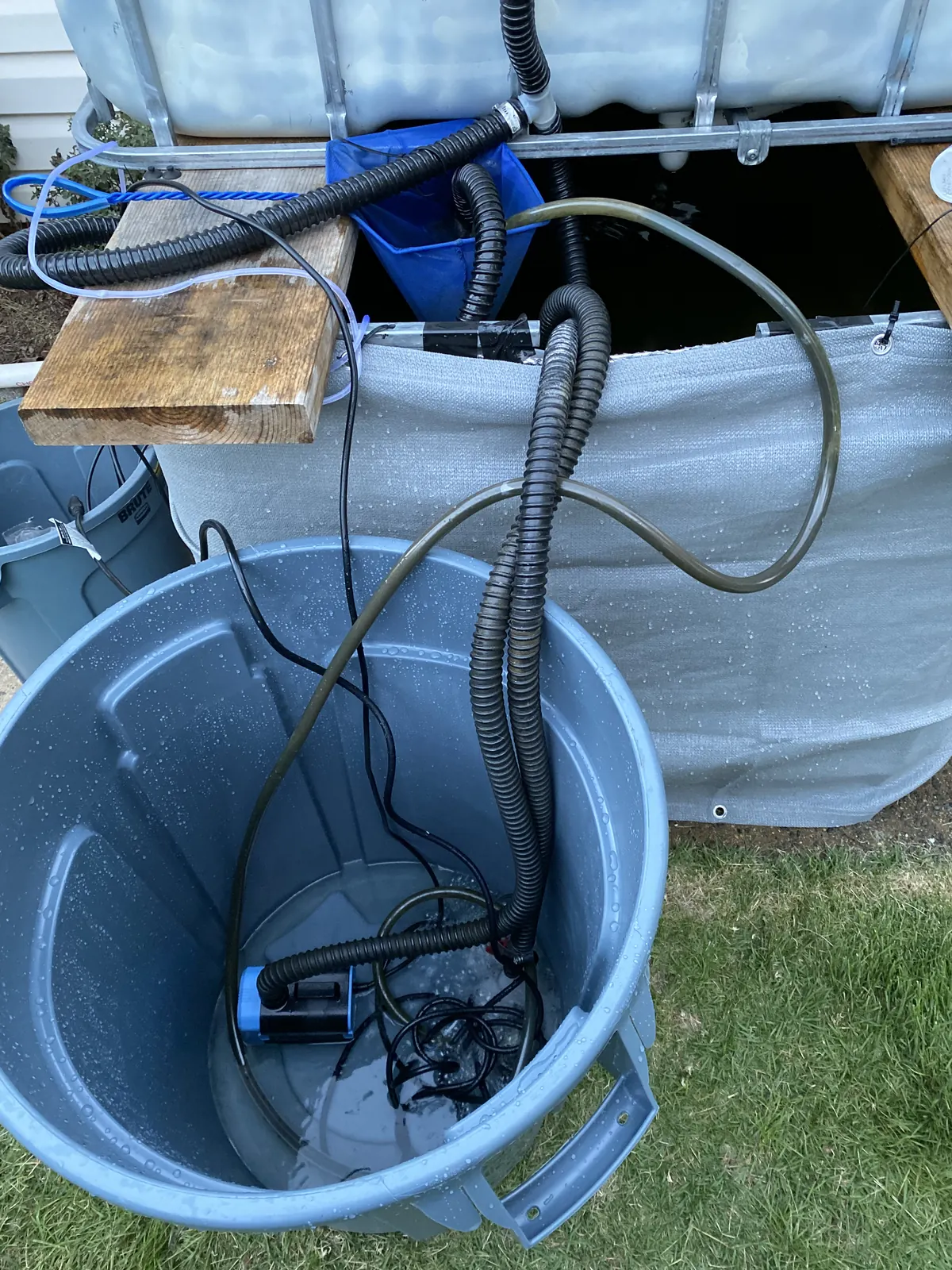
Turn off or isolate equipment if needed to make the area safe.
Dry the suspected area. Then watch where water first appears.
Trace upward. Water can run along pipe, tank walls and framing before dripping somewhere completely unrelated to the actual failure.
Common leak points: – bulkheads and Uniseals; – threaded fittings; – hose barbs and clamps; – glued PVC joints; – valves and unions; – pump connections; – tank seams or cracks; – overflowing beds that look like plumbing leaks.
Is it a leak or an overflow?
A grow bed that rises too high can spill over the rim even when every fitting is watertight.
Check operating water level, drain capacity and siphon behavior before attacking the plumbing with sealant.
The same applies to a sump that overflows after power is removed. That is a system-volume problem, not necessarily a cracked tank.
Tank penetration leaks
For a bulkhead or Uniseal, inspect: – hole shape and size; – gasket/seal condition; – wall damage; – pipe alignment; – stress from unsupported plumbing.
Do not automatically tighten a plastic bulkhead harder. Overtightening can distort a gasket or damage plastic.
If the hole or fitting is wrong, replacement is often more reliable than heroic caulking.
I learned this after drilling an unnecessary low penetration in my IBC tank for a temperature-sensor idea. Getting it sealed was miserable. The better repair would have been not drilling the damn hole.
Threaded and hose connections
For threaded plastic fittings, inspect the actual joint and confirm the sealing method is appropriate for that fitting.
For flexible hose, check: – hose fully seated on the barb; – clamp placement; – cracked or hardened hose; – mismatch between hose and barb size.
A clamp cannot make the wrong-size hose right.
Glued PVC joints
A solvent-welded PVC joint that leaks should be treated as a failed joint, not as a threaded fitting that can simply be tightened.
Where practical, cut out the failed section and rebuild it correctly with compatible pipe, fittings and the manufacturer’s solvent-welding procedure.
Tank cracks and seams
A crack in a container is different from a plumbing-joint leak.
Reduce water level if necessary to stop the loss and protect livestock. Determine whether the container can be repaired safely for its material and structural load.
A patch that stops dripping but does not restore structural integrity is not necessarily a safe repair.
Retest before calling it fixed
After repair: 1. refill in stages; 2. dry the repaired area; 3. inspect under static water pressure; 4. run the pump; 5. operate valves; 6. watch a complete flood/drain cycle where relevant; 7. check again after the system has run.
Leaks have a sense of humor. Give the repair enough time to prove itself.
n