
The best time to discover that your drain leaks is before fish depend on it.
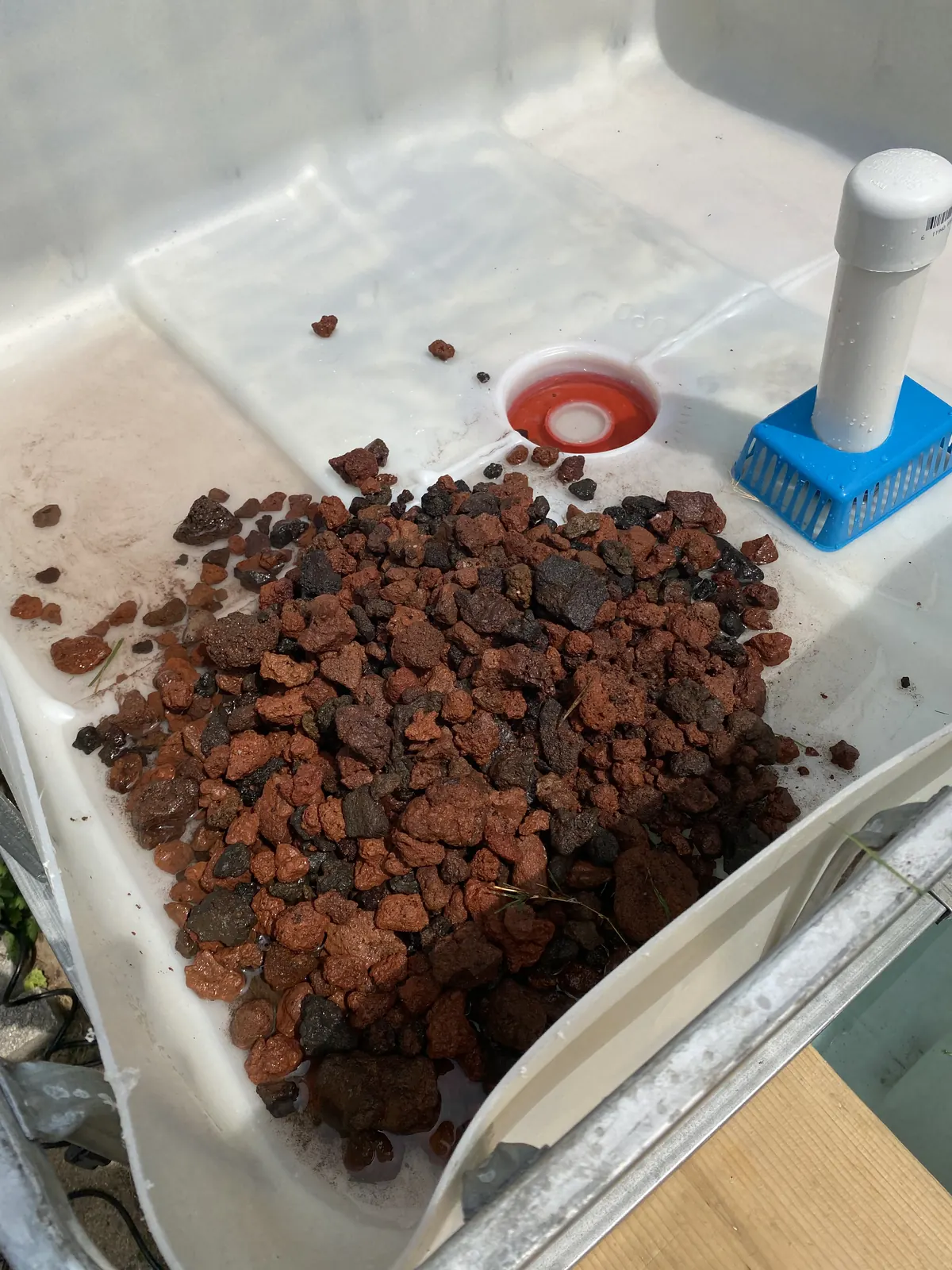
The best time to discover that your sump overflows during a power outage is also before fish depend on it.
Wet-testing is the boring gap between “I finished building it” and “put fish in it.”
Do not skip that gap.
My IBC system needed real tuning once water started moving. The bell siphon alone took most of a day to dial in because pump inflow and siphon outflow had to cooperate.
A dry system cannot show you those problems.
Start with a visual inspection
Before adding water, check:
- tank supports;
- grow-bed supports;
- bulkheads and Uniseals;
- hose clamps;
- threaded fittings;
- glued PVC joints;
- valve positions;
- pump placement;
- drain routing;
- electrical cord routing;
- air lines and check valves where used.
Make sure tools, plastic scraps and construction debris are out of the tanks.
Then start adding water in stages.
Fill in stages, not all at once
Add enough water to cover the lowest penetrations and inspect them.
Then raise the level and inspect the next group of fittings.
A slow staged fill makes leak location obvious. Filling everything immediately can leave you staring at a puddle while trying to determine which of six wet fittings caused it.
Mark or remember the normal static water level.
If a fitting leaks, stop and correct the fitting rather than building a permanent monument out of caulk.
Run the pump and check actual circulation
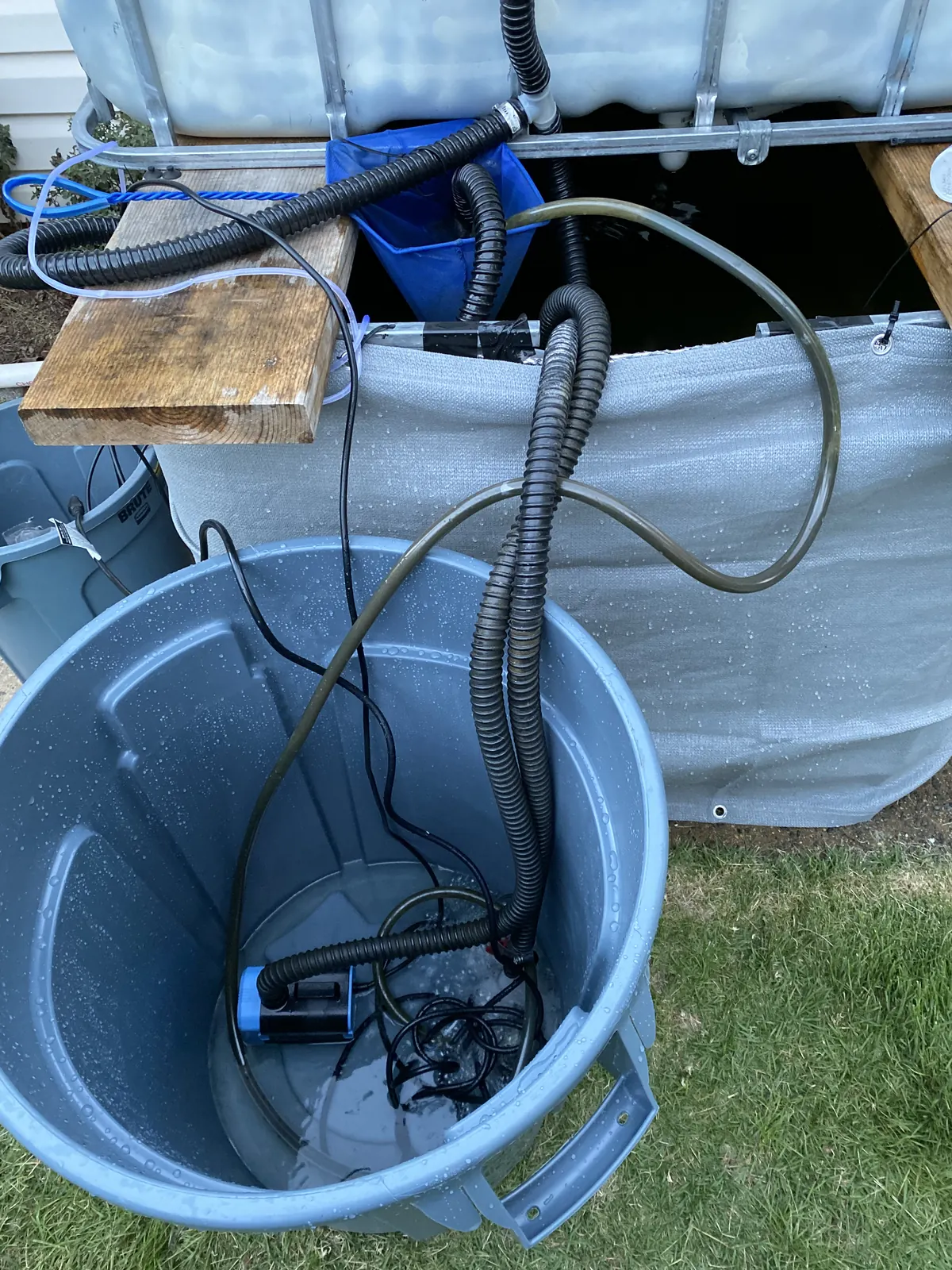
Pump ratings are not the same as delivered flow.
Head height, pipe diameter, elbows, valves and restrictions reduce what reaches the destination.
Run the actual plumbing.
Check:
- whether water reaches every intended component;
- whether valves provide useful adjustment;
- whether any branch steals too much flow;
- whether the pump remains submerged;
- whether hoses collapse or kink;
- whether fittings leak under operating conditions;
- whether the return flow matches the design.
My final pump was much stronger than the first one. I split the discharge and throttled the grow-bed branch rather than forcing the full pump output through the bed.
Wet-testing is where that kind of mismatch becomes visible.
Test every drain and overflow
A drain that works with a trickle may not work at full pump flow.
Run the system at realistic operating flow.
Watch the highest water level in each component.
Check the freeboard between normal operating level and the rim.
If the design includes an emergency overflow, verify that water can actually reach and exit through it without flooding something else.
Oklahoma State recommends oversized plumbing where practical to reduce clogging risk. A commissioning test cannot simulate years of roots and biofilm, so do not design a drain with zero margin on day one.
Tune flood-and-drain beds
For a bell siphon, watch multiple complete cycles.
Verify that the bed:
- fills to the intended level;
- starts the siphon reliably;
- drains faster than it fills;
- reaches the intended low point;
- breaks the siphon;
- starts filling again.
My bed finally settled around a nine-to-ten-minute fill and roughly one-minute drain.
That is a record of my system, not a universal target.
The important result is repeatability.
Verify the media surface stays dry
During the high-water part of the cycle, water should remain below the top surface of the grow media.
Oklahoma State recommends keeping the water roughly an inch below the media surface to reduce algae and pest pressure.
Adjust the standpipe, siphon or operating level before plants and roots make the job harder.
Run the aeration
Turn on the air pump and inspect every air stone.
Look for:
- disconnected tubing;
- kinked air lines;
- weak or uneven output;
- air stones that float out of position;
- excessive splash;
- dead surface zones.
Visible bubbles confirm the equipment is operating. They do not quantify dissolved oxygen.
If the design depends on a specific DO target, measure it.
Test the power-off condition
This is one of the most useful commissioning tests.
With the system running normally, disconnect power in a controlled way.
Watch where the water goes.
Does water siphon backward?
Does a grow bed drain into a sump that cannot hold the extra volume?
Does a return line continue draining a tank?
Does the fish tank fall below a safe level?
Then restore power.
Does the pump restart?
Does the siphon resume normal Cycling?
Does aeration restart?
A system that only works while nobody touches the plug is not fully commissioned.
Establish baseline readings
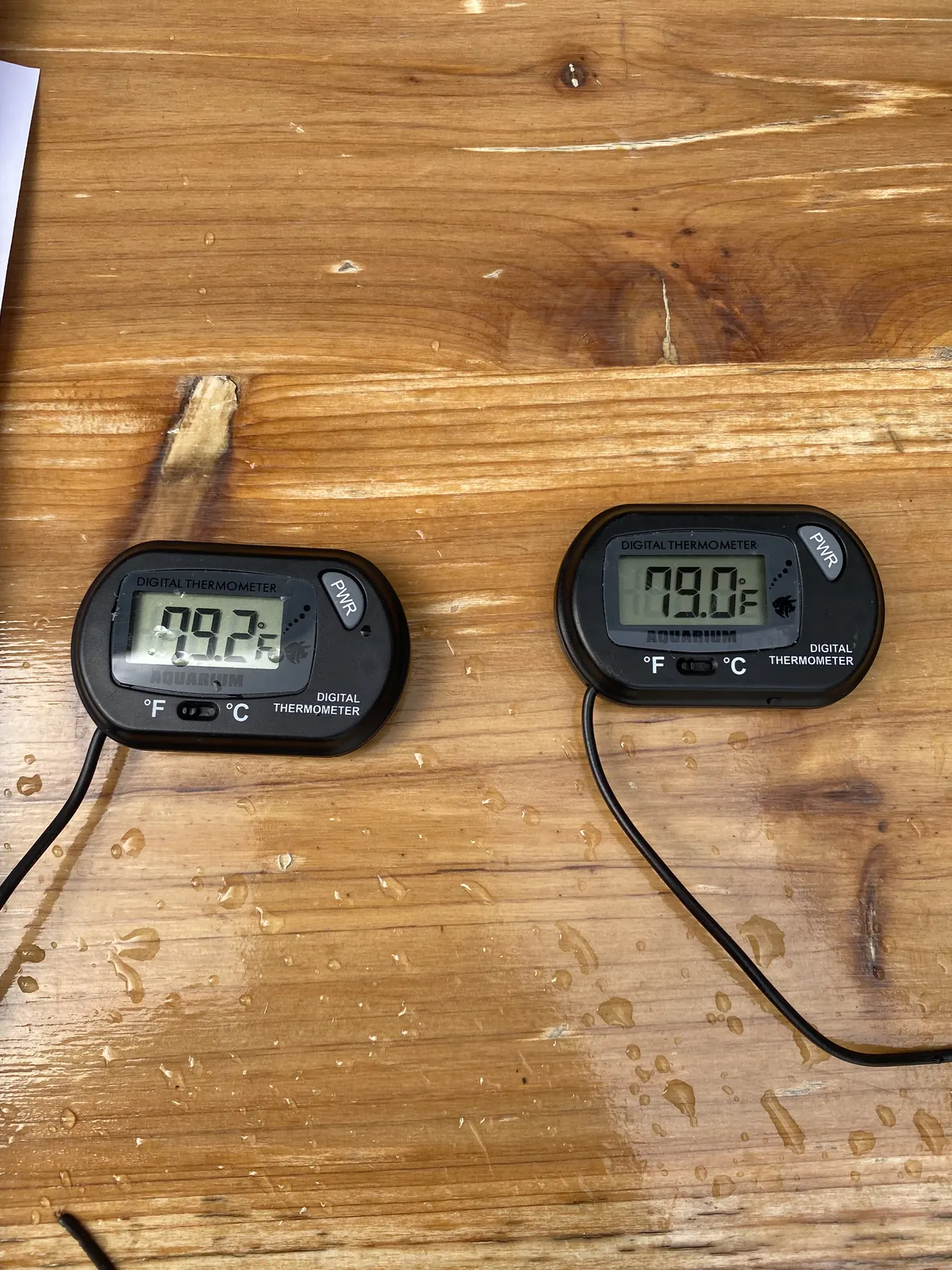
Before livestock, record:
- operating water levels;
- water temperature;
- pH;
- source-water information;
- pump behavior;
- fill/drain cycle timing where relevant.
Cycling and water-quality preparation are separate topics, but commissioning gives you the mechanical baseline.
When something changes later, you have something to compare against.
Commissioning checklist
Before adding fish, I want to be able to answer yes to these:
- No active leaks?
- Tank and bed supports stable?
- Pump remains submerged?
- Expected flow reaches each component?
- Drains handle full flow?
- Emergency overflow path works?
- Siphons start and stop repeatedly?
- Grow-media surface stays dry?
- Aeration works?
- Power-off drain-down is contained?
- Equipment restarts correctly?
- Plumbing remains accessible?
- Water is treated and ready for cycling/stocking steps?
If not, the fish can wait.
That is cheaper than learning under pressure.
Research Sources
- Oklahoma State University, Aquaponics:
https://extension.okstate.edu/fact-sheets/aquaponics
- Oklahoma State University, Principles of Small-Scale Aquaponics:
https://extension.okstate.edu/fact-sheets/principles-of-small-scale-aquaponics
- FAO, Small-scale aquaponic food production: