
Bubbles are visible.
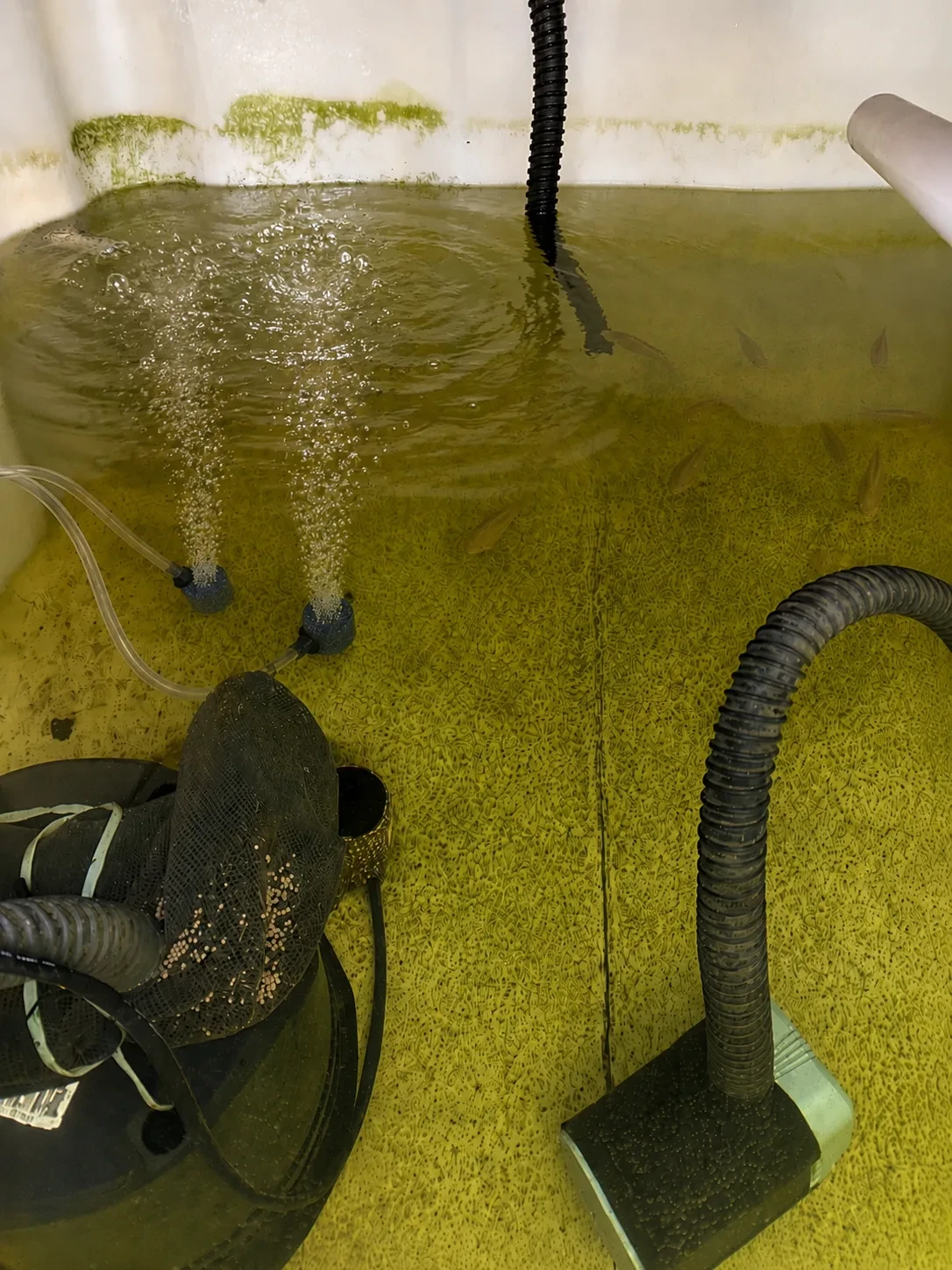
Dissolved oxygen is not.
That distinction matters in aquaponics because fish, nitrifying bacteria and plant roots all depend on oxygen, but looking at an air stone does not tell you the dissolved oxygen concentration in the water.
I ran continuous aeration in my IBC fish tank and used water movement to reduce stagnant surface conditions. That is firsthand system experience.
I did not measure dissolved oxygen with a DO meter during that experiment, so I am not going to turn a photo of bubbles into a fake oxygen reading.
If you need a number, measure it.
What dissolved oxygen means
Dissolved oxygen, usually abbreviated DO, is oxygen gas dissolved in the water.
It is commonly reported in milligrams per liter (mg/L), which is effectively the same numerical unit as parts per million for dilute freshwater measurements.
Aquaponics creates competing oxygen demand from:
- fish respiration;
- nitrifying bacteria;
- plant roots;
- decomposition of organic matter;
- other microorganisms.
That is why oxygen management is a system issue rather than only a fish-tank issue.
What range should you aim for?
There is no single perfect DO number for every fish species, water temperature and system design.
FAO’s general aquaponics guidance highlights about 5 mg/L as an important water-quality target. Oklahoma State lists a 5–8 mg/L compromise range for aquaponics and notes species differences; its table lists Nile tilapia above 4 mg/L.
Treat those as general guidance, not permission to run a species at its lower edge.
Cold-water fish often demand more oxygen than warm-water species.
Temperature changes the oxygen picture
Warm water holds less oxygen than cold water.
At the same time, fish metabolism and biological oxygen demand can increase as temperature rises within the organism’s active range.
That makes hot weather a double concern: less oxygen can dissolve in the water while the system may be consuming oxygen faster.
This is one reason temperature belongs beside DO when diagnosing fish stress.
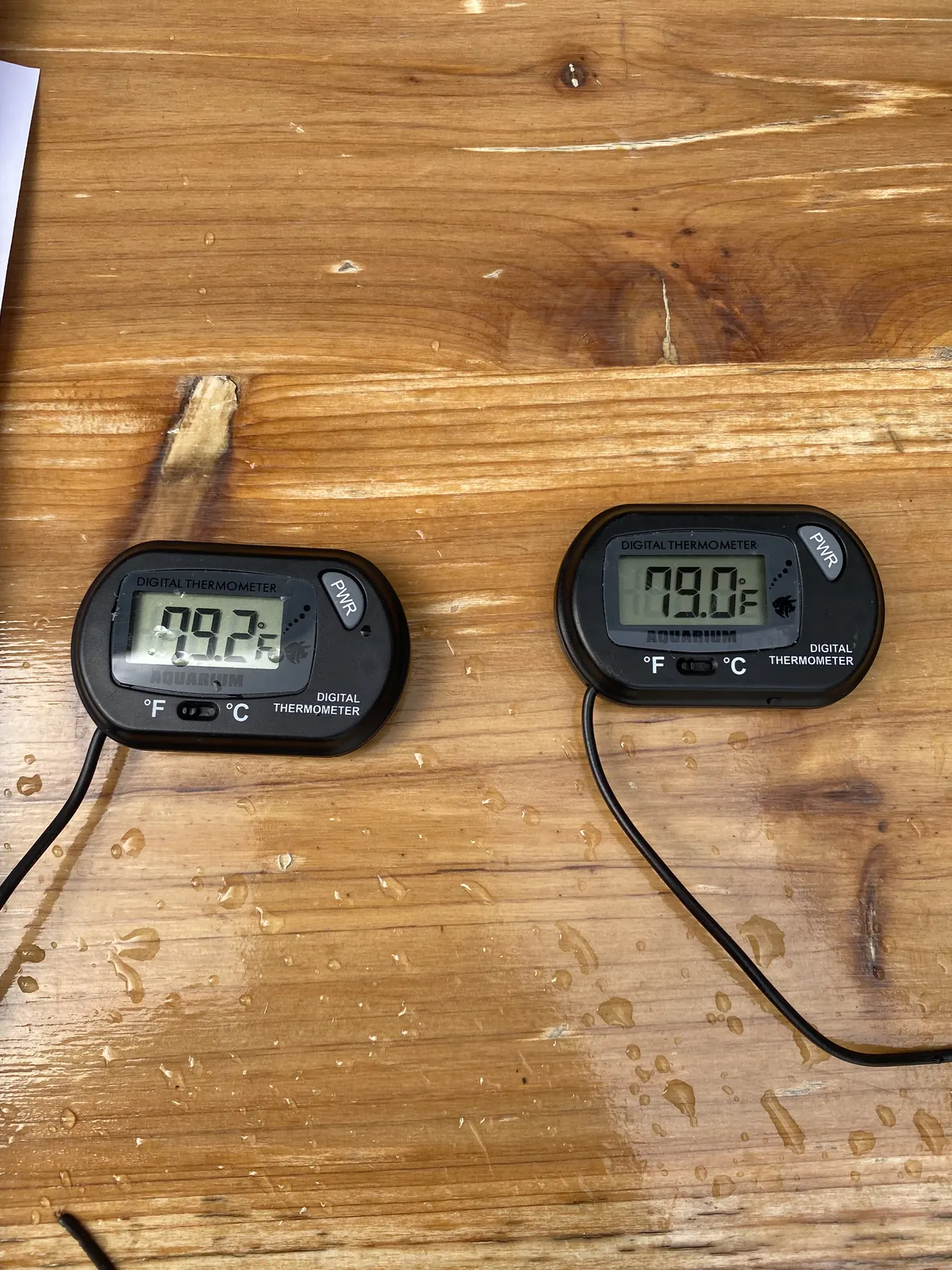
In my system I used two digital temperature probes at different depths so I could see what was happening in the upper/root-zone area and lower fish area. Those thermometers did not measure oxygen, but they gave useful context for the environment.
What low oxygen can look like
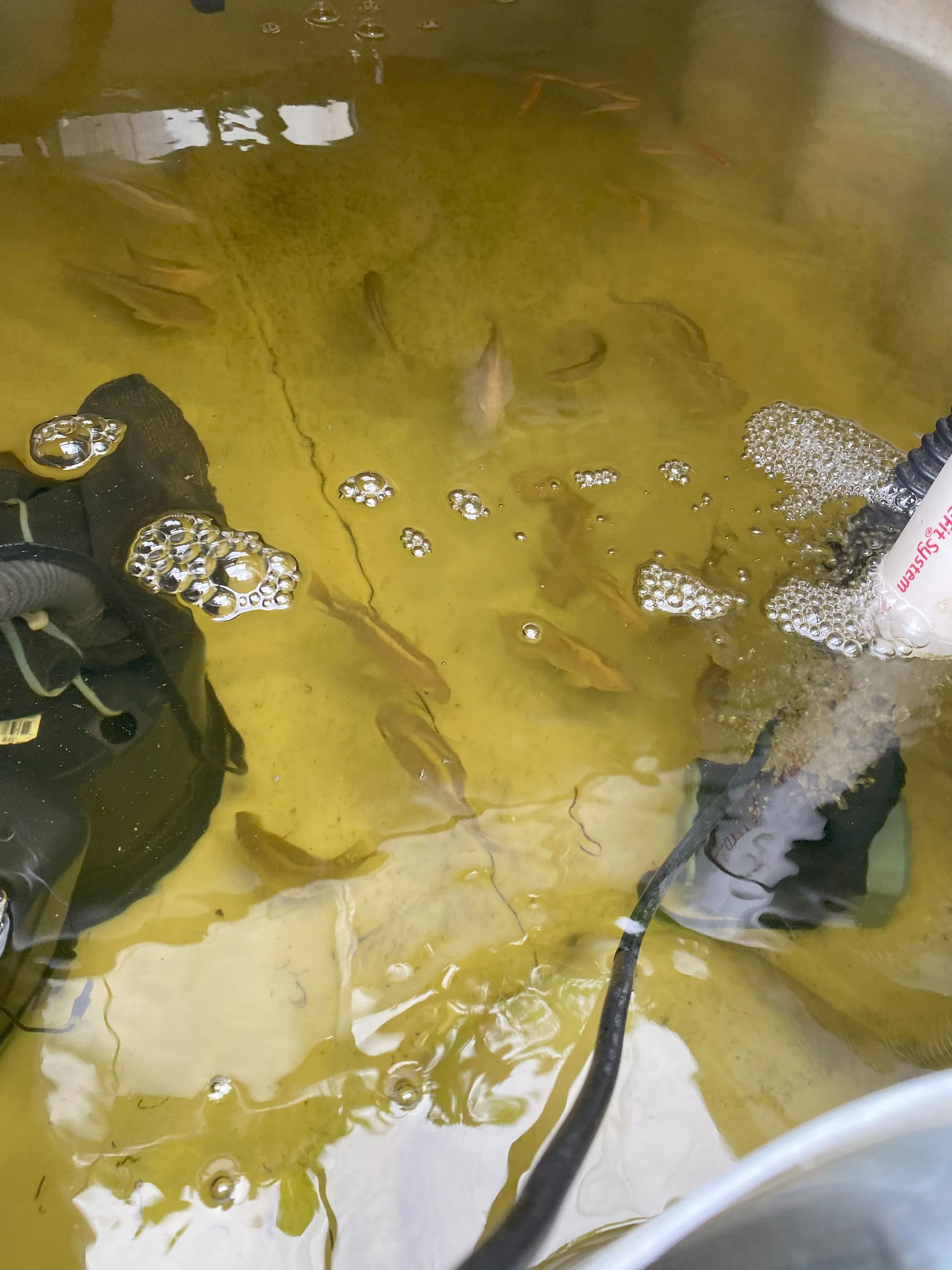
Possible warning signs include:
- fish congregating near inflowing water or aeration;
- rapid gill movement;
- fish piping or gulping at the surface;
- lethargy;
- reduced feeding response;
- unusual crowding near the surface;
- sudden stress after a pump or air-pump failure;
- worsening problems during warm periods or overnight.
Those signs are not unique to low oxygen.
Ammonia, nitrite, temperature problems, disease and other stressors can produce overlapping behavior.
If fish look wrong, check the system rather than diagnosing by one symptom.
How to measure dissolved oxygen
The most practical direct method for a home aquaponics operator is a dissolved oxygen meter.
Oklahoma State specifically notes that DO is most easily measured with a DO meter.
Follow the meter manufacturer’s calibration and maintenance instructions. Probe condition, calibration, temperature compensation and sampling technique all affect the reading.
Take measurements where they answer a question.
Useful locations can include:
- the fish tank;
- water entering or leaving a biofilter;
- a DWC bed;
- a sump;
- areas where circulation appears weak.
Useful times include early morning, hot afternoons, after feeding, and during troubleshooting.
One isolated number is less useful than a pattern tied to system conditions.
Why surface bubbles are not a DO test
An air stone can prove that air is being delivered.
It cannot prove that the water contains 5, 6 or 7 mg/L dissolved oxygen.
Bubble size, depth, water movement, temperature, stocking, organic load and contact time all affect oxygen transfer.
Surface agitation can also contribute gas exchange.
So use bubbles as an equipment check and a DO meter as a measurement.
What to check when DO is low
If a trustworthy measurement is lower than expected:
- verify the reading and meter calibration;
- check the air pump and air stones;
- check water circulation;
- inspect for a failed or restricted pump;
- look for excessive solids or decaying organic matter;
- review water temperature;
- review fish load and recent feeding;
- add or restore aeration while investigating the cause.
During an active fish-stress event, restoring aeration and circulation takes priority over philosophical debates about which component caused it.
Aeration needs redundancy
Air pumps and water pumps require power.
That means an otherwise healthy system can lose oxygen support during an outage or equipment failure.
My system eventually included a small solar aeration setup as backup. That unit is historical firsthand equipment, not a current product recommendation.
The broader lesson survives the product: decide in advance how you will keep oxygen moving if the primary system stops.
Research Sources
- FAO, Seven rules of thumb to follow in aquaponics:
https://www.fao.org/newsroom/story/Seven-rules-of-thumb-to-follow-in-aquaponics/en
- Oklahoma State University, Nitrification and Maintenance in Media
Bed Aquaponics: https://extension.okstate.edu/fact-sheets/nitrification-and-maintenance-in-media-bed-aquaponics
- Oklahoma State University, Principles of Small-Scale Aquaponics:
https://extension.okstate.edu/fact-sheets/principles-of-small-scale-aquaponics