
Roots are supposed to spread through an aquaponics grow bed.
 bell siphon standpipe” class=”wp-image-221″/>
Grow media is supposed to stay in the grow bed.
Your drain is where those two perfectly reasonable facts can turn into a plumbing problem.
The goal is not to build a drain so heavily screened that nothing can reach it. Fine screens clog too. The goal is to keep large material out while preserving enough open area and access that you can inspect and clean the drain.
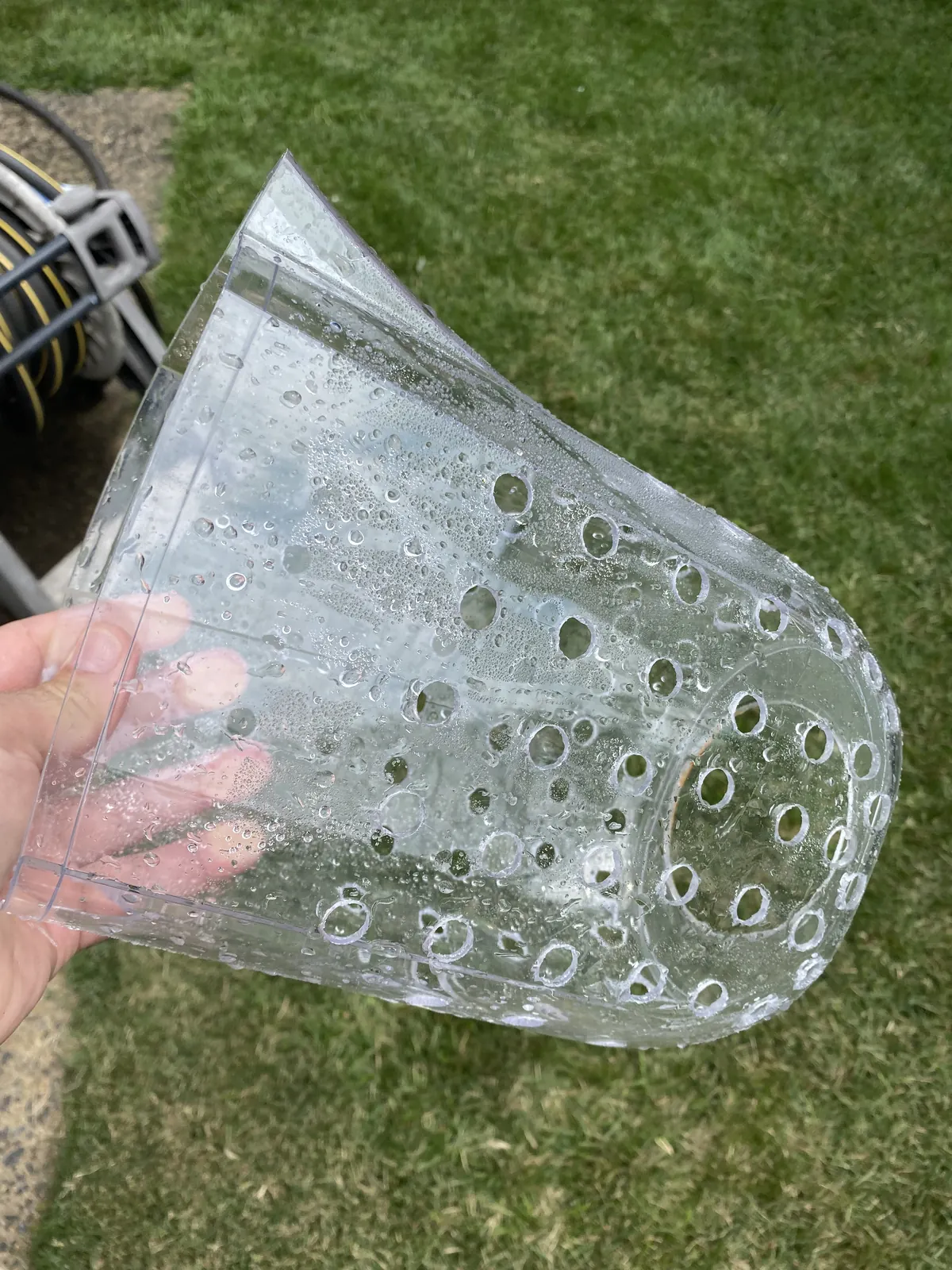
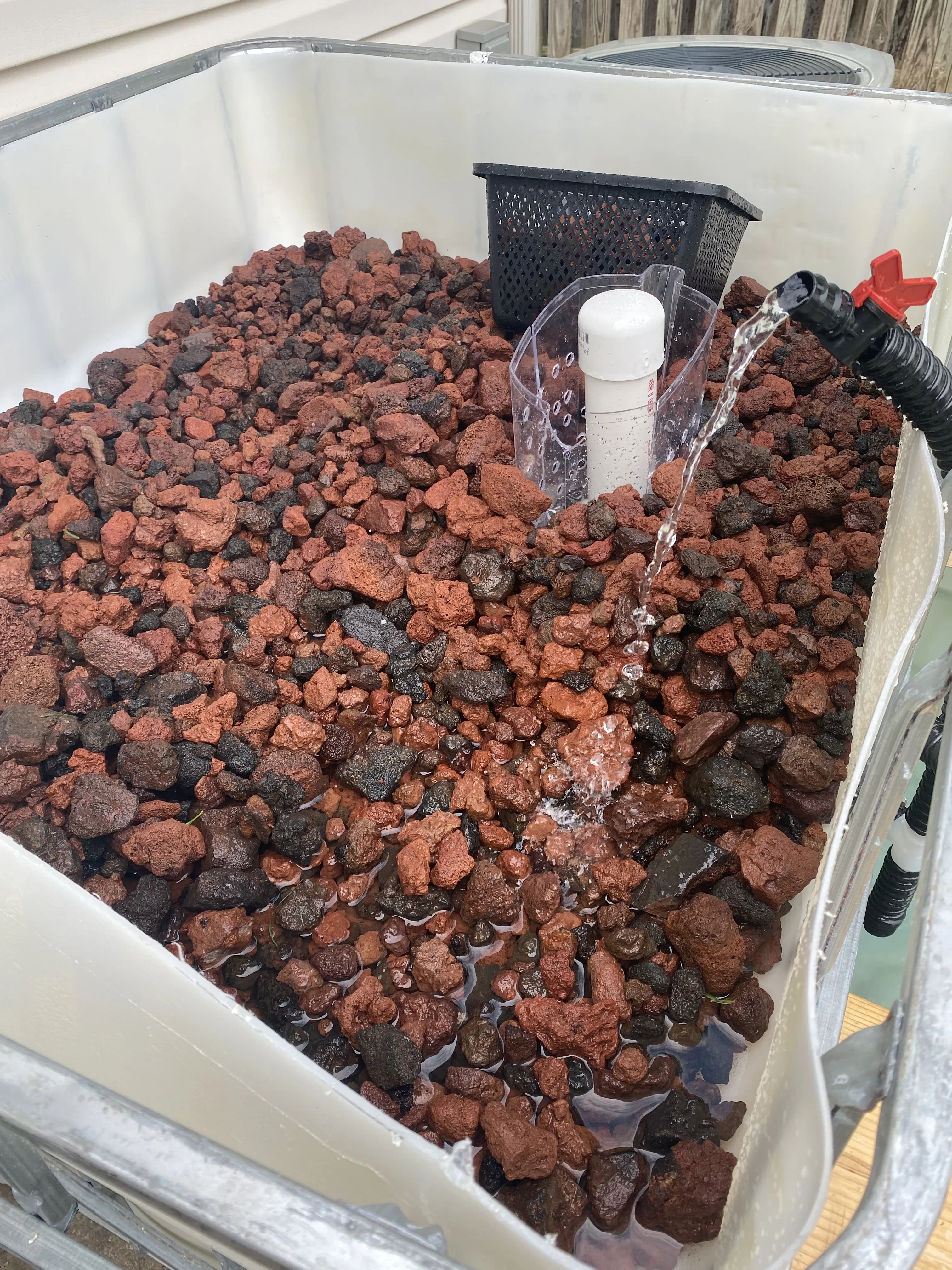
My IBC grow bed used a perforated media guard around the bell siphon and standpipe. That physical separation is simple, cheap and worth doing.
What actually clogs an aquaponics drain?
Common restrictions include:
- loose grow media;
- roots;
- dead root material;
- fish solids and organic debris;
- algae or biofilm;
- undersized pipe;
- screens that are too fine;
- a combination of several small restrictions.
Oklahoma State recommends periodic clog checks throughout aquaponics systems and specifically notes clearing root obstructions from pipes or bed drains as routine maintenance.
That matters because a partially restricted drain may not fail all at once. It can first change water levels, flow rate or siphon behavior.
Use a media guard around accessible drains
A media guard is a perforated or slotted barrier around a standpipe, siphon or drain area.
It has two jobs:
- keep grow media away from the drain assembly;
- let you reach the drain without digging out the bed.
The second job is easy to underestimate.
My guard gave me a removable access zone around the siphon. If the siphon needed attention, I could get to it without shoveling lava rock out of the grow bed.
That is the design target.
Do not make the guard openings too small
It is tempting to use the finest screen possible.
That can simply move the clog from the drain to the screen.
A good guard has enough total open area to pass the expected flow even after some biofilm or roots appear. The openings only need to be small enough to retain the media.
If your grow media is properly sized, you do not need mosquito-screen-sized holes to hold it back.
Oklahoma State notes that aquaponics media should be large enough that it does not wash into drains and plumbing. Media selection and drain protection work together.
Roots need management, not denial
Healthy roots will explore wet spaces.
If a plant sits near a drain, roots can eventually reach the guard and grow through openings. Dense roots can restrict flow even when no rocks enter the drain.
Inspect the drain area during routine plant maintenance.
When roots begin forming a dense mat around the guard, prune or remove enough material to restore water movement without unnecessarily tearing apart the whole root system.
Pay extra attention to mature plants with aggressive root systems.
Keep the standpipe accessible
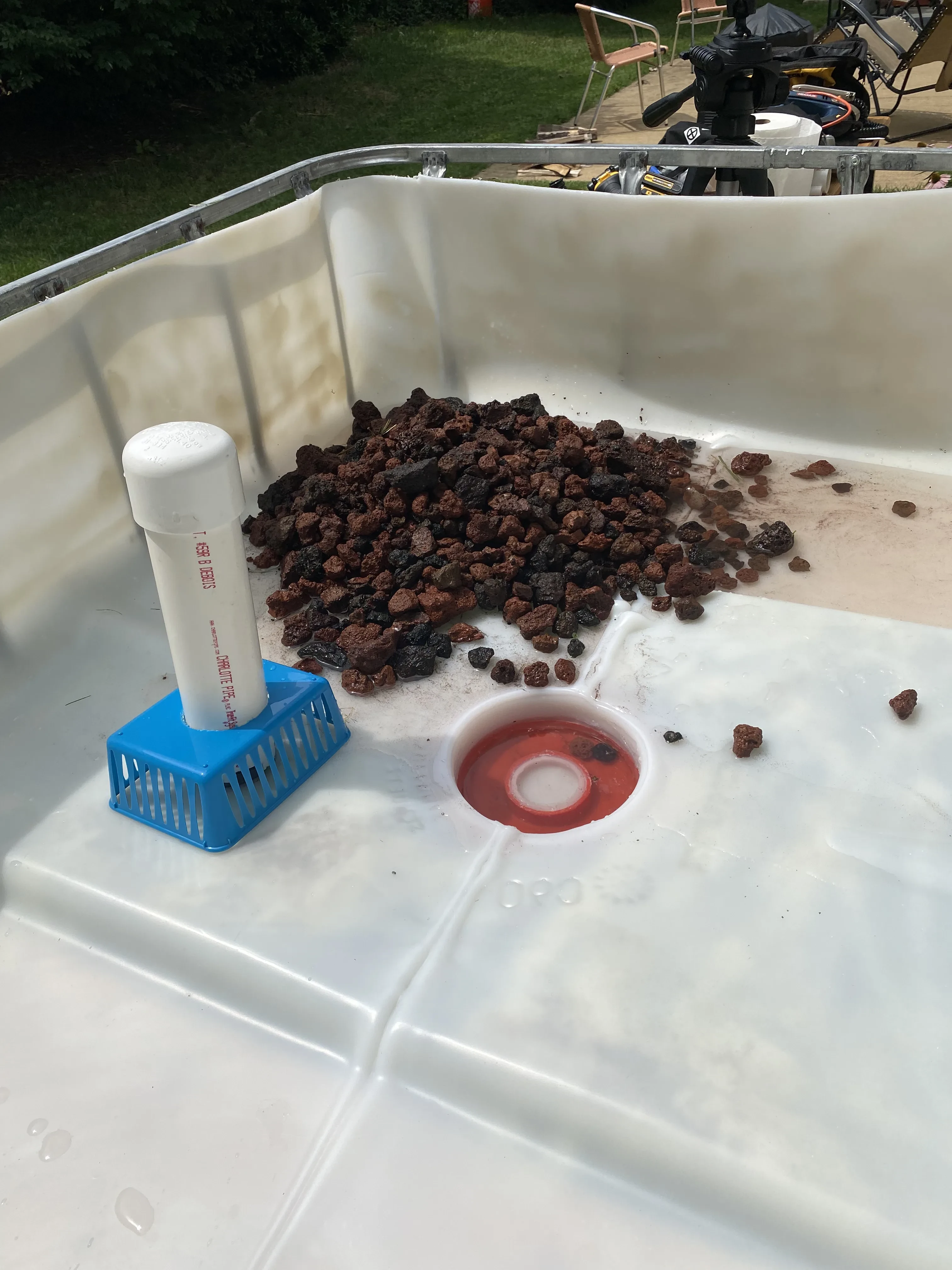
Whether you use a bell siphon, standpipe overflow or another drain arrangement, build it so the critical parts can be reached.
For a bell siphon, that means being able to remove the bell and inspect the standpipe.
If a siphon suddenly changes behavior, a root restriction or debris around the drain should be on the checklist along with incoming flow.
My system’s siphon was sensitive to the relationship between inflow and outflow. Anything that changes drain capacity can change that relationship.
Watch for the early signs of restriction
A drain problem may show up as:
- a grow bed filling higher than normal;
- a bell siphon that starts late;
- a siphon that will not break;
- slower drain-down;
- water backing up around a guard;
- unusual gurgling;
- overflow from a bed that previously behaved;
- pump flow that seems normal while return flow falls.
Do not wait for water on the ground before investigating.
A simple inspection routine
For a media bed:
- look at the water level during a normal cycle;
- watch the drain start and stop;
- inspect the media guard for roots and debris;
- remove the guard lid or siphon bell if the design allows;
- clear loose roots or solids;
- verify that the standpipe opening is clear;
- reassemble and watch a complete cycle.
If the system is continuous-flow rather than flood-and-drain, watch the steady-state water level and return flow instead.
What not to do
Do not permanently bury a drain assembly that will eventually need service.
Do not use a fine screen as a substitute for sensible media size.
Do not assume a drain is clear because some water still passes through it.
Do not cut roots blindly where you cannot see what else you are cutting.
And do not keep increasing pump flow to compensate for a restriction. That can turn a maintenance problem into an overflow problem.
The practical design rule
Aquaponics plumbing lives in a biological system.
Roots grow. Biofilm grows. Solids move. Media shifts.
Design the drain around that reality.
A guard that keeps rocks out, passes plenty of water and can be opened without excavating the bed is more useful than a clever drain you cannot reach.
Research Sources
- Oklahoma State University, Aquaponics:
https://extension.okstate.edu/fact-sheets/aquaponics
- Oklahoma State University, Principles of Small-Scale Aquaponics:
https://extension.okstate.edu/fact-sheets/principles-of-small-scale-aquaponics
- Oklahoma State University, Nitrification and Maintenance in Media
Bed Aquaponics: https://extension.okstate.edu/fact-sheets/nitrification-and-maintenance-in-media-bed-aquaponics