
Aquaponics grow bed media does much more than hold plants upright. In a media-bed system, it supports roots, gives nitrifying bacteria a large surface area, helps distribute water and oxygen, and captures some suspended solids before they return to the pond, stock tank, or converted IBC container.
The practical choices for most backyard systems are expanded clay, natural lava rock, or carefully selected inert gravel. Expanded clay is easier to handle. Lava rock is usually more affordable. Gravel can work, but only after confirming that it will not alter pH or introduce contaminants.
Affiliate disclosure: This page contains affiliate links. As an Amazon Associate I earn from qualifying purchases.
Bottom line: For a small indoor system, expanded clay is usually worth the convenience. For a full-size backyard or IBC grow bed, natural lava rock often gives the best balance of price, bacterial surface area, availability, and performance. Whatever media you choose, test it, rinse it thoroughly, and make sure the grow bed structure can support the finished weight.
Reality Check
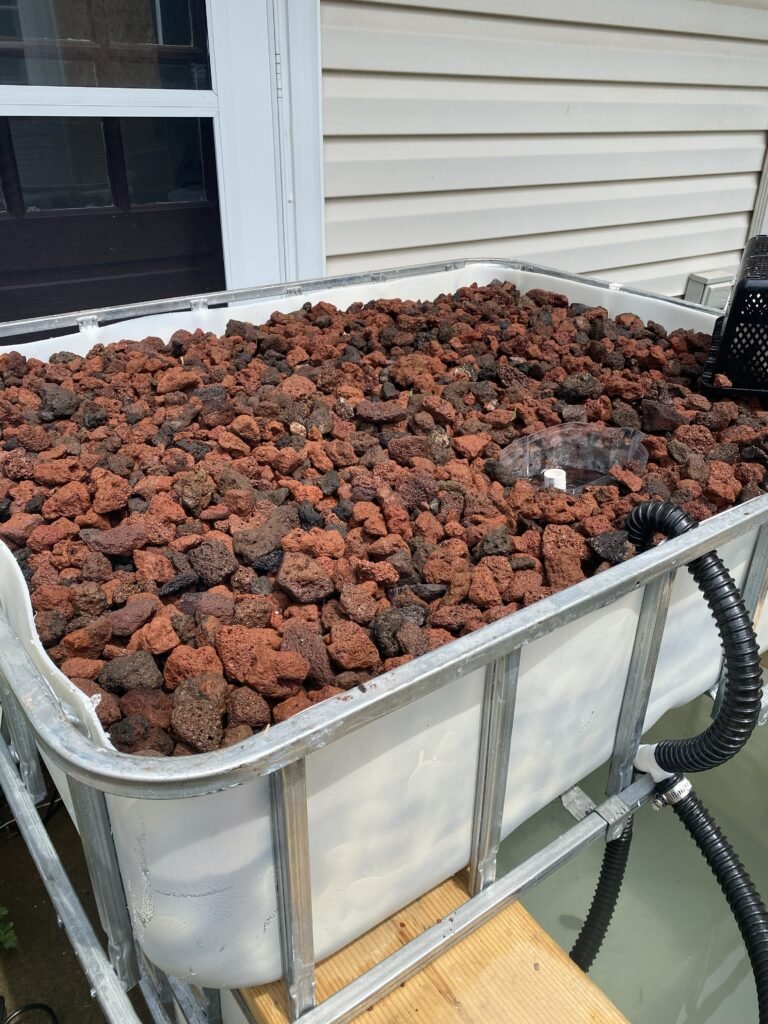
From my system: Field note: my IBC grow bed took roughly 18–20 bags of lava rock. It was inexpensive at the time but required repeated washing, roughly 8–12 rinses by memory, and it was abrasive enough that gloves mattered. I would still use lava rock again, but I would build a better rinse/sieve setup.
Expanded clay pellets look great. They are light, clean, easy to move, and easy to plant into. They also become expensive quickly when the grow bed holds hundreds of liters of media.
Lava rock is rougher, heavier, dustier, and considerably less pleasant to wash. It also works. For a backyard greenhouse system, that matters more than whether the grow bed looks like a hydroponics catalog.
The goal is to support plants, bacteria, water flow, and reliable maintenance without spending the entire equipment budget on rocks.
What Grow Bed Media Actually Does
A media bed combines several jobs that would otherwise require separate equipment. That simplicity is one reason media beds remain popular in backyard aquaponics.
It Supports Plants and Roots
The media anchors plants while allowing water, oxygen, and dissolved nutrients to reach the root zone. It must be stable enough to support mature plants without compacting into a solid mass.
Leafy greens and herbs place relatively little structural demand on a bed. Fruiting crops such as peppers and tomatoes become heavier and may still need stakes, trellises, or overhead support. The media holds the root ball, but it should not be expected to act like concrete around a six-foot tomato plant.
For crop ideas, see what plants grow well in aquaponics systems and growing herbs and peppers in aquaponics systems.
It Provides Biological Surface Area
Fish produce ammonia. Nitrifying bacteria colonize wet, oxygenated surfaces and convert ammonia into nitrite and then nitrate. Grow bed media provides a large amount of surface area for those bacteria.
This is why a media bed is not simply gravel in a box. In many backyard systems, it functions as a major part of the biological filter. Media with irregular surfaces and internal pores can support substantial bacterial growth, provided water and oxygen continue moving through the bed.
That bacterial population still depends on stable water chemistry. Use the aquaponics water testing basics guide to monitor pH, ammonia, nitrite, and nitrate while the system cycles and matures.
It Captures Some Solids
As water passes through the bed, media catches fish waste, uneaten feed, root fragments, and other suspended material. A modest amount of trapped organic material can break down and release nutrients. Too much accumulation blocks flow, consumes oxygen, and creates foul-smelling anaerobic pockets.
A lightly stocked media-bed system may manage solids without a large dedicated filter. Heavier fish loads usually need better solids removal before water reaches the bed. See aquaponics solids filtration basics for the difference between normal mineralization and turning a grow bed into a buried compost pile.
What Makes Good Aquaponics Grow Bed Media?
Good media should meet most of the following requirements:
- Inert or reasonably stable in water
- Free from dyes, coatings, oils, salts, and unknown chemicals
- Large enough to maintain water flow
- Small enough to support roots
- Strong enough not to crush or break down quickly
- Porous or textured enough to provide bacterial surface area
- Possible to rinse clean
- Available in enough volume to fill the bed
- Within the structural weight limit of the grow bed and support frame
- Comfortable enough to plant and maintain without shredding hands every weekend
No material is perfect. Expanded clay wins on weight and handling. Lava rock wins on price and surface area. Gravel wins on local availability but creates the greatest risk of excessive weight and unwanted pH changes.
Expanded Clay vs Lava Rock vs Gravel
| Media | Main Advantages | Main Drawbacks | Best Fit |
|---|---|---|---|
| Expanded clay | Lightweight, clean, easy to plant, consistent size | High cost, may float initially, can break down over time | Small systems, indoor beds, lightweight structures |
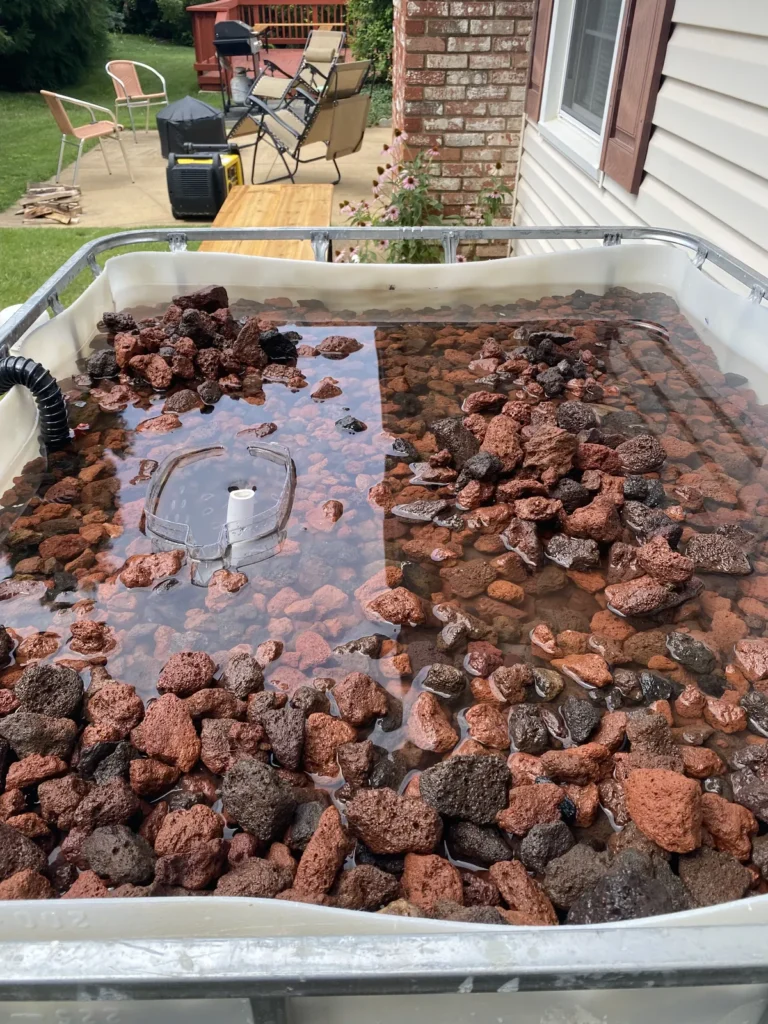
| Natural lava rock | Affordable, porous, good bacterial surface area, widely available | Heavy, rough, dusty, requires extensive rinsing | IBC beds, backyard greenhouses, cost-conscious builds |
| Inert gravel | Cheap, locally available, durable | Very heavy, may contain limestone, less comfortable to handle | Ground-supported beds after chemistry testing |
How Much Grow Media Does an IBC Grow Bed Need?
A common IBC footprint is approximately 48 inches by 40 inches. The actual cut height varies, so measure the inside dimensions of the grow bed rather than trusting a generic tote specification. See the IBC tote build guide for the complete chop-and-flip construction sequence.
To estimate gallons of media:
Width in inches × length in inches × media depth in inches ÷ 231 = approximate gallons
For a bed measuring 48 inches by 40 inches with 10 inches of media:
- 48 × 40 × 10 = 19,200 cubic inches
- 19,200 ÷ 231 = approximately 83 gallons
- 83 gallons equals roughly 314 liters
- 314 liters equals roughly 11 cubic feet
This estimate is close enough for ordering, but the final amount may change because the bed walls taper, plumbing occupies space, media settles, and bags are not always filled to the optimistic volume printed on the label.
| Media Depth in a 48 × 40 Inch Bed | Approximate Gallons | Approximate Liters | Approximate Cubic Feet |
|---|---|---|---|
| 8 inches | 66 gallons | 250 liters | 8.8 cubic feet |
| 10 inches | 83 gallons | 314 liters | 11.1 cubic feet |
| 12 inches | 100 gallons | 378 liters | 13.3 cubic feet |
Rough Bag Count for a Full IBC Grow Bed
Expanded Clay
Expanded clay is commonly sold in 50-liter bags. A grow bed requiring approximately 314 liters needs a little more than six 50-liter bags, so seven bags is the realistic order.
- Estimated requirement: 7 bags at 50 liters each
- Best for: low weight and easy planting
- Main budget risk: shipping and per-bag cost
View expanded clay grow media on Amazon.
Lava Rock
Landscape lava rock is often sold in 0.5-cubic-foot bags. A bed requiring approximately 11 cubic feet needs about 22 bags, with 23 or 24 providing a safer allowance for settling and irregular bag volume.
- Estimated requirement: 22 to 24 half-cubic-foot bags
- Best for: larger beds where cost matters
- Main labor cost: washing, lifting, and handling
Lava rock is usually a better local purchase than an online purchase because shipping dense landscape material can erase the price advantage. Amazon is more useful for expanded clay, testing supplies, gloves, and smaller specialty media than for filling an entire IBC bed with rock.
Expanded Clay Pellets
Expanded clay pellets, often sold under names such as LECA or hydroton, are among the easiest aquaponics media to handle. The pellets are lightweight, relatively uniform, and less punishing on hands and roots than sharp stone.
Expanded clay makes planting, transplanting, and removing old root systems easier. It also reduces the total load on elevated grow beds, greenhouse benches, and wood-framed supports.
The disadvantages are cost and availability. A tabletop system may need one bag. A full IBC bed may need seven large bags. At that scale, convenience becomes an equipment-budget decision rather than a minor upgrade.
- Use expanded clay when: weight matters, the system is small, planting access matters, or the bed sits on a structure with limited capacity.
- Avoid paying the premium when: the bed is large, ground-supported, and natural untreated lava rock is available locally.
Check current expanded clay options on Amazon.
Lava Rock
Lava rock is the practical backyard option. It has a rough, porous surface that provides substantial bacterial habitat, and it is commonly available through landscape suppliers and garden centers.
The tradeoff is handling. Lava rock is heavy, abrasive, and full of dust and small particles when it comes out of the bag. It may take several wash cycles before runoff becomes reasonably clear.
That was the choice in my system because function mattered more than appearance. Once the rock was washed and installed, it supported the plants and biological process without requiring a premium media budget.
Wear sturdy gloves when handling it. Lava rock will grind skin down faster than your enthusiasm expects.
Do Not Use Decorative, Dyed, or Treated Lava Rock
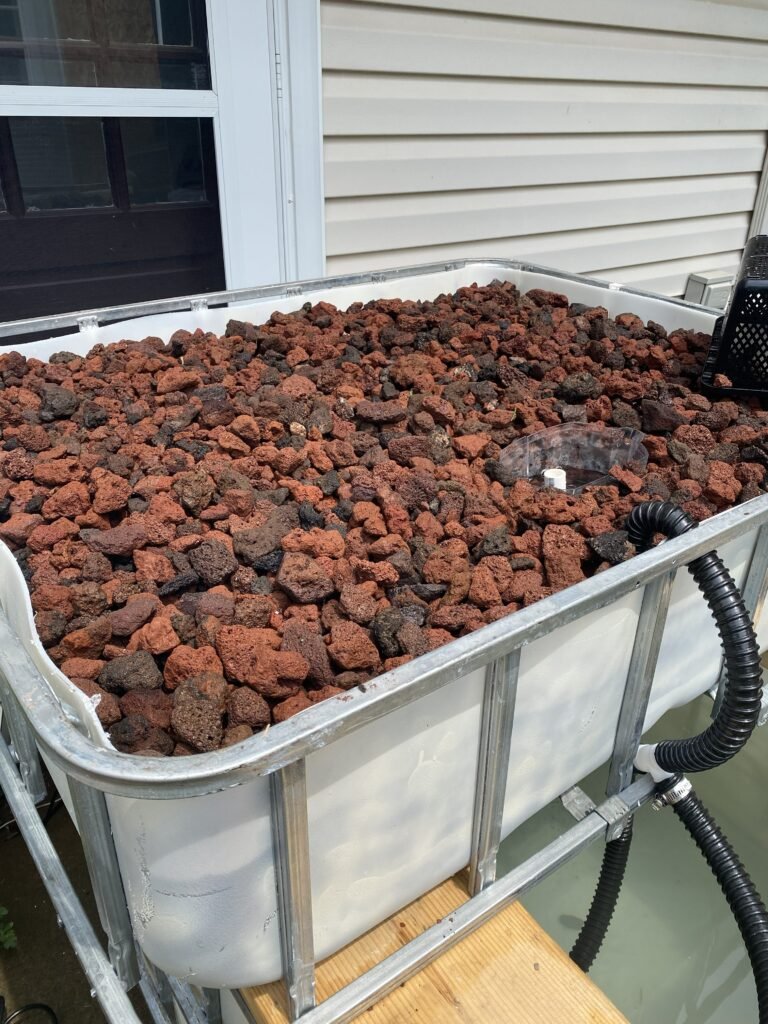
Not every product labeled lava rock belongs in an aquaponics system. Avoid material marketed primarily for:
- Gas grills
- Fire pits
- Decorative indoor displays
- Dyed landscaping
- Artificially coated garden accents
- Unknown industrial or reclaimed uses
These products may contain dyes, coatings, oils, binders, residues, or treatments never intended for fish or edible plants. Choose natural untreated stone from a supplier that can identify the material and its intended use.
When the packaging spends more time discussing patio color than garden use, leave it on the patio.
How to Wash Lava Rock Before Use
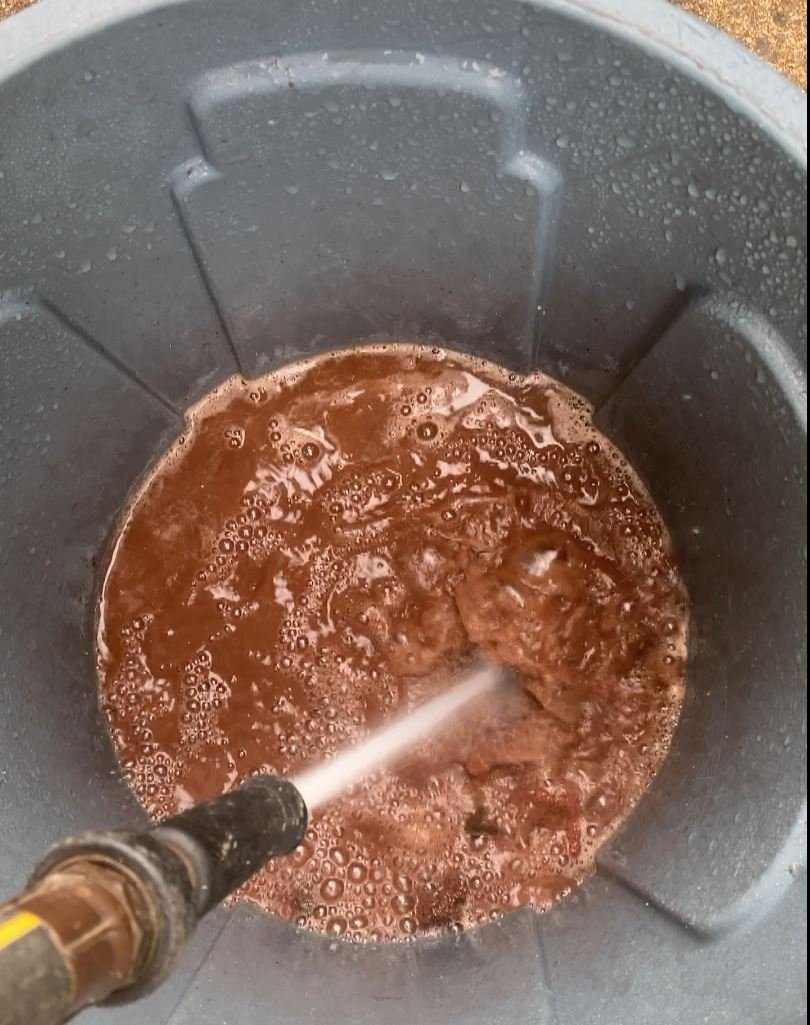
Washing is not optional. Bagged lava rock often contains enough dust to turn the system water opaque and load filters with fine sediment.
A Practical Washing Method
- Move a manageable amount of rock into a perforated crate, heavy mesh basket, or sturdy container with drainage holes.
- Rinse outside with a strong stream of water.
- Turn and agitate the rock with a shovel or gloved hands.
- Continue until the runoff changes from muddy red or black to reasonably clear.
- Allow the media to drain before placing it in the grow bed.
- Flush the filled bed before connecting it to fish water when practical.
Do not wash an entire pallet of rock in one giant pile unless you enjoy moving the same rocks several times for no measurable benefit.
Using Gravel in Aquaponics
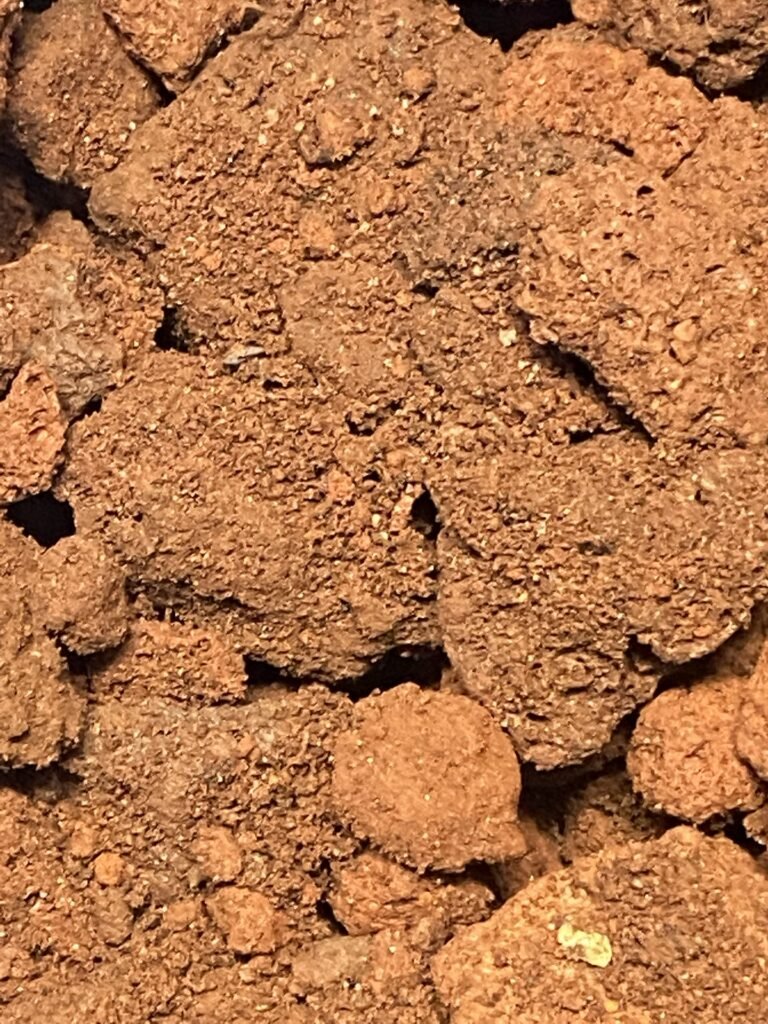
Gravel can work well when it is chemically inert, appropriately sized, clean, and supported by a strong grow bed structure. The problem is that “gravel” describes many different rocks.
Limestone, marble chips, coral-based material, shells, and other carbonate-rich media can continually raise pH. Aquaponics systems already tend to require careful pH management as they mature. Media that pushes pH upward can turn routine adjustment into a long-term argument with a pile of rocks.
How to Check Gravel Before Use
- Ask the supplier what type of stone it is.
- Rinse a sample thoroughly.
- Place the sample in a clean container with known water.
- Measure the starting pH.
- Let the sample soak for several days.
- Test pH again and watch for a sustained increase.
- Reject media that produces visible residue, unusual odor, oily film, or unknown discoloration.
A quick vinegar fizz test may reveal obvious carbonate material, but it is not a complete safety or chemistry test. A soak test gives a better picture of how the rock behaves in water over time.
Media Size Matters
Media that is too fine compacts, traps excessive solids, and restricts water flow. Media that is too large leaves broad gaps, provides poor root support, and makes planting small seedlings difficult.
For most backyard media beds, pieces in the general range of roughly 1/2 inch to 3/4 inch work well. Uniformity matters almost as much as exact size. A bag containing everything from dust to fist-sized stones creates uneven flow and difficult planting.
Avoid: sand, pea-sized compacting material, sharp glass-like stone, huge decorative chunks, degradable organic media, and anything with unknown chemical treatment.
Grow Bed Depth
A grow bed needs enough depth for roots, drainage, water distribution, bacterial colonization, and a dry surface layer. Many backyard media beds use approximately 10 to 12 inches of total media depth.
A shallow bed can grow lettuce and small herbs, but it provides less root space, less biological surface area, and less buffering against flow problems. Deep-rooted or heavy crops perform better with more usable depth.
Keep the Surface Dry
The water level should normally remain below the top surface of the media. A dry upper layer discourages algae, fungus gnats, mosquitoes, stem rot, and constant evaporation.
In many flood-and-drain beds, the high-water level sits approximately one to two inches below the media surface. The exact setting depends on the crop, standpipe, siphon, and bed design.
For flood-and-drain operation, see how a bell siphon works in aquaponics systems.
Weight and Structural Support
Media weight is not a minor detail. A full grow bed contains the dry media, retained water, roots, plants, plumbing, and the bed itself.
Expanded clay is relatively light. Lava rock and gravel are much heavier. Saturated gravel can place several thousand pounds on a large bed and its supporting frame.
- Support the entire base of the bed rather than only the corners.
- Use materials appropriate for wet greenhouse conditions.
- Inspect wood for rot and metal for corrosion.
- Do not place a loaded grow bed on a deck, table, or stand without confirming capacity.
- Account for people leaning on the bed during planting and maintenance.
Water and rock are both excellent at locating the weakest board in a structure. They usually find it at the least convenient time.
Media Beds and Water Flow
Water must move through the media without bypassing large sections or pooling in stagnant pockets. Good flow carries dissolved oxygen and nutrients to roots and bacteria while moving suspended material toward drains and filters.
Watch for:
- Slow drainage
- Areas that remain constantly saturated at the surface
- Water channeling through one narrow path
- Black or foul-smelling media
- Heavy root mats around the standpipe
- Solids accumulating faster than they break down
- Uneven plant growth across the bed
Correcting poor flow may require clearing roots, adjusting pump flow, cleaning the drain guard, improving solids filtration, or removing and washing part of the media.
Maintaining a Media Grow Bed
Media beds become much easier to maintain when access, solids, water level, and planting density were planned correctly. See the common aquaponics beginner mistakes guide.
A healthy media bed does not need constant cleaning. It does need observation and occasional intervention.
| Maintenance Task | What to Look For | Typical Timing |
|---|---|---|
| Check the media surface | Standing water, algae, flies, exposed roots | Weekly |
| Inspect drains and guards | Root blockage and slow drainage | Monthly |
| Remove dead roots | Dense mats around standpipes and drains | After major harvests |
| Observe odor | Sour, rotten-egg, or sewage-like smell | Whenever planting or harvesting |
| Check settling and low spots | Uneven surface and exposed plumbing | Several times per year |
| Evaluate solids loading | Dark sludge and restricted flow | As fish load increases |
Do not automatically sterilize or replace media because it looks stained. Mature media should contain bacteria, root residue, and biological growth. Cleaning becomes necessary when flow, oxygen, odor, or plant health shows that accumulation has become excessive.
What I Would Actually Use
For a normal backyard greenhouse system with a ground-supported IBC grow bed, I would use natural untreated lava rock again. It is not the easiest media, but it is widely available, biologically useful, and less expensive than filling the entire bed with expanded clay.
I would use expanded clay when the bed is smaller, elevated, indoors, or likely to be replanted frequently. The easier handling becomes more valuable when you are constantly working in the bed.
I would use gravel only after identifying the stone, confirming the structural load, and testing it in water. Cheap material stops being cheap when it forces a complete grow bed rebuild.
Simple Buyer Decision
- Choose expanded clay when low weight, clean handling, and easy planting justify the price.
- Choose lava rock when filling a large backyard bed and you are willing to trade washing labor for lower cost.
- Choose gravel only when it is inert, clean, appropriately sized, and supported by a structure built for the weight.
For most full-size backyard IBC grow beds, lava rock remains the practical default unless local pricing, structural limits, or handling requirements point clearly toward something else.
Frequently Asked Questions
What is the best grow bed media for aquaponics?
Expanded clay is the easiest to handle, while lava rock is often the best value for larger backyard systems. Inert gravel can work but requires more chemistry testing and stronger structural support.
Can I use regular landscaping rock?
Only after confirming that it is natural, untreated, clean, and chemically stable in water. Avoid dyed decorative stone, unknown recycled material, limestone-based rock, and anything intended for grills or fire pits.
How deep should aquaponics grow bed media be?
Many backyard media beds use approximately 10 to 12 inches of media. Shallower beds can grow some crops but provide less root space and biological surface area.
How much media does an IBC grow bed need?
A 48-by-40-inch IBC grow bed filled with 10 inches of media needs approximately 83 gallons, 314 liters, or 11 cubic feet of media.
Does lava rock change aquaponics pH?
Natural lava rock is usually reasonably stable, but geology and products vary. Test a sample before filling the bed. Avoid assuming that every red or black porous rock sold as lava rock is chemically identical.
Can I mix expanded clay and lava rock?
Yes. Some growers use heavier lava rock in the lower portion and expanded clay near the surface for easier planting. Mixing can reduce cost, but separating the materials later will be difficult.
Should grow bed media be replaced?
Stable mineral media usually does not need routine replacement. Remove or clean sections only when breakdown, severe clogging, contamination, or persistent anaerobic conditions make it necessary.
Can I use sand in an aquaponics grow bed?
Not in a conventional flood-and-drain media bed. Sand compacts, restricts flow, traps solids, and can create anaerobic conditions. Sand-based systems require a different design and operating method.
Final Takeaway
Aquaponics grow bed media is biological infrastructure. It supports plants, houses bacteria, influences water flow, captures solids, and determines how much work planting and maintenance will require.
Expanded clay is convenient. Lava rock is practical. Gravel can work when it is tested carefully. For a large backyard grow bed, I would rather use thoroughly washed natural lava rock and spend the remaining budget on dependable pumps, aeration, water testing, filtration, and backup power.
For a broader equipment overview, see the Aquaponics Equipment Guide.