
Most aquaponics systems do not fail because the idea is bad. They struggle because several small mistakes pile up at the same time.
Adding fish before the system is cycled, feeding too much, using an undersized pump, ignoring temperature, and skipping water tests can turn a promising backyard setup into a cloudy, smelly, expensive problem.
The good news is that most aquaponics beginner mistakes are predictable. You do not need perfect equipment or laboratory-level control. You need a stable biological system, conservative fish loading, reliable water movement, enough oxygen, and a habit of checking problems before they become emergencies.
Quick rule: Start slowly, test often, feed less than you think, and never assume that bubbles, clear water, or healthy-looking plants prove the system is balanced.
1. Adding Fish Before the System Is Cycled
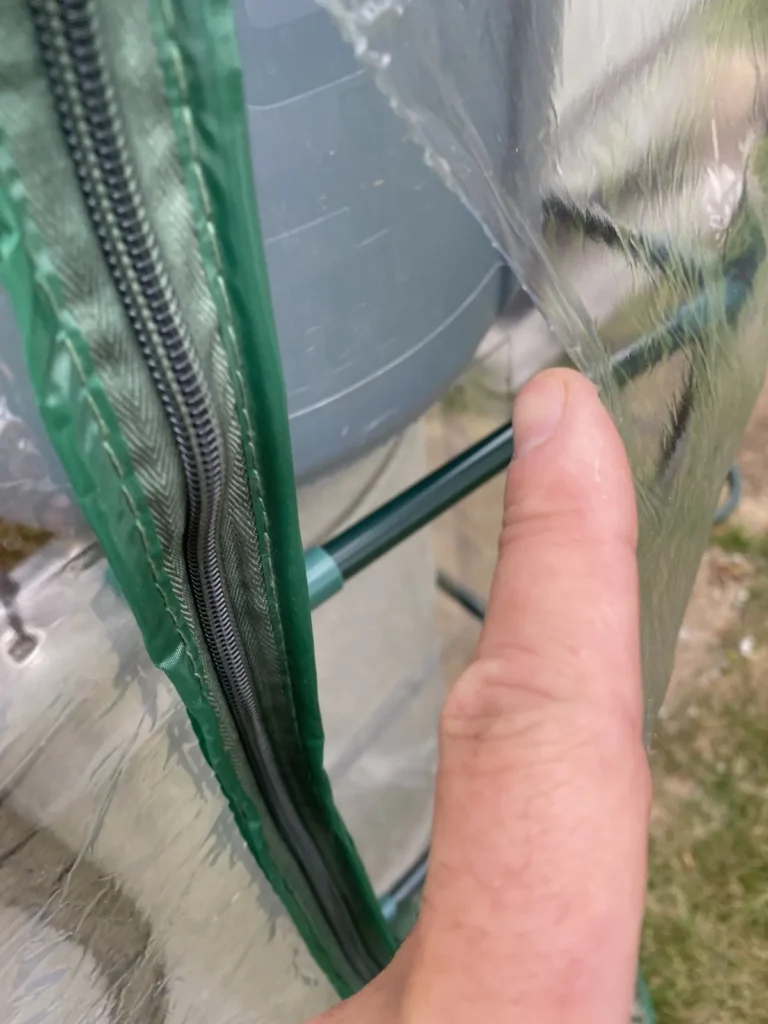
From my system: Field note: my biggest mistakes were not basic incompetence. They were overcomplicating the build, cheaping out on the greenhouse, and building a system at a rental where I could not keep it long term. The technical parts were manageable; the workload and operating reality were easier to underestimate.
A new aquaponics system does not begin with enough nitrifying bacteria to process a full fish load. Those bacteria need time to colonize the grow media, biological filter, plumbing, and other wet surfaces.
Fish produce ammonia. One group of bacteria converts ammonia into nitrite. Another group converts nitrite into nitrate, which plants can use. Until that biological cycle is established, ammonia and nitrite can rise quickly.
The beginner mistake is adding a large number of fish because the pond, stock tank, or converted IBC container looks empty. The water volume may be ready. The bacteria are not.
Better Approach
- Cycle the aquaponics system without fish before adding a full fish load.
- Add fish gradually.
- Test ammonia and nitrite daily during startup.
- Feed lightly while the biological filter matures.
- Increase stocking only after readings remain stable.
Use the aquaponics water testing guide to follow ammonia, nitrite, nitrate, pH, and temperature during cycling.
2. Overstocking the System
More fish produce more nutrients, but they also produce more ammonia, more solids, and more oxygen demand. A system can support small fingerlings and then become overloaded as those fish grow.
Stocking decisions must account for final fish size, daily feeding, filtration capacity, aeration, water volume, temperature, and available plant area. The number of fish that fits physically is not the number the biology can support.
Overstocking often shows up as:
- Persistent ammonia or nitrite
- Cloudy or foul-smelling water
- Heavy solids accumulation
- Fish crowding around air stones
- Rapid oxygen stress during hot weather
- Filters that need constant cleaning
- Nitrate rising faster than plants can use it
Stock conservatively. A slightly understocked system is easier to stabilize than one operating at the edge every day.
3. Overfeeding Fish
Overfeeding is one of the fastest ways to create an ammonia and solids problem. Uneaten feed sinks, breaks down, consumes oxygen, and adds waste without producing useful fish growth.
Fish should consume the offered feed promptly. If pellets remain floating or collect on the bottom, reduce the amount. Feeding should also decrease when water is too cold or too warm, when fish appear stressed, or when ammonia or nitrite is present.
Simple feeding rule: It is safer to slightly underfeed for a few days than to keep adding feed to a system that is already struggling.
Store fish feed in a sealed, dry container. Old, damp, or moldy feed can introduce additional problems.
4. Assuming Clear Water Means Safe Water
Clear water can still contain dangerous ammonia, nitrite, chlorine, chloramine, or the wrong pH. Most serious water-quality problems are not visible.
Cloudy water deserves investigation, but clear water is not proof that everything is working. Test the water instead of judging it only by appearance.
See how to keep aquaponics water clear for the difference between clarity, filtration, algae control, and actual water quality.
5. Not Testing Water Regularly
Aquaponics systems drift. Fish grow, feeding increases, plants are harvested, filters collect waste, temperatures change, and source water varies.
Testing only after fish begin acting strangely is too late. Fish gasping, refusing food, or hanging near a return pipe are emergency signs, not an efficient monitoring system.
At minimum, test:
- pH
- Ammonia
- Nitrite
- Nitrate
- Water temperature
Test daily during cycling and after problems. A mature, stable system can usually move to weekly testing.
Affiliate disclosure: This page contains affiliate links. As an Amazon Associate I earn from qualifying purchases.
View freshwater master test kits on Amazon.
6. Relying on Water Movement Instead of Dedicated Aeration
Water falling from a grow bed or spraying from a return pipe adds oxygen. That helps, but it should not be the only oxygen source in a stocked backyard or greenhouse system.
If the water pump stops, the oxygen supplied by the return flow stops with it. Warm water, heavy fish loads, algae, and accumulated solids can reduce oxygen faster than expected.
Use a continuous-duty air pump with multiple diffusers. Spread the diffusers across the pond, stock tank, IBC container, or chop tank rather than placing every air stone in one corner.
See aeration in aquaponics systems for pump selection, diffuser placement, maintenance, and backup oxygen.
View pond air pumps for aquaponics on Amazon.
7. Using an Undersized Water Pump
The maximum flow printed on a pump box is measured under favorable conditions. Actual flow drops when the pump pushes water upward, through long pipe runs, around elbows, past valves, and through filters.
An undersized pump can create weak circulation, poor solids transport, uneven grow-bed flow, and stagnant areas. An oversized pump can also cause trouble by overwhelming drains, filters, and bell siphons.
Size the pump using the required flow at the actual head height. Do not buy by gallons-per-hour alone.
Use how to size a pump for an aquaponics system before purchasing or replacing the main circulation pump.
8. Ignoring Solids Filtration
Fish waste does not disappear because it enters a grow bed. Some solids break down and release nutrients. Too much waste clogs media, coats roots, consumes oxygen, and creates foul-smelling anaerobic areas.
Lightly stocked media beds may handle part of the solids load. Heavily stocked systems, raft beds, and nutrient-film channels usually need dedicated mechanical filtration.
Common options include:
- Swirl filters
- Radial flow settlers
- Filter brushes
- Screens
- Filter socks
- Coarse filter pads
See aquaponics solids filtration basics for practical filter layouts and cleaning guidance.
9. Treating Mechanical and Biological Filtration as the Same Thing
Mechanical filtration removes solid particles. Biological filtration supports bacteria that process dissolved ammonia and nitrite. One does not replace the other.
| Filtration Type | Main Job | Common Equipment |
|---|---|---|
| Mechanical | Remove fish waste and suspended solids | Settlers, screens, brushes, pads |
| Biological | Convert ammonia to nitrite and nitrate | Grow media, moving-bed media, biofilter blocks |
| Plant uptake | Remove nitrate and other dissolved nutrients | Media beds, raft beds, channels, towers |
A barrel that catches waste may not provide enough oxygenated biological surface area. A biological filter full of media may not capture heavy solids. Know which problem each component is supposed to solve.
10. Using the Wrong Grow Bed Media
Grow media must support roots, maintain water flow, provide bacterial surface area, and remain chemically stable.
Common beginner errors include using limestone, decorative dyed rock, material intended for fire pits, media that compacts, or stone that is too heavy for the grow-bed structure.
Expanded clay, natural lava rock, and tested inert gravel can all work. Each has different cost, weight, and handling tradeoffs.
Read aquaponics grow bed media basics before filling a full IBC bed with several thousand pounds of something that later turns out to raise pH.
11. Letting Water Reach the Top of the Grow Media
The upper surface of a media bed should normally remain dry. Constantly wet surface media encourages algae, fungus gnats, mosquitoes, stem rot, and excessive evaporation.
In many flood-and-drain beds, the high-water level sits approximately one to two inches below the media surface. The exact level depends on bed design, crop type, standpipe height, and siphon operation.
See how a bell siphon works when diagnosing unreliable flood-and-drain cycles.
12. Ignoring Temperature Swings
Water temperature affects fish appetite, metabolism, oxygen demand, bacterial activity, ammonia toxicity, and plant growth.
Greenhouses create a false sense of security. They may become hot during a sunny afternoon and lose heat rapidly overnight. The air temperature can also change faster than the water temperature.
Measure the water directly. Choose fish suited to the expected climate, insulate exposed containers and plumbing, and avoid sudden temperature changes during water additions.
See how to heat aquaponics water in winter for heater sizing, insulation, and cold-weather planning.
View waterproof water thermometers on Amazon.
13. Adding Untreated Tap Water
Municipal water may contain chlorine or chloramine. Both can harm fish and nitrifying bacteria.
Chlorine may dissipate with time and aeration. Chloramine is more persistent. Leaving water in a barrel overnight does not guarantee that it is safe.
Check the local water supplier’s treatment information or use a conditioner labeled for both chlorine and chloramine. Treat replacement water before adding a substantial amount to a stocked system.
View water conditioners on Amazon.
14. Making Large Water Changes Without Matching Temperature
A large water change can reduce ammonia or nitrite, but replacement water that differs sharply in temperature or pH can stress fish.
Condition the water, check its temperature, and add it gradually. A separate barrel or large clean container makes the process easier and keeps raw tap water out of the system.
A small transfer pump is useful for moving conditioned water and can also serve as temporary backup equipment.
View small transfer pumps on Amazon.
15. Having No Backup Plan for Power Failures
Aquaponics depends on electricity. When power stops, aeration, circulation, filtration, heating, cooling, and monitoring may stop together.
The first emergency priority is usually aeration. A battery-powered air pump can buy time during short outages. A UPS, portable power station, or generator may be needed for longer interruptions.
Do not wait for the first storm to discover that the generator will not start or the battery air pump has dead batteries.
Use backup power for aquaponics systems to calculate runtime and build a layered outage plan.
16. Building Plumbing That Cannot Be Serviced
Pumps clog. Filters need cleaning. Roots enter drains. Valves fail. Equipment that cannot be removed without cutting pipe turns ordinary maintenance into a rebuild.
Use unions and valves around pumps, filters, UV units, and major plumbing branches. Leave enough room to reach drain guards, standpipes, and filter bottoms.
Plan where water will go if a drain blocks or a tank overflows. The correct answer should not be through an electrical outlet or across the greenhouse floor.
17. Buying Equipment Before Measuring the System
Buying pumps, heaters, air pumps, and filters before knowing the water volume, head height, fish load, and climate usually leads to replacement purchases.
Before buying equipment, measure:
- Total water volume
- Vertical pump lift
- Pipe length and diameter
- Number of elbows and valves
- Water depth for aeration
- Expected mature fish biomass
- Winter and summer water temperatures
- Grow-bed volume
- Available electrical capacity
For a complete equipment overview, see the Aquaponics Equipment Guide.
18. Changing Too Many Things at Once
When something looks wrong, beginners often adjust pH, change water, clean filters, add supplements, reduce flow, and change feeding on the same day.
That makes it difficult to identify the cause and can destabilize a system that was only slightly out of balance.
Confirm the problem, correct the immediate risk, then make controlled changes. During an ammonia event, for example, stop feeding, verify aeration and circulation, remove obvious waste, and monitor the readings. Do not dump several unrelated products into the water because one color on the test card looked unfriendly.
19. Ignoring Fish Behavior
Water tests provide numbers. Fish provide context.
Watch for:
- Gasping at the surface
- Crowding around water returns
- Refusing food
- Unusual isolation
- Flashing or rubbing
- Rapid gill movement
- Loss of balance
- Sudden jumping
- Unexpected deaths
Behavior changes should trigger an equipment check and water test. Do not assume every problem is disease when oxygen, ammonia, nitrite, temperature, or contamination may be responsible.
20. Expecting the System to Be Maintenance-Free
Aquaponics reduces some gardening work. It does not eliminate maintenance.
A stable system still requires:
- Water testing
- Feeding observation
- Filter draining
- Air-stone inspection
- Pump cleaning
- Root removal
- Plant harvesting
- Top-off water treatment
- Temperature monitoring
- Backup equipment testing
The best system is not the one with the fewest parts. It is the one whose parts are easy to inspect, clean, replace, and understand.
Common Mistakes at a Glance
| Mistake | Likely Result | Better Practice |
|---|---|---|
| Adding fish too early | Ammonia and nitrite spikes | Cycle first and stock gradually |
| Overfeeding | Waste, oxygen loss, cloudy water | Feed only what fish consume promptly |
| Weak aeration | Fish stress and poor biofiltration | Use dedicated continuous aeration |
| Undersized pump | Poor circulation and dead zones | Size at actual head height |
| No solids filter | Clogged beds and foul sludge | Remove heavy solids before sensitive components |
| No water testing | Problems discovered too late | Test daily during change and weekly when stable |
| Untreated tap water | Fish and bacteria damage | Neutralize chlorine and chloramine |
| No backup power | Rapid oxygen loss during outages | Use battery aeration and a longer-term backup |
A Better Beginner Routine
- Check that the pump and air pump are running.
- Watch the fish before feeding.
- Feed a measured amount.
- Remove uneaten feed.
- Check water temperature.
- Inspect filters and drain settled waste.
- Check grow-bed drainage and exposed roots.
- Test pH, ammonia, nitrite, and nitrate on schedule.
- Record unusual readings or behavior.
- Test backup equipment regularly.
This routine takes less time than recovering from a system crash.
Frequently Asked Questions
What is the most common aquaponics beginner mistake?
Adding too many fish before the system is fully cycled is one of the most damaging mistakes. It creates more ammonia than the immature bacterial population can process.
How long should an aquaponics system run before adding fish?
The answer depends on the cycling method, temperature, pH, ammonia source, and biological media. Add fish only after testing shows that ammonia and nitrite are being processed reliably.
Can you overfilter an aquaponics system?
Extra biological surface area is generally not a problem, but excessive mechanical filtering can remove material that might otherwise mineralize and feed plants. The larger concern is poor flow, clogged media, or filtration that is difficult to maintain.
How often should beginners test aquaponics water?
Test daily during cycling and after adding fish or experiencing a problem. Once the system is mature and stable, weekly testing is a practical baseline.
Why are my fish gasping at the surface?
Low dissolved oxygen is a common cause, but nitrite, high temperature, pump failure, gill damage, or contamination can produce similar behavior. Increase aeration immediately and test the water.
Why are my aquaponics plants not growing?
Possible causes include insufficient light, low fish load, poor nutrient availability, high or low pH, cold water, root-zone oxygen problems, or an immature system. Water testing helps narrow the cause.
Should I change all the water when something goes wrong?
Usually not. A complete water change can shock fish and disrupt system stability. Use partial changes with conditioned, temperature-compatible water when necessary while correcting the underlying cause.
Can aquaponics run without electricity?
Some low-density gravity-fed designs can reduce electrical dependence, but most backyard systems rely on pumps and aeration. A backup-power plan is still necessary.
Final Takeaway
Most aquaponics beginner mistakes come from moving too fast, feeding too much, testing too little, or building without enough oxygen, filtration, and service access.
Start with fewer fish. Let the bacteria mature. Keep ammonia and nitrite near zero. Maintain strong aeration and steady circulation. Remove excess solids. Treat source water. Plan for outages before the first outage.
Aquaponics does not require perfection. It does require paying attention before the system starts sending invoices in the form of dead fish and replacement pumps.