
Aquaponics plumbing has one job that matters more than looking tidy: move the intended water safely under normal flow, partial blockage, maintenance, pump shutdown, and restart. A system that works only when every screen is spotless is not finished; it is rehearsing for a flood.
This field guide covers the practical choices—pipe diameter, bulkheads, uniseals, valves, unions, drains, and overflows—without pretending one diagram fits every pump and tote. Start with a flow target and elevation drawing, then select components.
Affiliate disclosure: This guide contains Amazon affiliate links. If you buy through one of them, Aquaponics411 may earn a commission at no additional cost to you. As an Amazon Associate, Aquaponics411 earns from qualifying purchases.
Draw the Water Path First
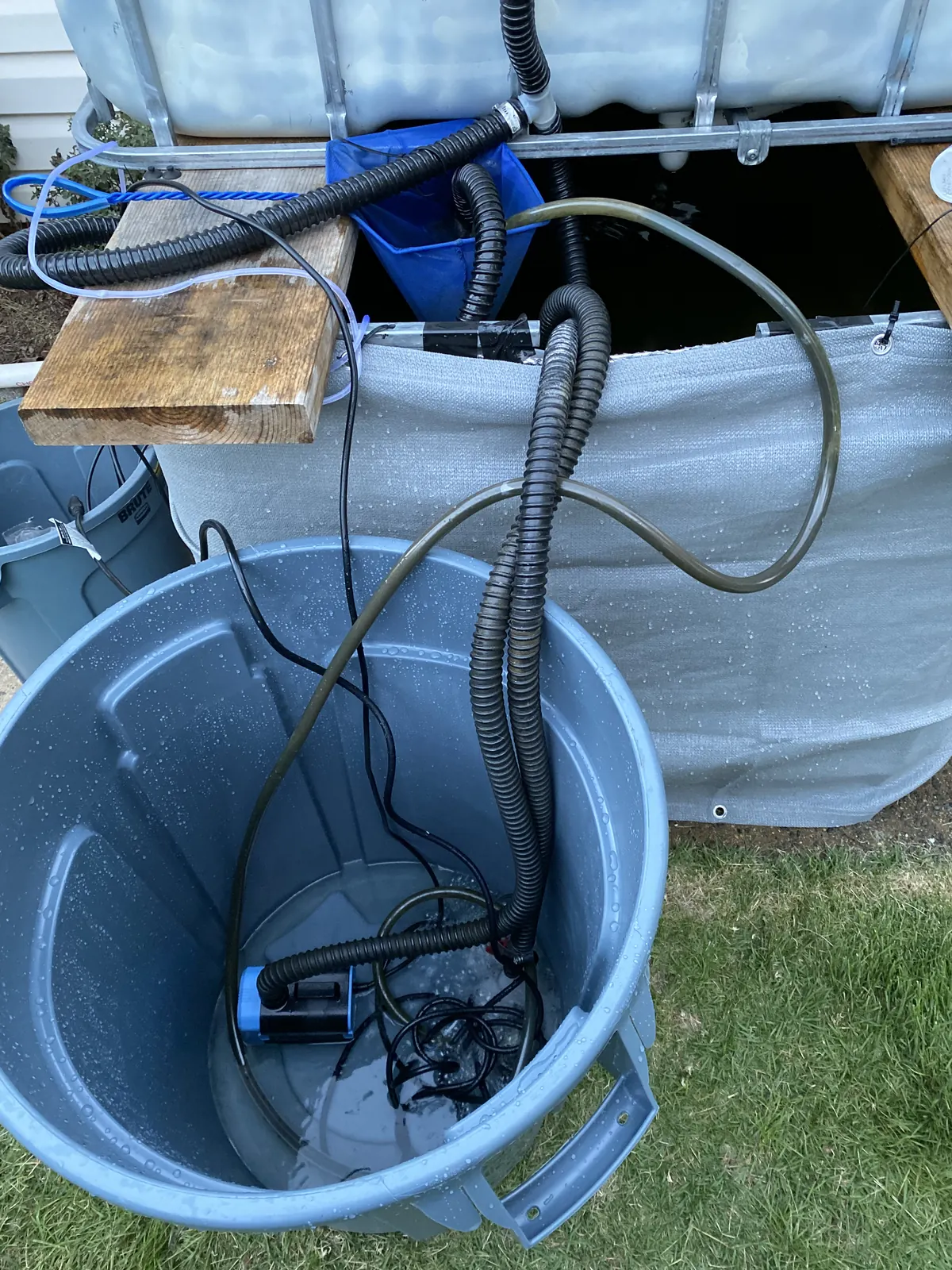
From my system: Field note: my grow-bed return was not a fancy manifold. A simple Wye split sent one outlet to the back left and one to the back right. That simplicity worked. The plumbing decision I regretted was drilling the tank for an unnecessary temperature sensor and then fighting the leak.
Mark the normal water level in every vessel, the highest possible water level, the pump location, vertical lift, drain points, and where water goes when power stops. Include filters and grow beds at their real elevations. This drawing exposes impossible gravity returns before PVC cement makes them permanent.
Pipe Size: Gravity and Pressure Are Different Jobs
A pumped line can move water through modest pressure, although friction increases quickly as pipe narrows, length grows, and fittings accumulate. A gravity drain has only the water-level difference available to push flow, so it generally needs more generous sizing and a clear air path. Never assume a drain matching the pump outlet diameter can safely carry the same flow by gravity.
The pump must be selected at total dynamic head, not at the zero-head number printed largest on the box. Use the pump-sizing guide to estimate lift and friction, then provide a controllable bypass instead of strangling the entire system.
Bulkheads vs Uniseals
Bulkhead fittings
A bulkhead clamps a gasketed fitting through a relatively flat wall. It provides a defined threaded or slip connection and can be removed, but it needs room for the flange, nut, gasket, and tools. Install the gasket in the manufacturer-specified position; adding sealant to compensate for a crooked hole is not craftsmanship.
Uniseals
A uniseal grips pipe through a flexible rubber fitting and can work well on curved containers. Hole diameter and edge quality are critical, and pushing pipe through can require leverage and an approved lubricant. Support the pipe so its weight does not distort the vessel wall.
Measure before ordering. Useful search points include water-tank bulkhead fittings, uniseal tank fittings, and true-union ball valves.
Valves With Specific Jobs
- Isolation valves let one component come offline without draining everything.
- Balancing valves divide pumped flow among beds or branches.
- Bypass valves return excess pump flow while preserving circulation.
- Drain valves make solids removal and winterization deliberate rather than improvised.
Ball valves are good for shutoff and coarse control. Gate valves can provide finer adjustment in some applications but vary widely in quality. Check valves should not be the only defense against backflow; debris can prevent them from sealing exactly when confidence is highest.
Use Unions Where Tomorrow Needs Them
Place unions around pumps, UV units, filters, and valves that may need replacement. A union costs more than a coupling and less than cutting apart a crowded manifold. Orient threaded fittings so removal does not require rotating an entire barrel or fish tank, which is a sentence nobody wants in a maintenance log.
Design the Overflow as a Separate Safety System
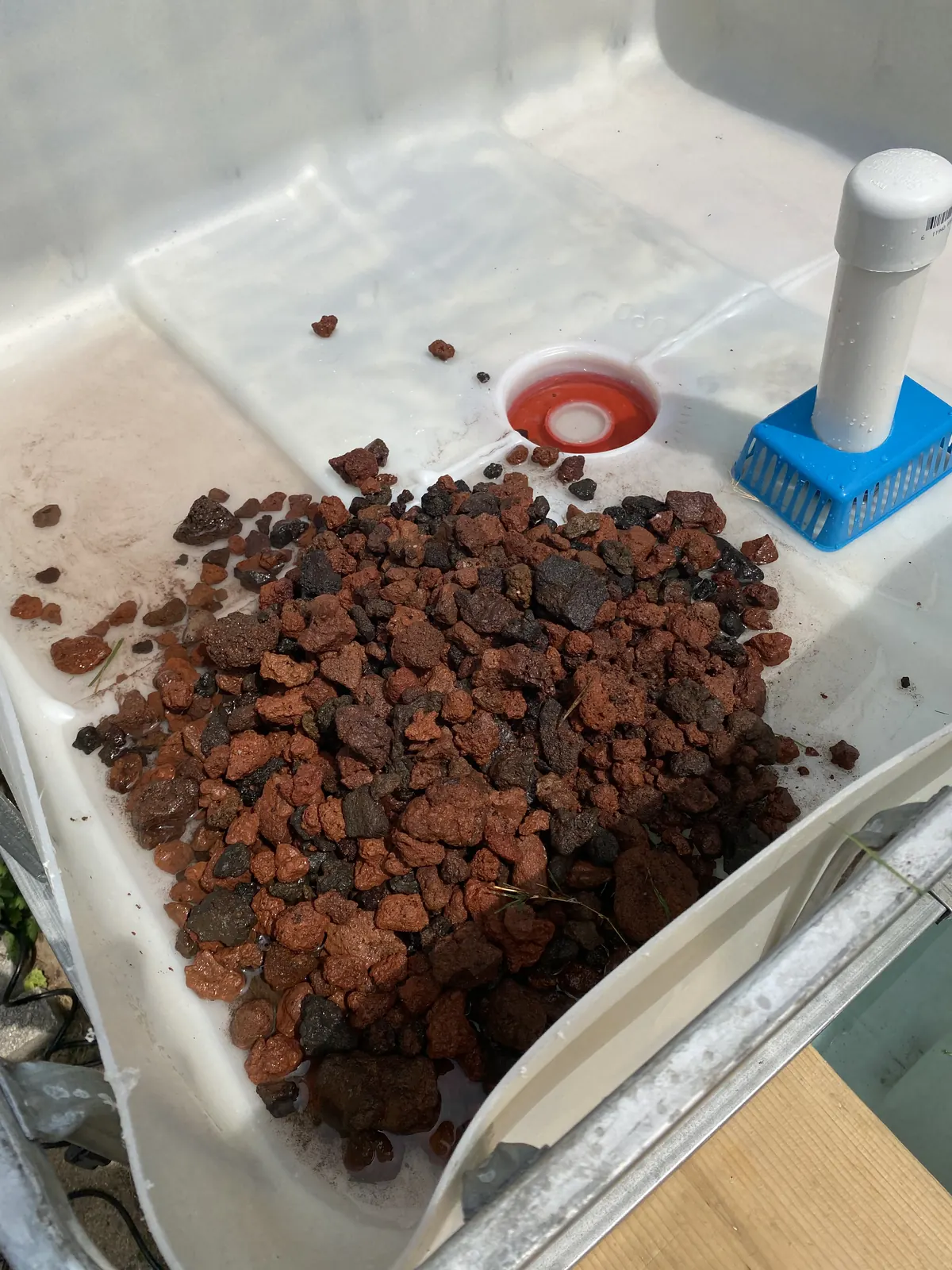
The working drain handles intended flow; the emergency overflow handles the day roots, leaves, fish food, or a curious snail change the plan. Route overflow water somewhere visible and safe. An overflow that quietly dumps behind the tank may protect the floor while hiding the developing blockage.
Standpipes, Siphons, and Open-Channel Flow
A standpipe sets the maximum bed water level in constant-flood or timed systems. A bell siphon uses changing pressure and an air break to start and stop a stronger drain cycle. Both need a media guard large enough for inspection and root removal.
Do not glue every siphon component. Serviceable friction-fit sections above the watertight bulkhead allow tuning and cleaning. For siphon behavior, see How a Bell Siphon Works.
Manifolds and Balanced Distribution
A manifold should receive water from a generously sized supply line, then divide it into branches with individual control. Symmetry helps but does not guarantee equal flow; elevation and fitting differences matter. Make each outlet visible so a slowing bed is noticed before roots dry.
PVC Assembly Without Regret
- Dry-fit and mark fitting orientation.
- Deburr and clean each cut.
- Use compatible primer and cement according to their instructions.
- Work with ventilation and appropriate protective equipment.
- Allow the specified cure time before introducing water.
- Flush the completed plumbing before connecting sensitive livestock.
Not every plumbing material is suitable for potable or food-system contact, UV exposure, temperature, or pressure. Check manufacturer ratings and local requirements rather than relying on pipe color alone.
The Power-Off Bucket Test
With the system running at maximum planned flow, mark all water levels. Cut power and watch every vessel until drainage stops. Confirm the sump or fish tank holds all returning water, no siphon creates an unintended drain-down, and the pump remains submerged enough to restart.
Restore power and watch the restart. Siphons, check valves, air locks, and split flows can behave differently after a shutdown. Repeat with one drain partly restricted to learn whether the emergency overflow is genuinely useful.
Maintenance Access Checklist
- Pump removes without draining the fish tank
- Each filter can be isolated and flushed
- Every drain has root and debris access
- Unions are reachable by hand
- Valves are labeled with normal positions
- Low points can be drained for freezing weather
- Spare fittings match the installed odd sizes
Technical Sources
Design principles were checked against Oklahoma State University’s small-scale aquaponics guidance and the FAO technical manual.
Friction Loss Without the Engineering Fog
Every foot of pipe and every elbow, tee, valve, reducer, and filter consumes some of the pump’s available pressure. Small-diameter pipe magnifies that loss, particularly at higher flow. This is why a pump can move impressive water into a nearby bucket yet disappoint after climbing to a grow bed through a decorative collection of fittings.
Use the manufacturer’s pump curve and a recognized friction-loss table or calculator. Estimate generously, then design a bypass and individual branch control. Oversizing pipe modestly is often quieter and more efficient than buying a larger pump to bully water through a narrow route.
Air Locks and Noisy Drains
High points can trap air in pumped or siphoning lines, while poorly vented gravity drains can gulp and surge. Maintain deliberate slopes, avoid accidental humps in flexible tubing, and provide ventilation where the drain design requires it. A noisy drain is sometimes merely annoying, but it can also be reporting unstable flow.
Transparent inspection sections can help during commissioning, though any clear pipe exposed to light may grow algae. Design permanent access points rather than relying on clear plumbing everywhere. Label any valve whose adjustment affects a siphon so routine cleaning does not erase the tuned position.
Finding a Slow Leak
Dry the area, mark the water level, and isolate sections rather than tightening every fitting at random. Bulkhead leaks may come from debris, a distorted wall, reversed gasket placement, over-tightening, or side load from unsupported pipe. Threaded leaks may reflect damaged threads or an inappropriate sealant.
Never tighten a bulkhead by hanging on a long wrench while the plastic wall twists. Drain below the fitting, support the pipe, inspect the parts, and reassemble according to the manufacturer’s instructions. A repair made with calm access generally outlives one made while water runs into a shoe.
Cold-Climate Plumbing
Identify every exposed pipe and trapped low point before freezing weather. Moving water can still freeze, especially during an outage. Insulate vulnerable runs, shorten unnecessary exterior loops, provide drains where practical, and keep an emergency plan for pumps and filters that cannot operate during a freeze.
Buried pipe is not automatically protected; local frost depth, wet soil, and unheated penetrations matter. Flexible couplings can make seasonal disassembly easier, but they must be rated and supported for the application.